For the first time in more than 60 years, you will watch a president step off Air Force One against a backdrop different from the familiar robin’s egg blue associated with John F. Kennedy. The United States Air Force is replacing that iconic livery with a red, white and dark blue scheme that reflects Donald Trump’s preferences and will eventually extend across the broader VIP fleet. What you are seeing is not just a new paint job, but a deliberate reset of how the presidency presents itself every time those aircraft appear on camera.
From Kennedy’s robin’s egg blue to a Trump-inspired palette
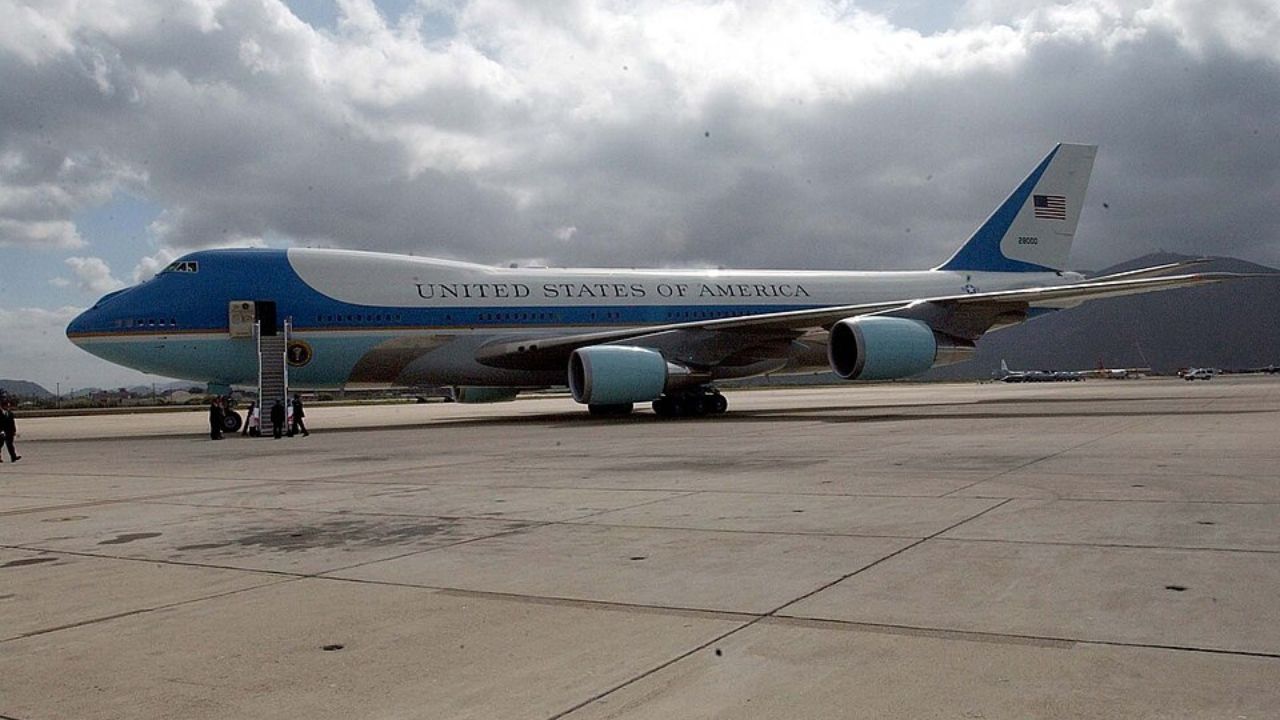
If you grew up with the classic image of Air Force One, you are used to a very specific look: a white top, pale blue midsection and polished presidential seal that have framed every commander in chief for more than 60 years. That robin’s egg blue identity became so ingrained that it turned into visual shorthand for the American presidency itself, a design choice often traced back to the Kennedy era and repeated on aircraft, models and campaign backdrops worldwide. Social media posts marking the change have noted that for more than 60 years every president has walked down those stairs into the same soft blue scene, a detail that now lands with extra weight because you know it is about to disappear.
The Air Force has now confirmed that this long run is ending as it adopts a new livery across its executive airlift fleet, including the aircraft that carry the call sign Air Force One. In official messaging shared in Feb, the Air Force described the change as a retirement of the classic Kennedy-era paint scheme in favor of a different red, white and blue treatment. Aviation watchers highlighted the shift with side-by-side images showing the robin’s egg blue being phased out, and one widely shared post noted that the traditional look had defined Air Force One for more than 60 years while also drawing 384 public comments from followers reacting to the redesign in Feb on a popular Air Force One fan account.
What the new Air Force One will look like
When you see the updated aircraft on the tarmac, you will notice a much more saturated national color scheme. Reporting on the design describes a white upper fuselage, a dark blue lower half, and a bold streak of dark red running from the cockpit toward the tail, with gold accents tying the elements together. The Air Force has said that this combination will appear not only on the future Boeing 747 replacements but also across other executive transport jets, which means the new look will quickly become the standard visual language for high-level government travel rather than a one-off experiment. One detailed breakdown explained that the red, white, dark blue and gold treatment is intended to echo the American flag while still reading as a formal state aircraft, a balance you will see every time the planes appear in live coverage of arrivals and departures.
The change is not limited to the two primary presidential aircraft that traditionally carry the Air Force One call sign. A broader set of VIP planes used by senior officials are also being repainted so that the entire fleet shares the same aesthetic, a move the Air Force has described as a unified identity for executive airlift. A recent overview of the U.S. Air Force VIP updates explained that the red, white, dark blue and gold palette will replace the lighter Kennedy colors on multiple aircraft types, giving you a consistent visual cue whenever a senior delegation flies into a foreign capital or disaster zone. Another report focused specifically on the future 747 replacements noted that the new scheme will be applied when those aircraft are delivered, which one Air Force briefing placed in the 2028 timeframe, so you can expect a transition period when older and newer designs coexist.
How Trump’s preferences shaped the redesign
From the moment Donald Trump began talking about replacing the aging presidential 747s, you heard him link the project to a more assertive red, white and blue look. He frequently criticized the robin’s egg blue as outdated and pushed for a design that more closely matched the American flag, framing it as a matter of national pride. Coverage of the current plan makes clear that the new scheme reflects Trump’s preferred colors, even as technical and cost concerns adjusted some of his earlier ideas. One detailed account of the decision explained that the Air Force VIP fleet is being repainted in Trump paint colors, with the updated design applied both to the current fleet and to the future Boeing 747 airliner that will eventually assume the Air Force One role.
Earlier iterations of Trump’s vision also faced pushback over engineering and expense. A report focused on the redesign explained that Trump’s New Paint Scheme To Replace Kennedy, Era Airforce One Livery, Here Are The Colors The President Chose, was initially scaled back because of concerns about how darker colors could affect heat management and maintenance costs on the large fuselage. That account noted that the final compromise still delivers the red, white and blue look Trump wanted for Air Force One and the broader VIP aircraft, but within parameters that Air Force engineers considered acceptable. The same report on Trump and the Kennedy-era livery traced how the design moved from a campaign-style concept to an approved government program, giving you a clear line between personal preference and institutional decision.
Why the Air Force is extending the scheme across the VIP fleet
From a practical standpoint, you are watching the Air Force use this moment to standardize its entire executive airlift brand. Instead of treating Air Force One as a one-off showpiece, planners are spreading the same colors and pattern across other VIP aircraft so that any plane carrying senior leaders immediately reads as part of the same family. Official explanations of the change describe it as a fleetwide rollout that covers multiple aircraft models, not just the high-profile 747s. In one briefing shared from WASHINGTON, the Air Force characterized the move as a new paint scheme for Air Force One and the executive aircraft fleet, which signals that you should expect to see the same visual identity on smaller jets that might carry cabinet officials or visiting dignitaries.
There is also a political and symbolic logic that you can recognize immediately. A unified fleet in Trump’s preferred colors means every televised arrival, from a summit in Europe to a domestic campaign stop, carries the same visual message. It turns the aircraft into traveling billboards for a particular interpretation of patriotism that leans on bold red, white and dark blue, instead of the softer Kennedy palette that suggested mid-century elegance. One detailed social media post about the change highlighted how the Air Force One fleet has looked the same for more than 60 years and is now being updated with red, white, dark blue and gold, a shift that replaces the traditional robin’s egg blue with a darker color in the new design and gives you a more assertive silhouette every time the planes appear in a live shot. The same post on the Air Force VIP fleet stressed that this is not a cosmetic tweak but a wholesale refresh of the presidential aviation brand.
What the change signals about presidential image and power
More from Fast Lane Only