Ford is racing to convince you that it is not about to hand the keys to its electric future to China’s Xiaomi. After a flurry of stories suggested the two companies were lining up a United States factory deal, the automaker has moved quickly to brand the idea “completely false” and insist its EV strategy remains firmly under its own roof. The pushback is about more than one rumor, it is a test of how you read corporate denials, geopolitical pressure, and the realities of building affordable electric cars in America.
How a single report ignited a Ford–Xiaomi firestorm
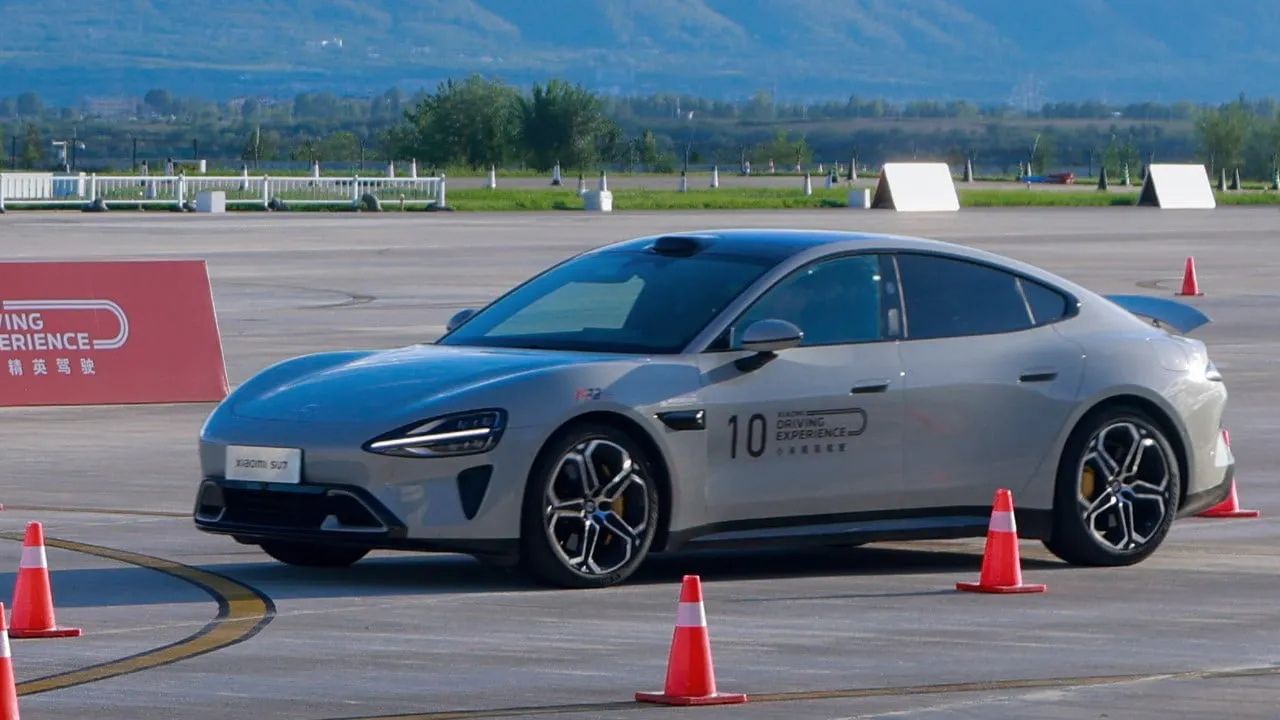
The latest storm started when a report claimed Ford had held preliminary talks with the Chinese electric vehicle maker behind the Xiaomi SU7 about building cars together in the United States. According to that account, the conversations were framed as early stage, with Ford exploring whether Xiaomi-branded models could be produced in an American plant, a scenario that would have put a Chinese consumer electronics giant inside a legacy Detroit factory. The idea that Ford might open its doors to a Chinese partner on U.S. soil, even at a discussion level, was enough to send the story ricocheting across the auto world, especially once it was tied to the broader narrative of Chinese brands looking for a back door into the American market through local manufacturing rather than direct imports, as described in coverage of preliminary talks.
From there, the rumor hardened into a simple, explosive claim: Ford was preparing to build electric vehicles in the United States with China’s Xiaomi. One outlet relayed that the supposed plan involved using Ford’s American footprint to assemble Xiaomi-branded EVs, a move that would have marked a dramatic shift from the company’s current message that its battery models are “proudly Americanmade.” The story quickly drew attention because it seemed to collide with Ford’s public stance on Chinese competition and tariffs, which has included criticism of low-cost imports from China and warnings about the impact of Chinese EVs on U.S. jobs, themes that also surface in reports on how American and Chinese players are clashing over electric car trade.
Ford and Xiaomi close ranks with emphatic denials
Once the partnership narrative took off, Ford responded with unusual speed and force. The company said the idea that it planned to build electric vehicles in the United States with Xiaomi was “completely false,” stressing that it was not negotiating to produce Xiaomi-branded cars in any of its American plants. In its statement, Ford framed the rumor as a misreading of its broader search for ways to make EVs more affordable, insisting that its current strategy is to refine its own platforms and manufacturing rather than outsource the job to a Chinese tech group, a line it reinforced in comments highlighted by Peter Johnson.
Xiaomi, for its part, matched Ford’s tone. The Chinese company said it was not in talks to set up a joint venture with Ford in the United States and that it had no agreement to build its own models in a Ford facility. Both sides stressed that there were no negotiations underway to produce Xiaomi-branded EVs in America, a coordinated message that went beyond the usual “we do not comment on speculation” and instead tried to slam the door on the story. That joint pushback was captured in reporting that noted how Ford and Xiaomi both rejected claims of a U.S. EV partnership and stressed they were not negotiating to do so.
Behind the rumor: what “talks” really mean in an EV arms race
Even as both companies deny any active plan, the reporting trail shows why the story was plausible enough to catch fire. Accounts of the situation describe how Ford explored the idea of using its U.S. manufacturing base to produce Xiaomi-branded vehicles, with the discussions framed as a way for the Chinese company to gain a foothold in the American market while Ford filled unused capacity in its plants. Those same reports say the talks, if they occurred, were exploratory and did not progress to a formal agreement, a nuance that often gets lost once a narrative hardens into “Ford is building cars for Xiaomi,” as outlined in coverage that summarized how Ford Denies Reported U.S. EV production.
Other reports add that the rumored discussions focused on a potential joint venture in the United States to manufacture electric vehicles, a structure that would have allowed Xiaomi to sidestep tariffs on Chinese imports while giving Ford access to Chinese software and cost engineering. The idea fits a broader pattern in which Chinese automakers and tech firms look for local partners to blunt trade barriers, while U.S. companies weigh whether collaboration is worth the political heat. Even as both sides now insist there is no deal, the suggestion that they at least explored a joint venture is why analysts say the situation “bears watching,” a phrase that appears in coverage of the rumored joint venture in the United States.
Jim Farley’s Xiaomi commute and the optics problem
Complicating the picture for you as a consumer is the fact that Ford CEO Jim Farley has been personally driving a Xiaomi SU7 while his company promotes its own Americanmade EVs. Video coverage has shown the CEO commuting in the Chinese-made electric model even as Ford markets vehicles like the Mustang Mach-E and F-150 Lightning as symbols of domestic manufacturing. That contrast has already drawn backlash from some U.S. buyers who see a disconnect between the company’s patriotic messaging and its leader’s choice of daily driver, a tension that was highlighted in a segment on how the CEO uses a Chinese EV.
Farley’s personal enthusiasm for the Xiaomi SU7 has also fed the sense that Ford and Xiaomi are at least philosophically aligned, even if both now deny any formal partnership. Social media posts have noted that Ford CEO Jim Farley has been commuting in the Xiaomi SU7 for months, and that while Ford and Xiaomi have publicly denied their EV joint venture, the two industries are “definitely still flirting.” That kind of commentary, captured in an Instagram post about Ford CEO Jim Farley and Xiaomi, helps explain why rumors of deeper collaboration find such a receptive audience, especially when they appear to line up with what the CEO is driving.
Geopolitics, Chinese EVs, and what this means for you
To really understand why Ford is so eager to distance itself from Xiaomi, you have to zoom out to the political fight over Chinese electric cars. U.S. and European automakers that fell behind Chinese firms on digital features and battery costs are now warning that Chinese brands pose a national security risk, arguing that connected vehicles from China could be used to gather data or undermine local industry. Critics counter that these security claims conveniently appeared only after Chinese companies built a commanding lead in affordable EVs, and that banning or heavily restricting Chinese cars from the American market could be “dangerous and self-defeating,” a phrase used in analysis of how Chinese electric car makers are being targeted.
Ford is caught squarely in that crossfire. On one hand, it has warned about the impact of low-cost Chinese EVs and supported tougher scrutiny of imports from China, aligning itself with arguments that American jobs and technology need protection. On the other hand, the company is under pressure to cut EV costs and improve software, areas where Chinese players like Xiaomi have real strengths. Reports on the alleged Ford–Xiaomi talks note that Ford and Xiaomi both told the Financial Times they were not in such talks, while BYD declined to comment, underscoring how sensitive any hint of collaboration has become. For you, the takeaway is that even a whiff of partnership with a Chinese brand can trigger political alarms, which is why Ford is working so hard to convince you that its EVs will be designed and built under its own banner, not as a quiet gateway for Chinese models.
More from Fast Lane Only