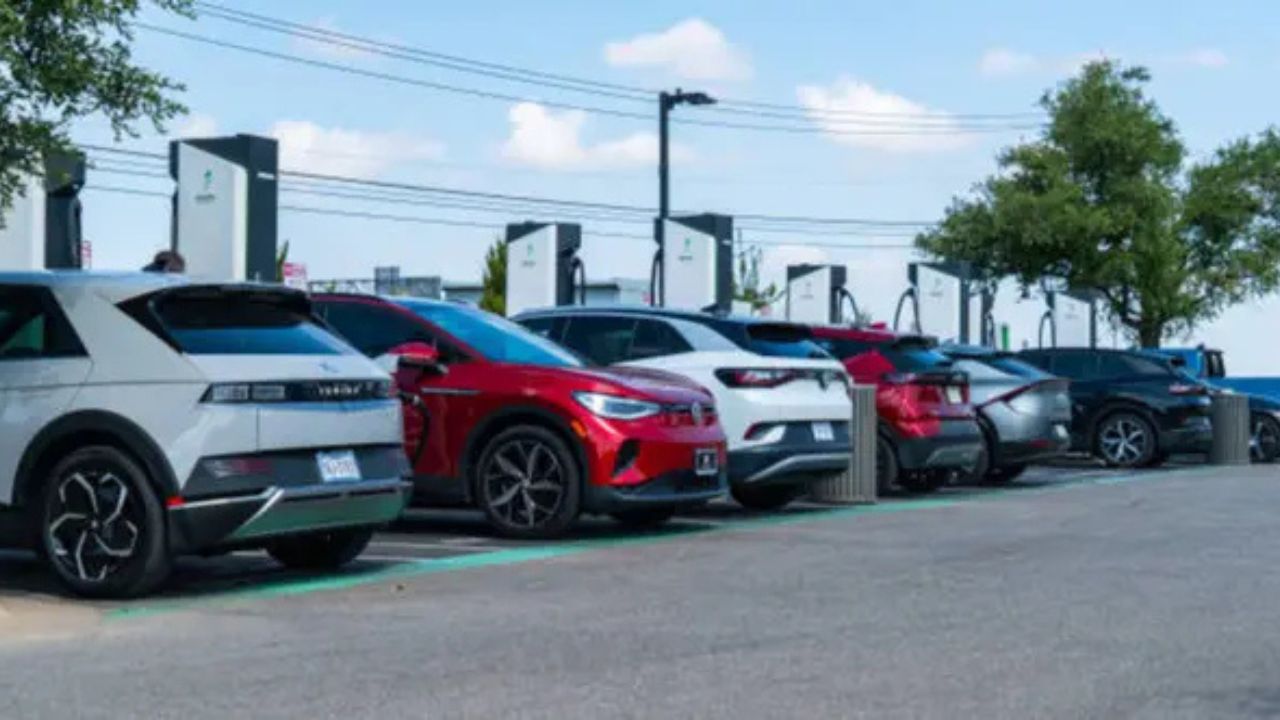
California is getting ready to spend $200 million to bring back electric vehicle rebates, but this time you will not be the only one getting help at the dealership. Carmakers will have to put in their own money alongside the state, effectively doubling the pot for buyers who qualify. The plan is designed to keep EV sales growing after federal incentives were cut, while also forcing the auto industry to share more of the cost of the transition.
If you are thinking about a first electric car or plug-in hybrid, this new structure could change how you shop, which brands you consider, and how quickly you need to move once the program opens. It also signals a shift in how California uses public dollars, tying climate policy more tightly to corporate responsibility and to the state’s broader clean air agenda.
How the $200 million plan works and why automakers must match it
At the heart of the proposal, California Gov Gavin Newsom is asking lawmakers to approve a $200 m package that would revive state incentives for new electric and plug-in hybrid vehicles, with the full $200 million aimed at getting you a discount right at the point of sale. Instead of waiting for a tax refund, you would see the rebate taken off the sticker price at the dealership, with the state and the manufacturer each covering half of the incentive. Budget language from Gov Gavin Newsom’s team spells out that carmakers would need to match the state’s contribution dollar for dollar to participate, turning the public investment into a much larger pool of price cuts for buyers who meet the rules laid out in the $200 million plan.
The idea is partly a response to President Donald Trump’s decision to cancel federal EV incentives last year, which removed a key discount many Californians had counted on when shopping for models like the Tesla Model 3, Chevrolet Equinox EV, or Hyundai Ioniq 5. By tying state money to automaker matching funds, Gov Gavin Newsom is trying to keep EVs competitive on price while nudging companies like General Motors, Ford, Hyundai and Tesla to shoulder more of the cost of hitting California’s climate and air quality targets. Early descriptions of the proposal emphasize that the $200 m in state money would be structured so that every public dollar is paired with private cash, effectively doubling the value of the program for qualifying buyers under the new California Governor Proposes.
Instant rebates, first-time buyers and price caps
For you as a shopper, the most noticeable change is that the discount would be instant and tightly targeted. Californians would no longer apply after the fact and wait months for a check, as they did under the long-running Clean Vehicle Rebate Project, which is detailed on the state’s rebate site. Instead, the new structure would apply at the dealership or online checkout, with the state and the automaker each knocking their share off the purchase price in real time. Reporting on the draft rules says the program is aimed squarely at first-time EV buyers, so if you already own a battery-electric or plug-in hybrid, you would likely be pushed to the sidelines while newcomers get priority under the New EV Rebate rules.
The state also wants to avoid subsidizing luxury purchases, so there will be strict price caps. Draft criteria describe limits of $55,000 for cars and crossovers and $80,000 for trucks and SUVs, which would keep the subsidy focused on vehicles like the Chevrolet Blazer EV or Ford F-150 Lightning Pro rather than six-figure performance models. Those thresholds, $55,000 and $80,000, are spelled out in program summaries that explain how California Targets First, Time EV Buyers With New State Rebate Plan and are meant to mirror caps Congress used when it revamped federal credits in 2022, as noted in guidance on $55,000 vehicle eligibility.
Who qualifies and how the money will be rationed
The new incentive is not meant to be a free-for-all, and you will need to fit into a fairly specific profile to benefit. California is preparing the program so that it focuses on first-time EV buyers with moderate incomes, using income caps and residency requirements similar to those that governed earlier rebates. Descriptions of the plan emphasize that California Targets First, Time EV Buyers With New State Rebate Plan by limiting eligibility to residents who have not previously registered an electric vehicle in the state and who stay under defined income thresholds, which are being refined by agencies working with the California Air Resources. Used vehicles are also expected to be eligible, but with tighter limits on price and battery range, and with a smaller rebate amount than for new cars, according to early outlines of how used vehicles would be treated.
Because the budget is finite, the state plans to hand out rebates on a first-come, first-served basis, which means timing will matter if you want to lock in a discount. Critics warn that this structure could create a rush of applications and favor buyers who can move quickly, while leaving slower households behind once the $200 m is exhausted. One analysis argues that the proposal sets up a first-come, first-serve free-for-all scenario that may not be the most careful use of limited public dollars, even if it delivers quick climate benefits, a concern raised in commentary on the proposal. Still, for you as a potential buyer, the message is clear: once the program opens, waiting too long could mean missing out entirely.
Politics, Trump’s rollback and pressure on automakers
The structure of this program is as political as it is practical. Gov Gavin Newsom has framed the $200 million package as a way to fill the gap left when President Donald Trump canceled federal EV incentives, and as a signal that California will not slow its climate push even when Washington pulls back. Governor Gavin Newsom’s office has already folded the $200 m into its broader 2026/27 budget proposal, presenting it as part of a long-term strategy to keep EV adoption on track with the state’s zero-emission sales mandates, according to budget documents summarized in Governor Gavin Newsom briefings. The move also fits with California’s pattern of using its market size to push national standards, a role that has often put the state at odds with the Trump administration.
Automakers, for their part, are being told that if they want their cars to qualify for this new wave of state help, they must put up matching cash. Reports on the negotiations say manufacturers that agree to participate would have to match the state’s rebates and could collectively see the program grow to as much as $750 million in combined discounts if they fully engage, a figure cited in coverage of California’s EV incentive program to require automaker matching funds that notes how Newsom, a vocal Trump foe, is using the state’s leverage to extract more from the industry and to position himself as a leading Democratic voice on climate policy in the run-up to 2028, as described in Newsom profiles. For you, that political tug-of-war translates into a rare moment when state leaders are effectively telling car companies to compete on how much of a discount they are willing to share.
How this fits into California’s broader clean transportation push
More from Fast Lane Only