You spent the last decade watching your dashboard turn into a tablet, with climate, seat heaters, even wipers buried in glossy menus. Now global safety rules are starting to push back, and that shift overseas may be the nudge that brings real buttons back to the center stack of cars you drive in the United States. As regulators in Europe and China tie top safety scores to physical controls, you are looking at a quiet but powerful redesign of how you touch and trust your next car.
The stakes go beyond nostalgia. When every basic task demands a tap and swipe, your eyes leave the road longer, your reaction time stretches, and your risk climbs. As safety assessments harden around those findings, the question is no longer whether touch-heavy dashboards are stylish, but whether they are acceptable at all.
How Europe turned touchscreens into a safety problem
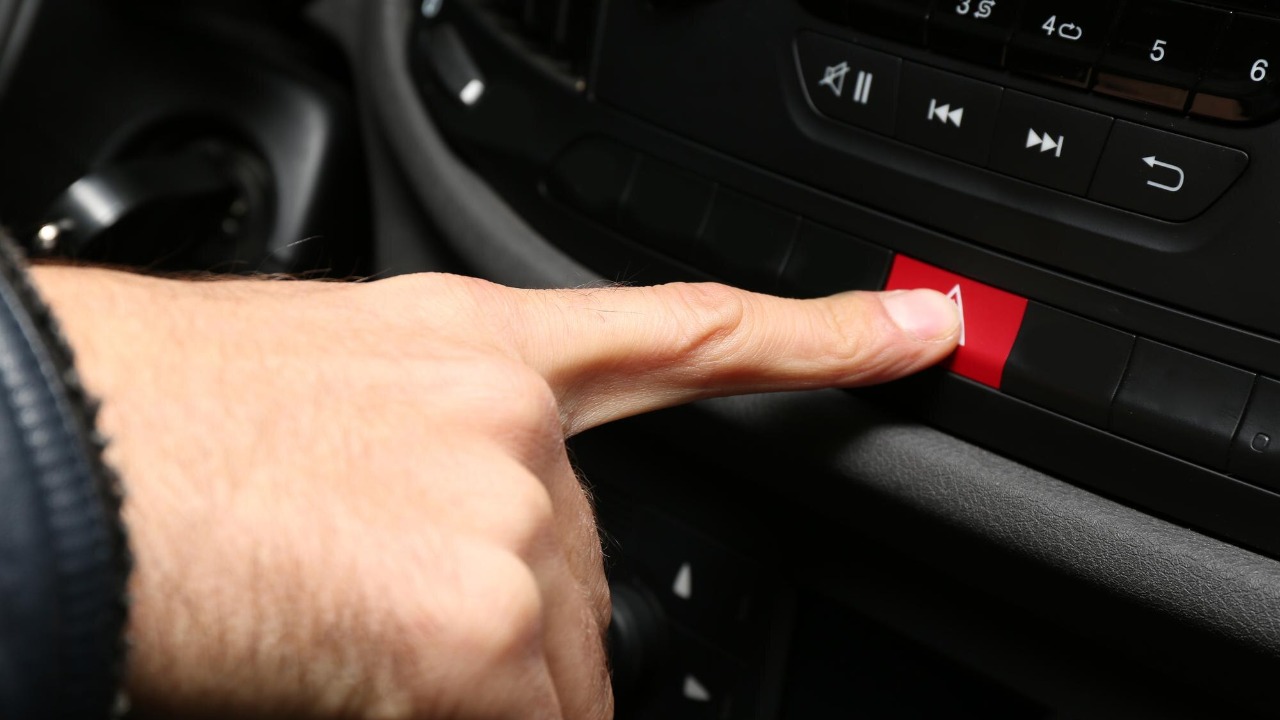
If you want to see where your own dashboard is heading, start in Europe, where the European New Car Assessment Program, or Euro NCAP, has turned in-car touch controls into a measurable safety issue. To earn the maximum safety rating under protocols that took effect in January 2026, a car now needs physical buttons or dials for core tasks like turn signals, hazard lights, wipers, the horn and indicators for emergency systems, instead of hiding them in a touchscreen. In updated guidance described as an assessment, Euro NCAP treats the move away from all-screen dashboards as a prerequisite for the coveted five star score that European automakers chase.
This shift did not arrive in a vacuum. Earlier concerns inside Euro NCAP about drivers hunting through layers of icons led to a broader review of how long your eyes leave the road when you adjust something as simple as temperature or fan speed. One analysis of the new rule, framed as a wake up call at the AI Foundational Level of Automotive Technology, argues that carmakers spent years chasing minimalist screens and now have to reconcile that design language with hard safety incentives. If you buy a car in Europe from 2026 onward, you are effectively voting on that tradeoff every time you decide whether a five star badge matters more than a seamless glass panel.
China’s draft rules and the global ripple effect
On the other side of the world, regulators in China are moving in parallel, and that matters for you because global automakers rarely engineer one cockpit for Beijing and another for Boston. Draft rules from the Ministry of Industry and Information Technology, or MIIT, would require that certain functions use physical controls that you can reach without diving into a screen. The Draft rules from explicitly treat touch only access for key features as unacceptable, echoing Euro NCAP’s concern that critical actions must work even if software lags or a display fails.
Reporting that tracks those draft rules back to collision repair and safety analysts notes that Chinese regulators are watching the same research as Europe. One review of the proposal, which cites how in 2024 the European New Car Assessment Program updated its protocols, describes a shared worry that complex digital dashboards have a largely unproven safety record and that an Assessment of those risks must come before more apps migrate into your car. When China and Europe, two of the largest car markets, start writing similar expectations into their test protocols, you can expect global platforms to tilt away from all glass interiors even before any U.S. rule changes.
Why touchscreens slow you down behind the wheel
Regulators are reacting to something you already feel when you jab at a glossy panel on a bumpy road: touch interfaces demand more of your brain. A summary of lab style driving experiments points out that interacting with complex in car touchscreens can stretch your reaction time to hazards by around 30 percent, produce significantly higher cognitive workload as measured by pupil dilation, and trigger more frequent lane departures compared with simpler controls. As you try to manage layered menus, your attention splits between the road and a tiny icon, and findings like these, highlighted in a Significantly higher workload study, give regulators hard numbers to work with instead of vague discomfort.
Real world tests tell a similar story. In one widely cited Scandinavian evaluation of in car interfaces, described by a U.S. law firm that focuses on crash cases, drivers were asked to perform simple tasks while traveling at 68 miles per hour. In the ten seconds the Volvo’s driver took to change a setting through the screen, the car covered a football field of distance, and the same review of the Vi Bil test notes that even activating the vehicle’s heated seats through a touchscreen kept eyes off the road longer than a physical switch would. Combined with earlier findings that physical buttons can be located by feel and pressed in fractions of a second, as summarized in a piece titled Study Finds That in Cars Are Safer and Quicker to Use Than Touchscreens, the case for giving you a real knob for volume or climate control becomes less about nostalgia and more about physics.
Automakers pivot as safety scores and customers push back
Automakers are not blind to what you are experiencing, or to what safety scores mean for their marketing. Analysts tracking Euro NCAP’s rule change describe how European automakers are already reworking interior car design so that, to keep a five star rating, functions like wipers, hazard lights and turn signals return to dedicated switches. One overview of how European automakers are responding notes that brands which cling to minimalist dashboards risk losing that coveted five star label, a tradeoff you notice the moment you compare spec sheets in a showroom.
You are also seeing individual brands test how far they can push touch only controls before you revolt. One widely discussed example involves Mazda, which long championed a physical rotary controller for its infotainment system, then replaced its signature knob with a touchscreen and told customers the change was safer and more intuitive. Coverage of that decision, under the line Mazda Replaces Its, captures the tension between marketing claims and the growing body of research that questions whether flat glass can ever match the tactile certainty of a click. At the same time, electric focused brands that built their identity around giant central displays, such as the vehicles you see on Tesla, are under pressure to prove that software shortcuts and voice commands can keep pace with old fashioned switches once regulators start scoring them on distraction.
What this global shift could mean for U.S. drivers
Right now, you can buy a new car in the United States that earns top safety marks without a single physical button for climate or audio, because U.S. tests have not yet tied star ratings to control layout. Analysts looking at the European and Chinese moves argue that this gap will not last. One breakdown of What This Could notes that car development is global and that if a model needs physical buttons to score well in Europe and comply with MIIT rules in China, you are unlikely to see a completely different, screen heavy version shipped only to U.S. dealers. Instead, you will probably get the same safer hardware, even if federal rules lag behind.
More from Fast Lane Only