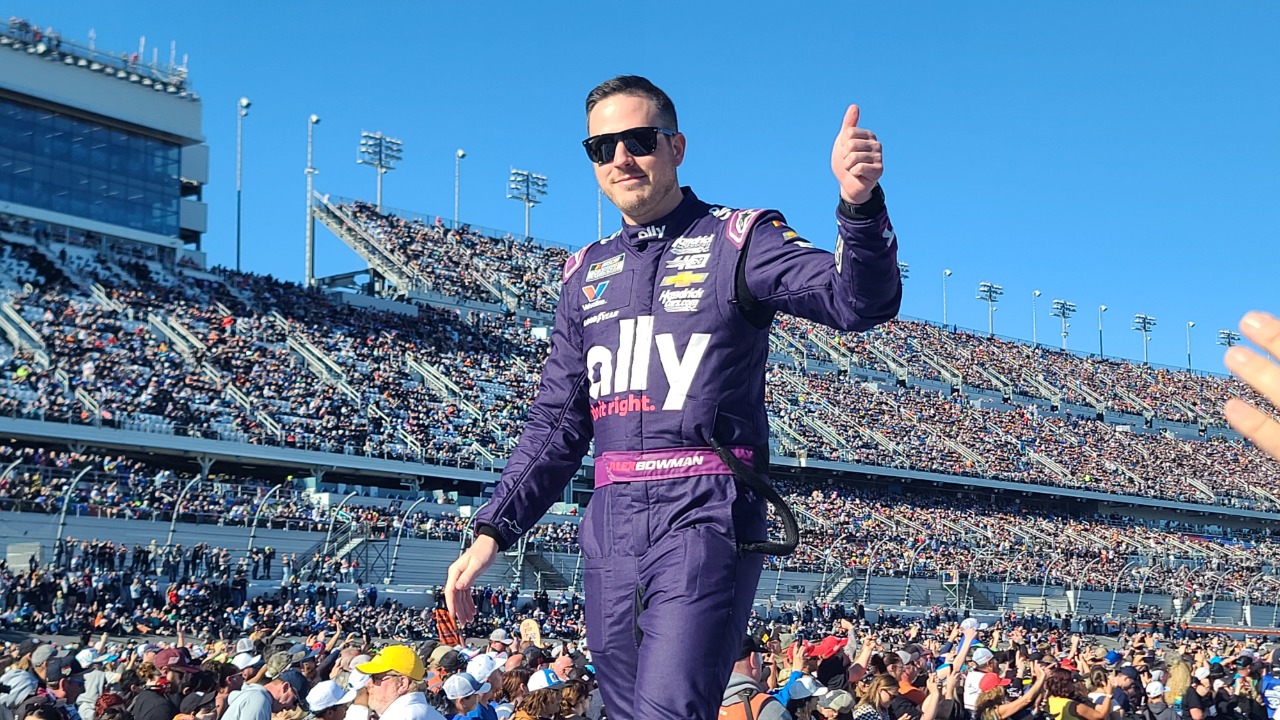
You see it often in motorsports: a driver steps out of the car and the story quickly shifts to who replaces him and what that means for points. With Alex Bowman dealing with vertigo and sitting on the sidelines, the more revealing story sits inside the Hendrick Motorsports garage, where teammates and leadership have closed ranks around one of their own. As you follow the next stretch of NASCAR’s Cup Series schedule, you are really watching how a powerhouse team responds when a key piece is suddenly missing.
The shock of Bowman’s vertigo diagnosis
You knew Alex Bowman as the steady presence in Hendrick’s No. 48 Chevrolet, and at age 32 he looked positioned for another full run at the NASCAR Cup Series playoffs. That changed when vertigo symptoms forced him out of the car in the middle of a race, leading Hendrick Motorsports to confirm that he would miss at least the next three Cup Series events.
Team officials have stressed that Bowman continues to experience symptoms and that the organization is following medical guidance rather than a competitive timeline. Hearing that he will sit out at least three more NASCAR Cup Series races makes clear this is not a short-term inconvenience but a health issue that can affect balance, vision, and reaction time, all non-negotiable for a driver who races at more than 180 miles per hour.
Bowman, in his ninth season with the Rick Hendrick owned team, had already slipped to 36th in the Cup Series standings after three consecutive finishes outside the top 25 earlier this year. For you as a fan or analyst, that context explains why Hendrick is not trying to rush him back simply to salvage points. The organization has framed the priority clearly: Bowman returns only when he is fully cleared and comfortable.
How Hendrick reshuffled the No. 48 seat
Once Bowman stepped away, you watched Hendrick Motorsports move quickly to stabilize the No. 48 program. At Phoenix Raceway, Anthony Alfredo was tapped as a substitute, giving the team a driver with recent Cup experience while medical evaluations continued. That decision signaled to you that Hendrick wanted continuity for the crew and sponsors even as Bowman focused on recovery.
The next step came with Las Vegas, where Justin Allgaier was chosen to pilot Hendrick Motorsports’ No. 48 Chevrolet. You saw that move as a nod to Allgaier’s veteran presence and his familiarity with high pressure situations. Internally, the team framed these choices as short term solutions that keep the car competitive without putting any extra pressure on Bowman to accelerate his return.
Behind the scenes, Hendrick Motorsports Jeff Andrews has been the public voice on the situation, explaining that the team is focused on long term health and monitoring any potential lasting effects. Hearing leadership talk that way sends a clear message that the organization is willing to absorb short term disruption for the sake of a driver’s well being.
Teammates speak up for Bowman
The most visible support for Bowman has come from the drivers you watch every week. Chase Elliott and William Byron used interviews to send public encouragement, making sure you heard that the Hendrick camp is unified behind Bowman’s recovery. Elliott, already a high profile figure in the garage, spoke about wanting his teammate to take the time he needs rather than rushing back into the car.
When you look at Elliott and Byron offering those words, you realize how important public messaging is inside a four car organization. By framing Bowman’s absence as a health decision that everyone supports, they remove any hint of internal tension about who is in the car or how the team’s overall performance might be affected.
On social platforms, you also saw fans respond to messages like “Get well soon Alex” as Chase Elliott and Kyle Larson reacted to the absence of their Hendrick Motorsports teammate. That feedback loop matters for you as a viewer because it reinforces that the driver’s health story is not separate from the racing narrative. It is part of how you process the season.
Kyle Larson’s candid view of the stress
Kyle Larson has been especially direct about how Bowman’s vertigo has affected the mood inside Hendrick. He acknowledged that the situation is stressful for the organization, since you cannot predict when vertigo symptoms will ease or how quickly a driver can regain full confidence in the car. At the same time, Larson has praised how everyone has handled the uncertainty and kept focus on support rather than frustration.
When you follow Why Kyle Larson has framed the issue, you see a driver who understands both the human and competitive sides. He knows that every race Bowman misses complicates playoff math, yet he has been clear that no points scenario is worth risking a teammate’s long term health. That kind of message carries weight inside a team that expects to contend for championships every year.
Larson’s own stature in the sport also shapes how you interpret his comments. When a driver of his caliber calls the situation stressful but manageable, you get a window into how elite teams process adversity. They acknowledge the pressure, then redirect it into practical steps instead of public drama.
Chase Elliott’s role as a supportive leader
Chase Elliott has grown into one of the sport’s central figures, and you can see that leadership in how he has handled Bowman’s absence. Through interviews and fan interactions, Elliott has emphasized empathy and patience, reminding you that vertigo is not a minor injury that a driver can simply push through.
Looking up Chase Elliott and his record, you see a driver who understands the grind of a Cup Series season and the mental toll that comes with missing races. That perspective informs his public stance, which has consistently framed Bowman’s recovery as a shared concern rather than a personal setback.
Elliott’s comments have also helped keep fan expectations in check. By speaking directly about vertigo and acknowledging how difficult it can be, he gives you a more realistic picture of what Bowman faces. That matters when speculation about return dates starts to swirl around any injured driver.
The broader Hendrick culture around health
If you step back from the race-to-race updates, Bowman’s situation gives you a clearer view of Hendrick Motorsports’ culture. The organization has repeatedly stressed that it is 100 percent behind Alex, and that message has been consistent from Rick Hendrick through Jeff Andrews to the drivers. You can see that stance reflected in the choice to bring in experienced substitutes, rather than pushing a young prospect into a pressure cooker just to fill a seat.
That approach fits with how Hendrick has handled previous health and injury issues. The pattern you recognize is simple: prioritize the person, stabilize the team, then adjust competitive goals as needed. In Bowman’s case, that has meant accepting a hit in the early Cup Series standings in exchange for giving him the time he needs to recover fully.
When you read about Alex continues to, you are reminded that health stories in motorsports rarely follow a neat timeline. Hendrick’s willingness to speak openly about that uncertainty gives you more transparency than you often get in injury situations across sports.
What Bowman’s absence means for the season
From a competitive standpoint, you know that missing multiple races in the NASCAR Cup Series creates a steep climb for any driver hoping to make the playoffs. For Bowman, already 36th in points, the path likely shifts from points accumulation to a must-win scenario once he returns. That reality adds another layer of pressure, which is why the team’s insistence on patience stands out to you.
At the same time, Bowman’s absence has created opportunities for substitute drivers like Anthony Alfredo and Justin Allgaier to showcase their skills in top tier equipment. You see how those runs can reshape perceptions of both drivers and open doors for future starts, even as everyone involved keeps the focus on Bowman’s eventual return.
More from Fast Lane Only