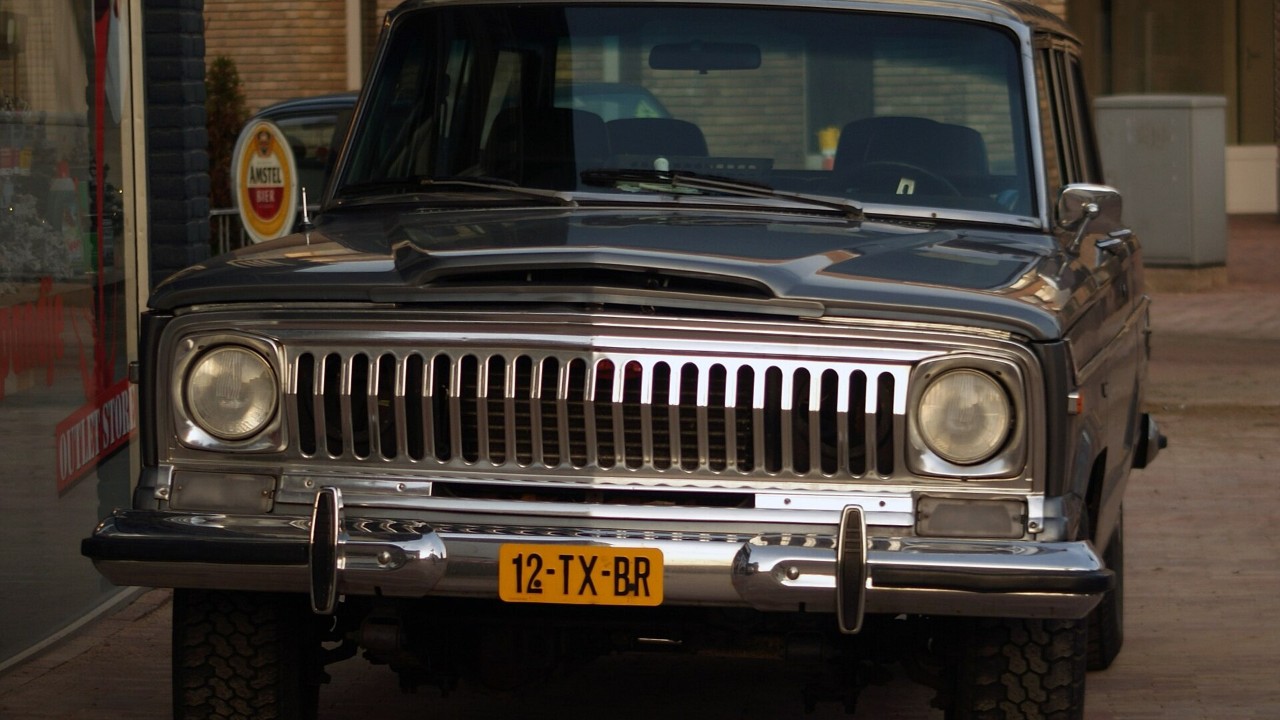
The 1953 Volkswagen Beetle did not simply roll into showrooms as another imported oddity. It arrived at the precise moment when car culture, highway building, and postwar tastes were shifting, and it quietly rewrote the rules for what an everyday car could be. I want to trace how that particular model year, with its mix of old‑world simplicity and new refinements, helped move the Beetle from fringe curiosity to mainstream fixture.
The postwar road boom that set the stage
To understand why the 1953 Volkswagen Beetle caught on, I first look at the roads it was about to drive on. Since the great interstate‑building binge that began in the 1950s, America has been shaped around long‑distance car travel, with highways growing more elaborate, extensive, and congested. Even in the early part of that build‑out, the idea of the open road was turning into a mass pastime, and families were starting to think about cross‑country trips as a normal part of life rather than a rare adventure.
At the same time, the dominant American car was getting larger and more luxurious, which made the Beetle’s compact practicality stand out. From convertibles to well‑made family station wagons, cars were getting bigger, higher‑tech, and more luxurious, a trend that unfolded alongside a major expansion in U.S. highway opportunities, as Incre describes. Against that backdrop of chrome and tailfins, a small, efficient car that promised low running costs and easy maneuvering on crowded new roads had a very specific appeal, especially to younger or more budget‑conscious drivers.
From Nazi project to American “people’s car”
The Beetle’s path to mainstream acceptance was never guaranteed, and I think its political baggage makes its success even more striking. Despite any lingering Nazi associations, postwar America fell hard for the resuscitated Beetle, turning it into a symbol of freedom and individuality that defied the car’s fascist roots. That transformation required not just time and distance from the war, but a deliberate reframing of what the car represented to buyers who had no interest in its origins.
Part of that reframing involved contrasting the Beetle with the giants of American industry that had once inspired its creators. According to Hagerty, Henry Ford, who Hitler had admired greatly, represented the earlier ideal of mass production that the Volkswagen project tried to emulate. Yet by the time the Beetle reached American shores in meaningful numbers, it was no longer a state propaganda tool. It was a cheap, durable import that promised to outlast the latest styling fad, and that promise resonated with buyers who were more interested in value than ideology.
Why 1953 was a turning point in the Beetle’s design
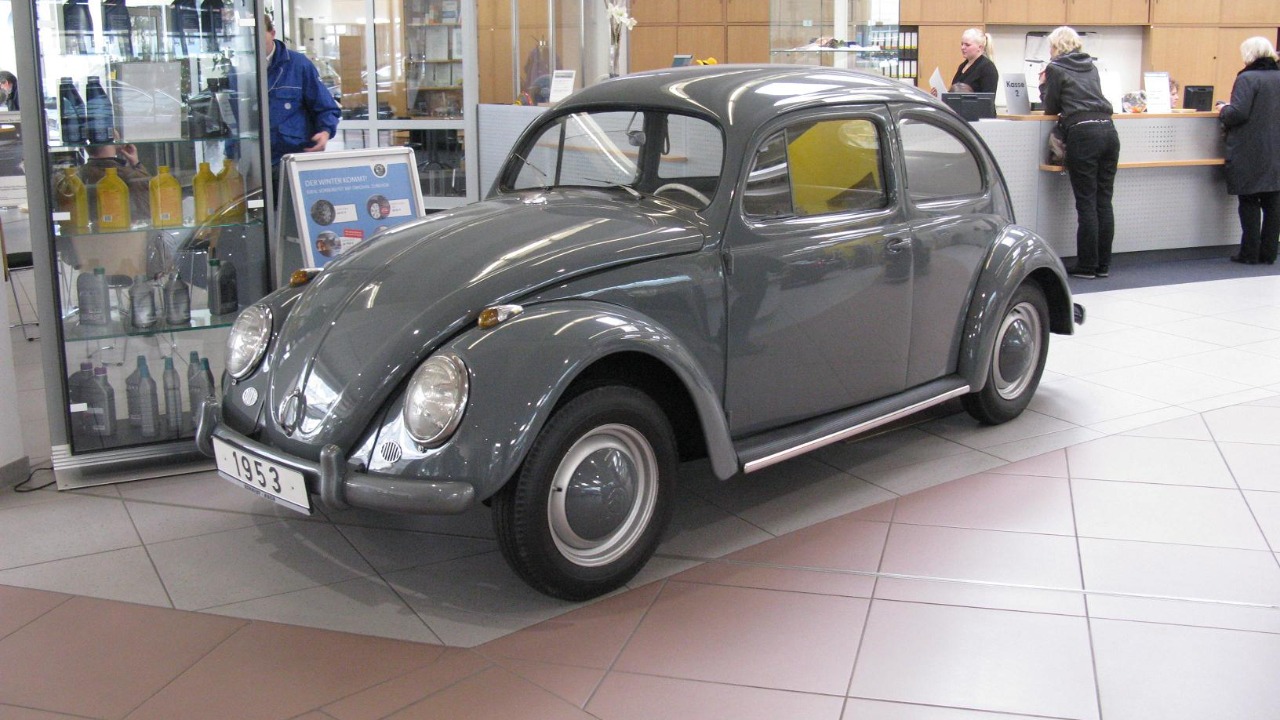
When I focus on 1953 specifically, the story becomes one of quiet but meaningful evolution. That year saw major changes to the Beetle’s design, with the last split‑window Beetle produced in March of 1953 and the first oval‑window cars offering an increased 23% area to previous editions, as Beetle historians note. That single change made the cabin feel less cramped and more modern without sacrificing the car’s iconic silhouette, a subtle shift that mattered to drivers who were starting to expect better visibility and comfort on longer trips.
The transition was not instantaneous, and the in‑between cars have become legends in their own right. During the summer of 1952, During the changeover at Wolfsburg, production lines shifted from the split‑window to the oval‑window, and The Zwitter was assembled with a split rear window but a dashboard presaging that of the oval window cars. Those Zwitters are now considered the rarest example of the Volkswagen Beetle, produced for less than six months from 1952 to the beginning of 1953, a detail that the Maine Classic Car Museum highlights when it shows off its 1953 Zwitters. In other words, 1953 sat right at the hinge between the Beetle’s earliest, more utilitarian form and the more refined version that would conquer global markets.
Engineering refinement and the “people’s car” promise
Under the skin, the 1953 Beetle benefited from a steady stream of incremental improvements that made it feel more polished without losing its simplicity. The flood of improvements continued in this year as well, and for the most part they were felt more than they showed, from better drivability to more robust components and a growing network of replacement parts around the world, as For the engineers behind the car emphasized. That kind of invisible refinement is exactly what turns a quirky import into a dependable daily driver, and it helped the Beetle live up to its reputation as a car that could take abuse and keep going.
In the broader European context, the Beetle was almost alone in offering this mix of sturdiness and affordability at scale. At that time, it (Renault Dauphine) was only the Renault Dauphine rival that came close, yet it was the Volkswagen that offered the masses a car that was well constructed, well engineered, durable, and reliable, hence its success worldwide. That reputation for durability was not just marketing spin; it was reinforced every time a Beetle started on a cold morning or survived a rough road that would have rattled a flimsier car apart.
How a quirky import found its American audience
When the Beetle first arrived in the United States, it did not immediately dominate the sales charts, and I think that slow burn is part of what made its eventual mainstream status so durable. In 1953, sales of Volkswagen’s in the United States hovered at around 2,000 units. However, thanks to concerted marketing and word‑of‑mouth about low running costs, that modest foothold grew into a phenomenon. While the vehicle received a lukewarm reception in Great Britain, a large number of Americans (the United States) flocked to the Beetle, which proved adaptable to numerous contexts, from college campuses to suburban driveways, as While the historical record shows.
Part of that adaptability came from the way the car fit into a changing culture of leisure. The car itself helped in other ways: it was small, and got more than twice the gas mileage of the average American car, which made it ideal for the emerging leisure activity, the road trip, that was taking hold among American families. I see that combination of thrift and adventure as central to the Beetle’s charm: it let people participate in the new highway culture without paying V8 money at the pump, and it turned the idea of “cheap transportation” into something aspirational rather than embarrassing.
Design cousins, ad wizards, and the culture shift
The Beetle did not evolve in isolation, and I find it helpful to look at its relatives and rivals to see why 1953 mattered. The 1953 model year marked a pivotal moment in the evolution of the 356, bringing refinements that further enhanced its Porsche character and gave the car a cleaner, more modern appearance, as 356 documentation notes. That Porsche connection matters because it shows how the same basic engineering philosophy that underpinned the Beetle was being refined at the sports‑car end of the spectrum, giving the humble people’s car a kind of reflected prestige.
Marketing then took that engineering base and turned it into a cultural statement. In 1959, the New York‑based advertising agency Doyle Dane Bernbach (DDB) launched the now‑iconic campaign that focused on the Beetle’s simplicity, efficiency, and practicality, as New York creatives recast the car. Instead of apologizing for its size, Volkswagen reframed it as practical, reliable, and efficient, and Instead, Volkswagen leaned into the Beetle’s quirks, turning a supposedly flawed product into a global icon. That shift in tone built directly on the groundwork laid by the 1953 car, which had already proven that a small, honest machine could thrive in a world obsessed with bigger and flashier.
The 1953 Beetle’s lasting reputation on the road
Even decades later, enthusiasts still single out early‑1950s Beetles for their balance of simplicity and usability, and I see that as a testament to how well the 1953 formula landed. People who had bad experiences with these cars probably had a beat up pile of junk on its last leg, but owners who drove well‑maintained examples talk about how the cars felt solid, predictable, and oddly modern for their age, as one comment on a 1953 Volkswagen Beetle oval window listing put it, noting that People who had bad experiences often started with the wrong car and ending with a cheerful “Anyway, happy motoring,” in the Oct discussion. That kind of lived experience reinforces the idea that the Beetle’s mainstream success was not just about clever ads or low prices, but about how it actually behaved on real roads.
Over time, regulations and technology would move on, and the same qualities that once made the Beetle feel timeless eventually became liabilities. Volkswagen’s cheap car was too expensive to update, and the 1977 Clean Air Act tightened limits on pollutants like nitrogen oxide released on the roads, which made it difficult for the aging design to comply, as According to later regulatory histories. Yet by then, the groundwork laid in 1953 had already done its work: the Beetle was firmly embedded in popular memory as the little car that could, a mainstream presence that had started as a niche import and ended up reshaping how drivers around the world thought about size, efficiency, and character in a car.
More from Fast Lane Only: