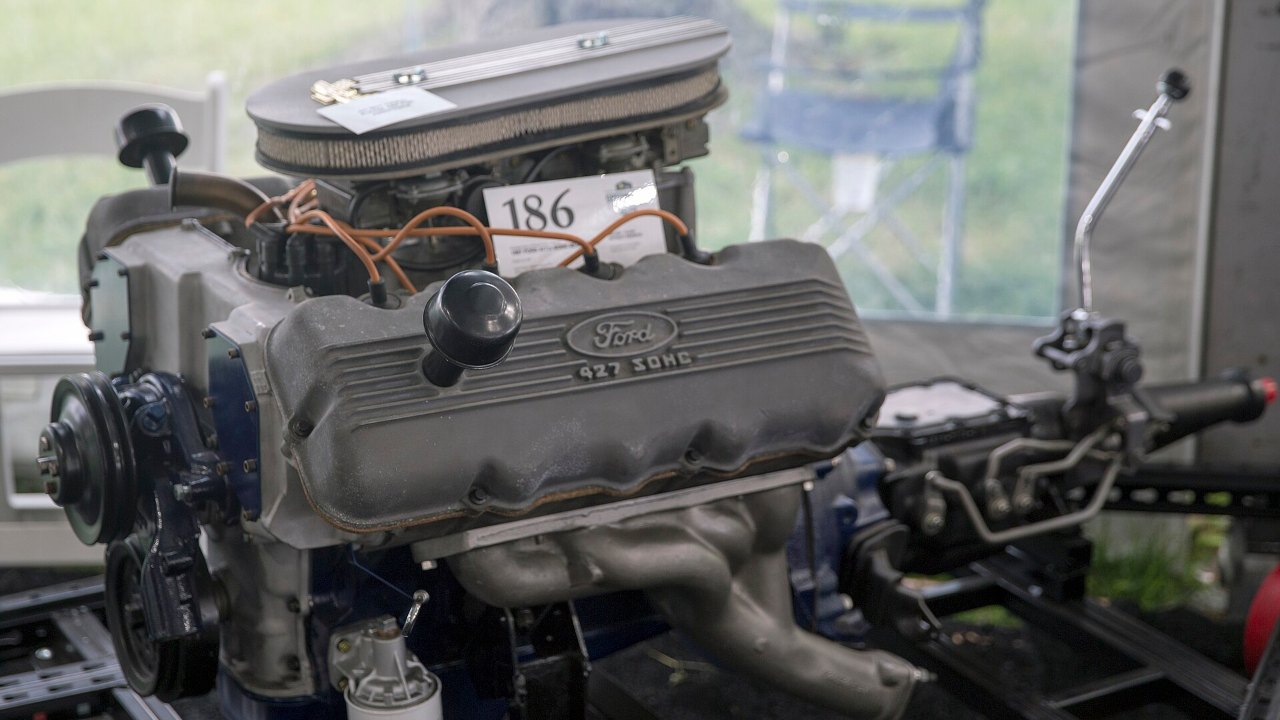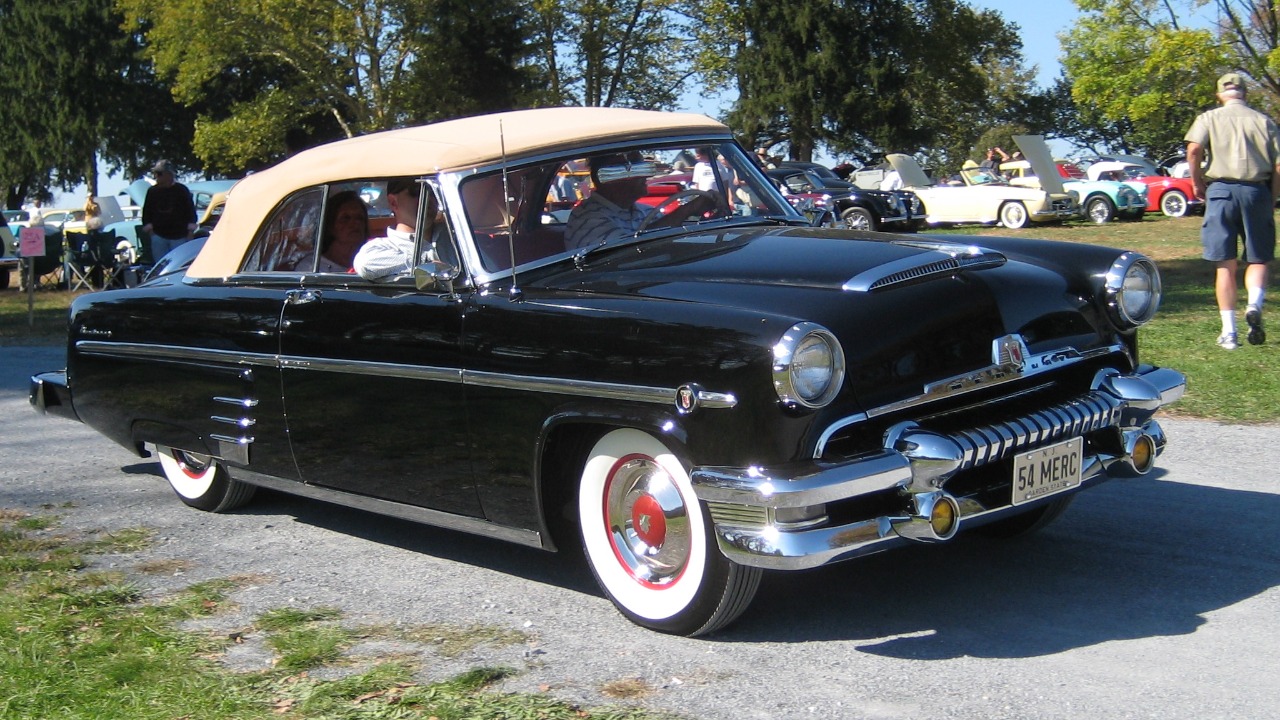
The 1954 Mercury Monterey arrived at a moment when American car buyers were splitting into two camps: those chasing luxury and those chasing value. Instead of picking a side, Mercury built a car that sat confidently in the middle, with styling, power, and pricing that spoke to both. By threading that needle, the Monterey helped define what a mid priced American car could be in the mid 1950s.
When I look back at that model year, I see a car that did more than add a new V8 or a fresh grille. The 1954 Mercury Monterey crystallized Mercury’s role inside the Ford family, separating it from Ford on one side and Lincoln on the other, and it did it with a mix of engineering and image that still feels remarkably calculated.
Mercury’s mid priced mission comes into focus
Mercury had been created by Ford to fill the gap between the company’s namesake brand and its luxury arm, Lincoln, but that mission was not always sharply defined. By the early 1950s, the market for so called “step up” cars was crowded, and Mercury needed a clear identity that justified a higher price than a Ford without stepping on Lincoln’s territory. The 1954 Mercury Monterey became the clearest expression of that strategy, presenting itself as a full size car with more presence and polish than a basic family sedan, yet still within reach of middle class buyers.
The Monterey name itself already carried weight by 1954, since The Mercury Monterey had been used on a series of full size cars that Mercury marketed as convertibles, hardtops, and station wagons. That lineup signaled that Mercury was not chasing bare bones transportation, it was selling body styles and trim levels that felt aspirational. In 1954, that positioning matured, with the Monterey serving as the brand’s showcase for comfort and style while still clearly belonging to the Mercury side of the showroom rather than the more rarefied Lincoln corner.
“A new kind of power” and what it really meant
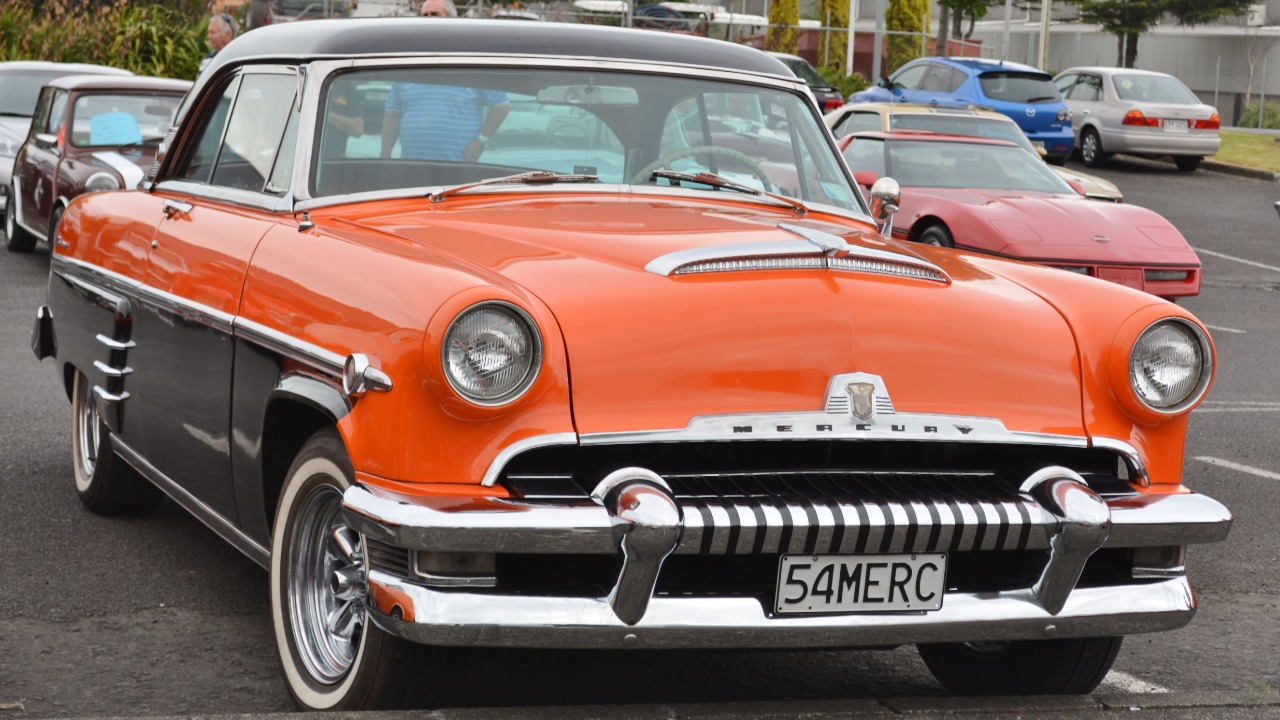
When Mercury rolled out its new V8 for 1954, the company wrapped it in the slogan “a new kind of power,” and on the surface that sounded like a straightforward engine pitch. Underneath, it was a statement about where Mercury wanted to sit in the market. The promise of fresh power gave the Monterey the performance credibility that buyers expected from a mid priced car, something that felt a step above the typical Ford without demanding the premium associated with Lincoln or other luxury badges.
That phrase also hinted at a broader transformation inside the brand. The new V8 was promoted as a defining feature of the 1954 Mercury lineup, and the company used “a new kind of power” to suggest that it was reshaping what buyers could expect in the mid priced field. By tying that message directly to the Monterey, Mercury turned the car into a rolling advertisement for its engineering ambitions, using the engine as proof that the division could deliver more than just extra chrome compared with a Ford, as detailed in coverage of Mercury and its push into that segment.
Design that walked the line between Ford and Lincoln
Power alone would not have been enough to carve out a distinct space, so the 1954 Mercury Monterey leaned heavily on design to signal its status. The car shared broad proportions with other full size offerings of the era, but the details were carefully tuned. The Monterey’s sheet metal, trim, and interior appointments were more elaborate than a typical Ford, yet they stopped short of the opulence that defined Lincoln. That balance let buyers feel they were stepping up without crossing into a world of chauffeur driven formality.
In practice, that meant the Monterey could appeal to families trading up from a basic sedan as well as professionals who wanted something more substantial without the cost or image of a full luxury car. The styling cues, from the grille to the roofline, communicated that dual mission. The car looked substantial enough to hold its own in a driveway next to higher priced machinery, but it still felt approachable, a deliberate middle path that matched Mercury’s broader positioning between Ford and Lincoln.
Body styles and versatility as a market tool
Another way the 1954 Mercury Monterey split the market was through sheer versatility. By offering the Monterey as a full size platform in multiple body styles, Mercury could speak to different kinds of buyers without fragmenting its identity. A family might gravitate toward a station wagon, while someone chasing a bit of flair could pick a hardtop or convertible, yet all of them were buying into the same mid priced promise. That range of choices made the Monterey a flexible answer to a wide set of needs.
Because the Monterey nameplate already covered convertibles, hardtops, and station wagons, Mercury could use it as a unifying banner for customers who wanted something more than a basic sedan but did not want to jump all the way to Lincoln. Each body style carried the same core attributes of size, comfort, and image, so the Monterey became less a single model and more a family of cars that collectively defined Mercury’s place in the market. That breadth helped the division hold onto buyers who might otherwise have drifted either down to Ford for price or up to Lincoln for prestige.
Why the 1954 Monterey still matters in hindsight
Looking back, I see the 1954 Mercury Monterey as a case study in how a brand can use one model year to clarify its entire mission. By pairing a heavily promoted new V8 with styling and body choices that sat squarely between mass market and luxury, Mercury managed to speak to two audiences at once. The car reassured practical buyers that they were getting full size space and solid engineering, while also signaling to status conscious drivers that they were stepping into something more refined than a basic Ford.
That balancing act is what made the Monterey such an effective market splitter. It did not chase extremes, it occupied the middle with confidence, using power, design, and versatility to justify its place between Ford and Lincoln. In a landscape where brands still struggle to define their tiers and trim ladders, the 1954 Mercury Monterey stands as an early, remarkably clear example of how to build a car that lives comfortably in the space between.