
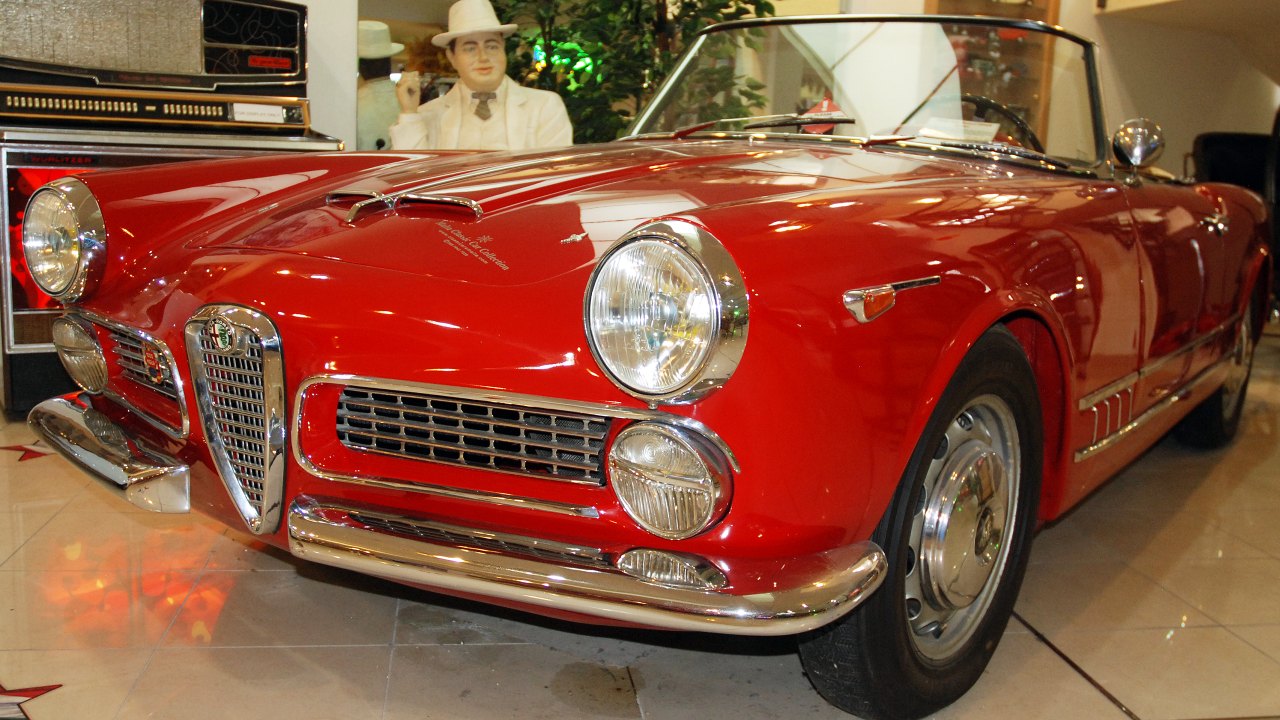
The 1959 Alfa Romeo 2000 Spider marked a turning point for Alfa, shifting the brand from small, eager sports cars toward a more mature, grand-touring identity. It kept the company’s sporting character intact, but wrapped it in a calmer chassis, more space, and a distinctly upscale presence that previewed how Italian performance could coexist with comfort.
By pairing Touring coachwork with a larger engine and more refined road manners, the 2000 Spider showed that Alfa could appeal to drivers who wanted La Dolce Vita as much as lap times. It was not the company’s most agile roadster, yet it quietly reset expectations for what an Alfa Spider could be.
From 1900 workhorse to 2000 flagship
Alfa introduced the 2000 as the replacement for the long-serving 1900, positioning it as a new flagship rather than another niche sports car. They based the 2000 Berlina and Spider on the late 1900 floorpan, but the intent was clearly to move upmarket, with more space, more power, and a more relaxed character than the earlier sedan and coupes that had built Alfa’s postwar reputation. In period, the 2000’s larger displacement and higher gearing signaled that the company was thinking about sustained high-speed travel and comfort, not just back-road sprints.
This shift contrasted sharply with the smaller Alfa Romeo Giulietta family, which had been a major departure from Alfa Romeo’s traditional business because it was small, lightweight, and aimed at broader production. The Alfa Romeo Giuliette The Alfa Romeo Giulietta line, including the Alfa Romeo Giulietta Spider Alfa Romeo, brought the brand into a new volume era, but the 2000 Spider sat above that, as a more expensive and more mature expression of the marque. Where the Giulietta Spider chased agility and affordability, the 2000 Spider was conceived as a grander machine that could carry two people and their luggage across a continent in comfort.
Touring coachwork and La Dolce Vita styling
The 1959 Alfa Romeo 2000 Spider by Touring Few distilled the visual language of La Dolce Vita into metal, with long, flowing lines and a low, poised stance that looked at home on Italian coastal roads. Built by Touring, the Spider combined a wide grille, clean flanks, and a subtle rear deck that read less like a stripped-out racer and more like a sophisticated open GT. Contemporary observers have noted that few cars sum up La Dolce Vita like an Alfa Spider and this one comes with all the glamour implied by that phrase, especially when finished in bright colors and set against Mediterranean light.
That elegance was not accidental. The Alfa Romeo 2000 Touring Spider, introduced in 1958, was described as a classic Italian roadster known for its elegant lines and advanced engineering for the time. Vehicle Overview The Alfa Romeo design brief clearly prioritized proportion and presence, giving the Touring Spider a more formal, almost aristocratic look compared with the pert Giulietta Spider. In an era when Italian coachbuilders were still shaping the identities of brands, the 2000 Spider’s bodywork aligned Alfa with the same culture of handcrafted style that surrounded contemporary Italian grand tourers from other marques.
Engineering for comfort as well as speed
Beneath the graceful body, the 2000 Spider’s chassis signaled a deliberate move toward refinement. Front wheel suspension was independent, with double wishbones, while the rear used a solid axle, and on all four wheels there were coil springs. This layout, combined with careful tuning, gave the car a supple ride that was more forgiving on poor surfaces than a pure sports setup. Period assessments noted that the suspension provided a supple ride and competent handling, a balance that made the Spider feel composed rather than edgy at speed.
The practical side of the package reinforced that grand-touring brief. The large trunk offered plenty of luggage room plus a useful space behind the seats, so the car could credibly serve as a holiday companion rather than a weekend toy. Contemporary reporting on the 2000 highlighted that, despite its comfort and space, sales did not soar, suggesting that the market was still catching up to the idea of an Alfa that prioritized maturity over raw excitement. Even so, the engineering choices, from the independent Front suspension to the generous storage, showed Alfa quietly broadening its definition of performance.

Positioned between Giulietta agility and luxury GTs
To understand how the 2000 Spider matured the brand, it helps to see where it sat in Alfa’s own lineup. The 1959 Alfa Romeo Giuliette The Alfa Romeo Giulietta range was small, lightweight, and aimed at bringing Alfa Romeo to a wider audience, a major departure from the big powerful sports cars, touring cars and luxury sedans for the Italian elite that had established Alfa’s reputation. The Giulietta Spider in particular was compact and lively, a car that made its name on nimbleness rather than long-distance comfort. By contrast, the 2000 Spider was physically larger, more softly sprung, and more expensive, aimed at buyers who wanted a more relaxed, prestigious open car.
In the broader Italian context, the 2000 Spider also echoed trends seen among higher-end grand tourers. Italian coachbuilders were catering to special customers who favored personalized body styles handcrafted by the finest Italian specialists, often ensuring that no two cars were the same. While the 2000 Spider was not as rarefied as a bespoke 250 GT, its Touring body and upscale positioning placed Alfa closer to that world of tailored GTs than the Giulietta ever could. It bridged the gap between the brand’s traditional big touring cars and its new small sports models, signaling that Alfa could operate comfortably in both spaces.
Legacy: a quieter but crucial evolution
Commercially, the 2000 Spider never matched the popularity of the Giulietta Spider or the later, more famous Alfa Spider generations, and contemporary accounts acknowledge that sales did not soar. Yet its influence on Alfa’s self-image was significant. By proving that an Alfa Spider could offer a supple ride, competent handling, and real luggage capacity, it laid groundwork for later models that leaned into the grand-touring side of the brand. The car’s combination of elegant Touring coachwork, advanced-for-its-time suspension, and practical packaging showed that maturity did not have to mean abandoning performance, only reframing it.
Today, when a 1959 Alfa Romeo 2000 Spider by Touring Few appears in a curated nine-Alfa garage, it is often celebrated as the car that captures La Dolce Vita in a more relaxed, grown-up key. The Alfa Romeo 2000 Touring Spider is remembered as a classic Italian roadster whose elegant lines and engineering foresight helped steer Alfa toward a broader, more cosmopolitan audience. In that sense, the 2000 Spider did not just replace the 1900, it helped the company grow up, proving that the marque could evolve from building cars for the Italian elite and enthusiastic drivers into crafting machines that made style, comfort, and speed feel like parts of the same experience.
More from Fast Lane Only:



Leave a Reply