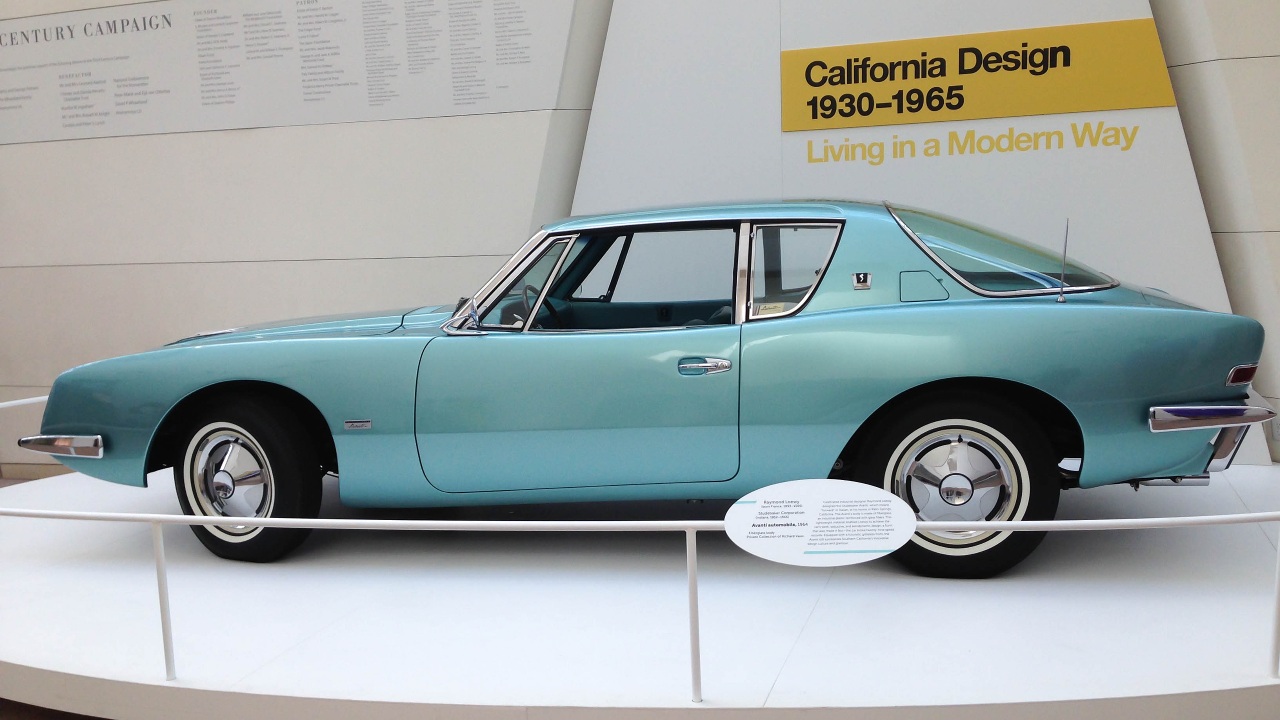
The 1964 Studebaker Avanti arrived as a last, audacious attempt to drag an old-line automaker into a future it could no longer afford. With radical styling, fiberglass construction, and genuine high speed credentials, it was engineered to signal that Studebaker still belonged in the performance conversation even as the company’s finances crumbled. The car did not save the brand, but it left a legacy that outlived its maker and still shapes how enthusiasts talk about American performance design.
A moonshot from a shrinking company
By the early 1960s, Studebaker was running out of time and cash, yet it chose to invest in a halo coupe that could reset its image in a single stroke. The Avanti was conceived as that desperate swing, the kind of all‑in product gamble that automakers sometimes make when the balance sheet is already tilting toward bankruptcy, a dynamic that later commentators have described as a final scream from a cornered company. Studebaker needed a car that looked nothing like its conservative sedans, and it needed it quickly, which is why the Avanti rode on an existing chassis and mechanical package even as its body and interior tried to leap ahead of Detroit convention.
That tension between old bones and new ambition defined the project. Underneath, the Avanti used a conventional Studebaker frame and a V8 that had been in service for years, but the company wrapped those parts in a body that was meant to look like tomorrow and marketed the result as a technological showcase. Contemporary and later coverage of the car’s development has emphasized how much pressure the program carried inside Studebaker, with the Avanti positioned as the model that might keep dealers interested and buyers curious long enough for the rest of the lineup to catch up. When Studebaker ceased operations by 1964, that strategy had clearly failed, yet the Avanti itself was already being recognized as a brilliant piece of American industrial design history that deserved a life beyond the company that created it.
Design that skipped a decade
The Avanti’s styling still looks like it arrived from a different decade than the early 1960s, which was exactly the point. Instead of the long hood, formal roof, and chrome‑heavy face that defined many domestic coupes, the Avanti presented a smooth, grille‑less nose, a sharply tapered tail, and a cabin that sat unusually upright on the chassis. One detailed critique notes that, despite having a flatter roof than the Hawk, the Avanti was unusually tall for a contemporary sporty coupe, almost 54 inches high, which gave it a slightly perched stance compared with lower, more traditional rivals. That height, combined with the car’s narrow greenhouse and sculpted sides, produced a profile that some buyers found futuristic and others simply found odd.
Inside, Studebaker tried to match the exterior drama with an aircraft‑inspired dashboard and more upscale door trim than its other models, signaling that this was meant to be a premium, almost European‑flavored grand tourer rather than a simple two‑door variant of a family car. Later analysis has argued that the Avanti interior improved upon Studebaker’s earlier sporty offerings by giving the driver a more focused cockpit and better integrated controls, even if some ergonomics reflected the compromises of adapting existing hardware. The overall effect was a car that looked and felt like a design study that had somehow escaped the auto show stand and made it into showrooms, a quality that still helps explain why collectors see it as a standout piece of mid‑century American design.
Fiberglass, speed, and the “fastest production car” claim
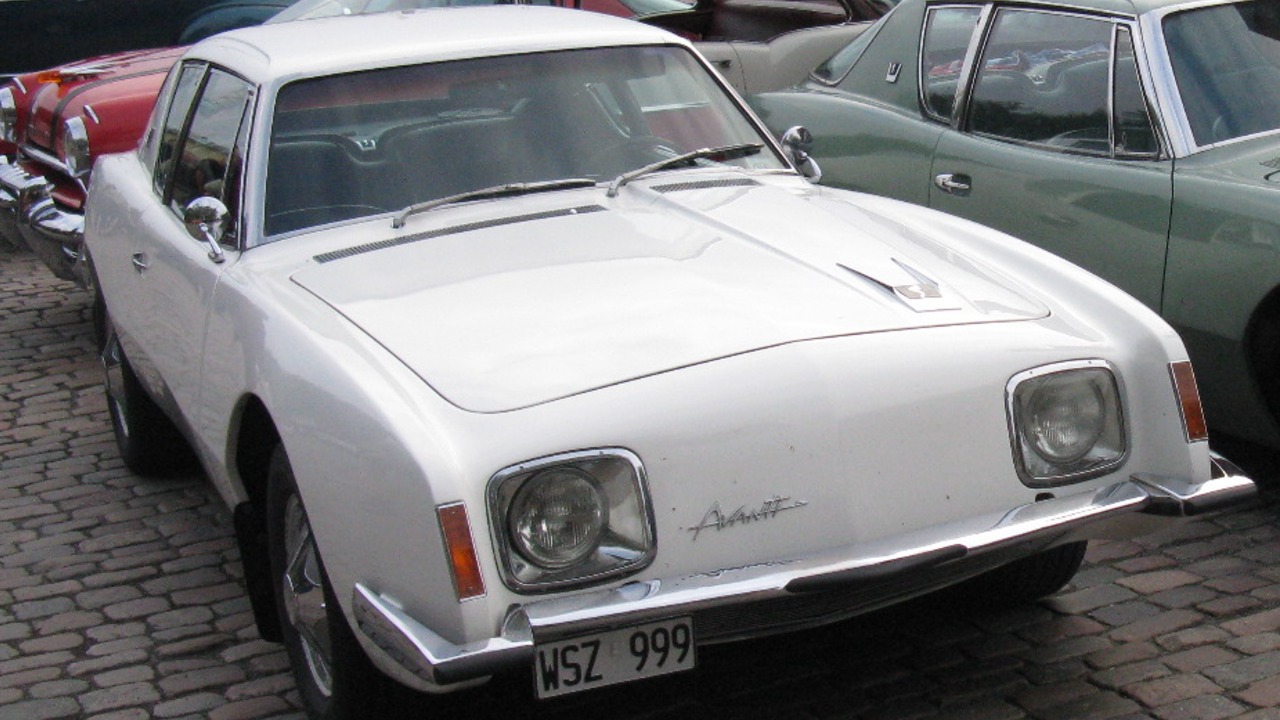
If the Avanti’s shape looked like the future, its construction tried to act like it. Instead of stamping the body from steel, Studebaker used fiberglass panels, a choice that reduced weight and allowed the complex curves of the nose and tail to be molded without the cost of new metal dies. Later descriptions of the car’s engineering emphasize that its powertrain was based on Studebaker’s existing V8, but that its entire body was made of fiberglass instead of steel, which helped the coupe achieve performance that rivaled or exceeded early muscle cars. The unusual shape also required careful molding techniques, and the lack of a traditional grille across the nose gave the Avanti a cleaner aerodynamic face, with cooling air routed through lower openings rather than a chrome‑framed mouth.
Studebaker leaned hard into the performance story. Called “the fastest production car in the world” upon its introduction, a modified Avanti reached over 170 m, 270 km at the Bonneville Salt Flats, a figure that the company used aggressively in its marketing. Those Bonneville Records Cemented Its Legacy in the performance world, even if the exact relationship between the record‑setting cars and showroom models was more complicated than the advertising suggested. For Studebaker, the real marketing gold would come from being able to say that a customer could walk into a dealership and buy a car that shared its basic engine and body with the machines that had just set official speed marks on the salt.
The R2 and the muscle car arms race
The most dramatic expression of that performance push was the supercharged R2 version of the Avanti. In this configuration, the Studebaker V8 received a Paxton supercharger that significantly increased output, turning the sleek coupe into a genuine high speed machine. Period and retrospective tests have described the R2 as a muscle car in everything but name, with one detailed look at a 1964 Studebaker Avanti Paxton Supercharged R2 Muscle Car highlighting how the blower transformed what was otherwise a fairly traditional American V8 into something that could run with, and sometimes ahead of, better known performance icons. It was built in 1963 and it has a supercharged V8, details that underline how far Studebaker was willing to push its existing hardware to stay relevant.
Contemporary enthusiasts often point out that the Avanti could outrun some early muscle cars, and later analysis has framed it as the car that was faster than a muscle car in the 1960s. Its powertrain was based on Studebaker’s established engine family, but the combination of forced induction and fiberglass bodywork gave it a power‑to‑weight ratio that embarrassed heavier steel‑bodied competitors. At Bonneville, those advantages translated into the headline 170 m, 270 km figure, while on the street they meant that an Avanti driver could legitimately claim to own one of the quickest American cars of the era. That performance credibility is a major reason why Avanti owners today still argue that their car deserves a place on any serious bucket list of classic performance machines.
A future that arrived too early
For all its speed and style, the Avanti could not reverse Studebaker’s financial slide, and that failure has fueled decades of debate about whether the car was a visionary leap or a fatal distraction. Some analysts have asked outright whether the 1963‑64 Studebaker Avanti was a fatal mistake, arguing that the company poured scarce resources into a niche halo coupe instead of shoring up its bread‑and‑butter models. They point to the car’s unusual proportions, including that almost 54 inch height, and its polarizing styling as factors that limited its appeal at a moment when Studebaker needed volume more than it needed headlines. From this perspective, the Avanti tried to outrun the future by betting that a single spectacular product could overcome structural business problems that were already too deep.
Yet the Avanti’s story did not end when Studebaker closed its doors. The design and tooling were picked up and evolved into the Avanti II, a continuation model that kept the basic shape alive with updated mechanicals. Its unusual shape required the body to be molded from fiberglass panels, just as before, and since the Avanti lacked a grille across its nose, the later versions preserved that distinctive, almost grille‑less face that had set the original apart. The fact that independent builders could keep the Avanti concept in production long after Studebaker disappeared underscores how strong the underlying design was, even if the original business case had been flawed.
Legacy of a near miss
Looking back, I see the 1964 Avanti as a car that anticipated several trends that would define later decades of performance design, but did so from within a company that lacked the resources to capitalize on them. The use of fiberglass, the emphasis on aerodynamics, and the pursuit of headline‑grabbing top speed runs all foreshadowed strategies that larger manufacturers would refine and repeat. Enthusiasts who describe the Avanti as a Pony Before the Mustang are not entirely exaggerating, since it offered a personal performance coupe formula before the pony car label took hold, even if its pricing and positioning kept it from becoming a mass market phenomenon. Talk to Avanti owners today and they often argue that their car makes a pretty good case for itself as a missed opportunity in American automotive history.
The Avanti also illustrates how a single model can outlast the corporate structures that created it. Studebaker, as a manufacturer, did not survive the decade, but the Avanti name and shape continued in various forms, and the original cars remain highly prized among collectors who value both their design and their connection to a vanished brand. Studebaker ceased operations by 1964, yet in spite of the drama surrounding its gestation and ultimate demise, the Avanti remains a brilliant piece of American industrial design history that still feels oddly contemporary when it appears at a cars and coffee meet. In that sense, the car did manage to outrun the future, not by saving its maker, but by stepping outside its time in a way that still resonates more than sixty years later.
More from Fast Lane Only: