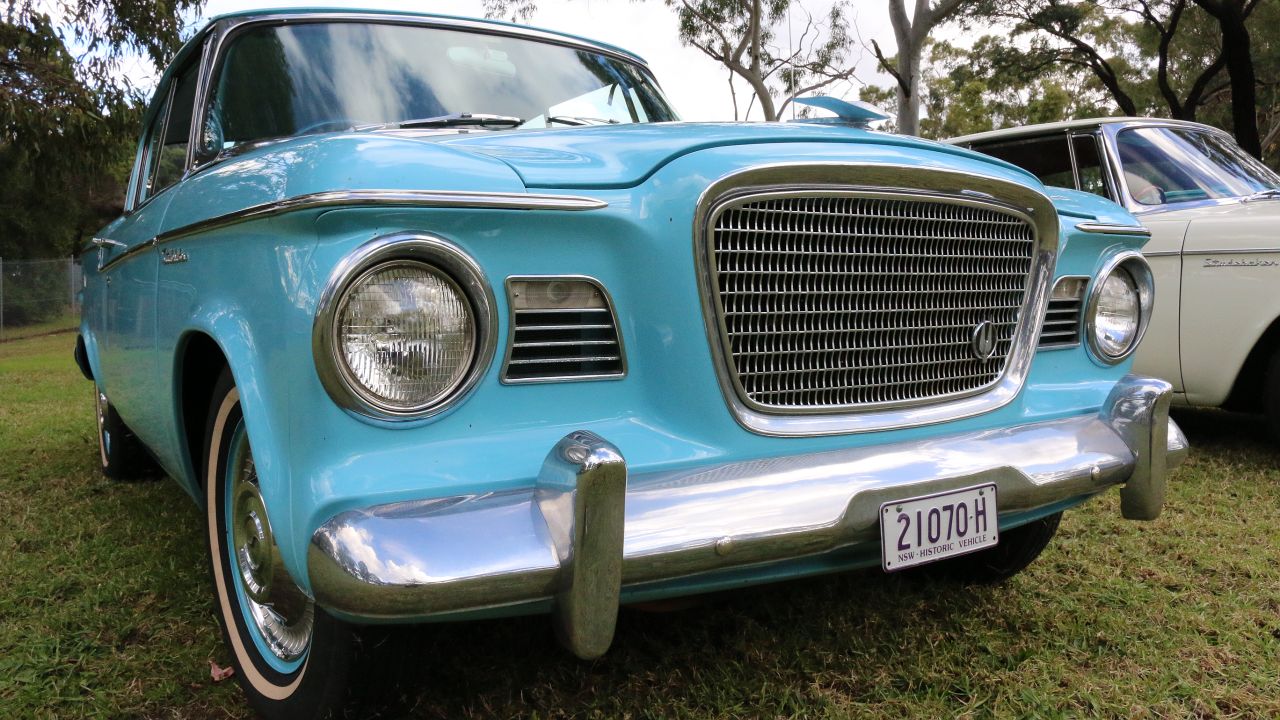
The 1959 Studebaker Lark landed in showrooms at a moment when its maker was running out of both cash and time. Compact on the outside but roomy enough inside for American buyers, it gave Studebaker a short but vital reprieve from years of financial strain and production missteps. I see the Lark not just as a clever small car, but as a last, well timed swing by a company trying to stay in the game.
Studebaker on the brink
By the late 1950s, Studebaker was in trouble that went far beyond a single bad model year. Production problems with the redesigned 1953 models had driven costs up while sales lagged, leaving the company operating at a loss and struggling to keep its factories efficient. Reporting on the company’s history notes that by 1954 Studebaker was already wrestling with the possibility that it might have to abandon United States auto production altogether, a remarkable fall for a firm that had been founded in 1899 and once thrived on wagons and early cars. Those mounting losses set the stage for the desperate search for a new product that could be built cheaply and sold quickly enough to stabilize the books.
The corporate structure around that search was unusually complex. At the time the Lark was conceived, the Studebaker, Packard Corporation was operating under a management contract with Curtiss, Wright Aircraft Co, an arrangement that reflected just how fragile the automaker’s position had become. Instead of pouring money into a clean sheet platform, the company had to find a way to reuse as much existing hardware as possible while still offering something that felt fresh to buyers who were starting to hear about compact cars from Detroit. The Lark emerged from that pressure cooker as a pragmatic answer: a new body on a shortened, prewar Studebaker chassis that could be built with limited investment yet marketed as a modern, right sized alternative.
Designing a compact from old bones
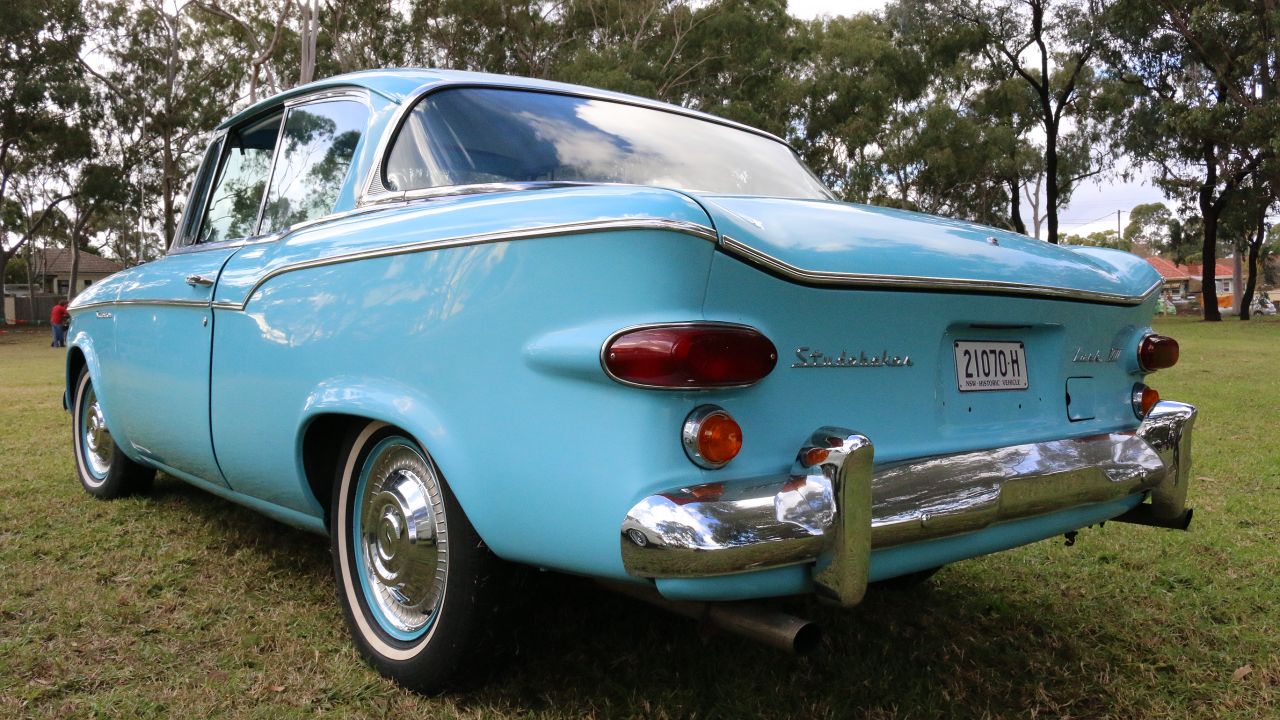
What made the Lark timely was not only that it was small, but that it was small in a way Studebaker could afford. Engineers shortened the company’s existing frame, a design that dated back to prior to World War II, and wrapped it in a clean, upright body that maximized interior space. Instead of chasing the long, low, tailfinned look that dominated mid decade styling, the Lark’s proportions emphasized practicality, with a tall greenhouse and short overhangs that made it easy to park yet comfortable for families. The decision to reuse the older chassis kept tooling costs down and let Studebaker move from concept to production quickly, which was essential for a company already under financial strain.
The styling story around the Lark’s front end has become a minor legend in design circles. Commentators have long noted how much the 1959 Lark’s face resembled the later 1960 Valiant, and some have argued that the resemblance was not entirely coincidental. A detailed design history recounts how a Studebaker historian dug into the development timelines and correspondence, suggesting that ideas and sketches may have circulated in ways that blurred the line between inspiration and imitation. Whether or not one accepts the strongest version of that claim, the episode underlines how aggressively Studebaker’s team pushed to create a compact that looked contemporary, even if it meant treading close to the themes that would soon appear on rival compacts.
Pricing for survival in a Detroit world
Studebaker had already experimented with bare bones value as a survival tactic before the Lark arrived. With the Scotsman, the company stripped its full size car down to essentials and managed to undercut Ford and Chevrolet by some $100, a meaningful gap in a market where buyers watched every dollar. Only a few thousand were originally envisioned, yet the Scotsman proved that there was room for a smaller, cheaper Studebaker that did not try to match the Big Three on size or flash. That lesson fed directly into the Lark program, which aimed to offer compact dimensions and sensible pricing without feeling quite as spartan as the earlier budget model.
The Lark series introduced in 1959 provided Studebaker a brief respite from the financial troubles it had been experiencing since the early 1950s, and pricing was central to that turnaround. By leveraging existing mechanical components and a shorter wheelbase, the company could keep production costs under control while positioning the Lark as an economical choice for buyers who did not want a full size sedan. Contemporary accounts describe how the car’s combination of modest sticker price, decent performance, and usable space attracted customers who might otherwise have defaulted to a six cylinder Ford or Chevrolet. In that sense, the Lark arrived just ahead of the compact wave from Detroit, giving Studebaker a short window in which it could claim to be the established name in small American cars.
Dealer networks, myths, and market reach
Even a well timed product cannot succeed without a way to reach customers, and Studebaker’s dealer network had been eroding as its financial problems deepened. Enthusiast discussions have preserved a revealing thread about how some General Motors aligned retailers reportedly added a Stude franchise on the side so they could sell the compacts, a move that may have helped the Lark reach buyers in towns where the traditional Studebaker presence had faded. One participant in that conversation speculated that GM itself might have discouraged such dual arrangements, but the very idea that dealers were willing to juggle brands underscores how much interest there was in a credible compact at the end of the 1950s.
Those same discussions also highlight how myths grow up around a car that arrives at a turning point. Owners and historians have debated whether the Lark’s early sales were driven more by its novelty as a compact or by the loyalty of long time Studebaker customers who wanted to give the company one more chance. What is clear from the available reporting is that The Lark gave Studebaker a product that dealers could rally around, something new to put in the showroom window that did not require apologizing for outdated styling or thirsty engines. In a market where the Big Three controlled most advertising and distribution, that kind of focused, distinctive offering was one of the few levers an independent could still pull.
The Lark’s brief reprieve and lasting legacy
In financial terms, the Lark did exactly what Studebaker needed in the short run. The Lark series introduced in 1959 provided Studebaker a brief respite from the financial troubles it had been experiencing since the early 1950s, stabilizing production and bringing new customers into showrooms. Used car listings and auction descriptions today still emphasize how the compact line bought the company time, even if it could not reverse deeper structural problems like high labor costs and an aging plant. For a few model years, the Lark’s sales volumes and relatively low development costs gave management a plausible story that the company could adapt to a changing market.
That reprieve, however, did not last. Historical overviews of Studebaker’s final years note that the same pressures that had forced the company into a management contract with Curtiss, Wright Aircraft Co never fully went away, and by the mid 1960s the firm ultimately announced plans to abandon U.S. auto production. In that context, the Lark looks like a well judged but ultimately temporary solution, a compact that arrived at exactly the right moment to show what an independent could still do with limited resources. When I look at surviving examples, whether a 1959 Studebaker Lark VIII Regal Hardtop coupe or a 1960 Studebaker Lark De Luxe two door sedan, I see more than tidy proportions and clever packaging. I see the last, timely surge of ingenuity from a company that understood its predicament and, for a brief period, found exactly the right car to answer it.
More from Fast Lane Only: