The 1966 Pontiac Star Chief did not shout about performance with stripes or spoilers. It whispered it through a hushed cabin, a long wheelbase, and a big V8 tuned more for effortlessness than drama. In a market obsessed with quarter-mile times, it quietly went after buyers who wanted power they could feel in the seat of their pants but barely hear over the carpet and upholstery.
\That balance of restraint and muscle was not an accident. Pontiac had spent more than a decade moving the Star Chief from the top of its lineup toward a more nuanced role, and by 1966 the car was carefully aimed at drivers who wanted something more dignified than a GTO yet more spirited than a Buick or Oldsmobile. The Star Chief’s final act, renamed as the Star Chief Executive, shows how far the brand was willing to go to court people who valued quiet authority over loud speed.
From prestige flagship to Star Chief Executive
The Star Chief began life in the mid‑1950s as Pontiac’s prestige full‑size, and that early positioning still shaped its character in 1966. When the model was introduced, it sat at the very top of the Pontiac range, a status that signaled comfort and status first, even as the brand’s image grew sportier over time. Reporting on the nameplate’s evolution notes that When the Star arrived in 1954 it was the halo of the line, and that heritage lingered even as Pontiac chased younger buyers.
By the mid‑1960s, Pontiac was reshuffling its full‑size hierarchy, and the Star Chief’s name was caught in that transition. For 1966 the car was officially renamed the Star Chief Executive, a deliberate step toward retiring the old badge while keeping its upscale associations. Internal documentation identified it as Star Chief Executive in Series 256, and brochures made clear that The Star Chief was being eased toward a new identity simply called Executive.
A quiet counterpoint to muscle car bravado
In the late 1960s, corporate buyers and middle managers were expected to drive something conservative, and Pontiac leaned into that reality. Contemporary commentary points out that Well into that era, Buicks and Cadillacs were the default choices for executives, while Pontiacs were more often associated with shift supervisors and senior factory workers. The Star Chief Executive was Pontiac’s attempt to bridge that gap, offering a car that looked respectable in a company parking lot yet still carried the brand’s performance reputation.
That positioning was helped by the way Pontiac framed its full‑size lineup. Marketing material grouped the Star Chief Executive with the Grand Prix, Bonneville and other big cars, but it was priced and trimmed to appeal to buyers who wanted a taste of luxury without the flash. The car’s role as a bridge between the more affordable Catalina and the top‑line Bonneville echoed an earlier debate over Whether the Star had effectively become a deluxe Catalina or a cheaper Bonneville, a question that underscored how carefully Pontiac was threading the needle between value and prestige.
Power in reserve, not on display
Under the hood, the Star Chief Executive delivered the kind of torque that made a heavy sedan feel light on its feet, but it did so without the rowdy soundtrack of a street racer. Pontiac’s full‑size fact sheets list a 389 cubic inch V8 as a core offering, including a CID 2‑Barrel Economy version that was Manual Transmission Only, with Overhead valves and a Cast iron block. That specification was not about drag strip glory, it was about smooth, durable thrust that could move a family and their luggage with minimal fuss.
Surviving cars show how that philosophy played out in the real world. A walk‑around of a Pontiac Star Chief its drivetrain highlights a 66 model running a 389 V8 paired with a Turbo 400 automatic, a combination that delivers strong acceleration without constant shifting or high revs. Another detailed look at a restored example notes that The drivetrain delivers smooth acceleration and relaxed cruising, with drum brakes at the rear that were typical of the era but tuned for progressive, predictable stops rather than abrupt bite.
Cabin calm and understated luxury
Inside, the Star Chief Executive leaned hard into comfort, using materials and details to create a sense of calm that matched its mechanical refinement. Period brochures for the upscale Brougham trim across Pontiac’s big cars talk about plush nylon blend carpeting and sumptuous upholstery, and the Star Chief Executive borrowed that language of softness and quiet. The idea was that you could glide down the highway with the V8 barely audible, cocooned by thick carpets and padded door panels that soaked up road noise.
Surviving interiors reinforce that impression. One well‑preserved sedan shows a classic dash and gauges that gleam with chrome trim, paired with a factory steering wheel on a tilt column that keeps the driving position relaxed, details captured in a close look at a 1966 Pontiac Star. Another video tour emphasizes how black leather ornaments the interior of a largely original car, noting that while it is not heavily optioned, it still delivers a level of luxury that feels a step above a basic family sedan, a point underscored in a June feature on Jun that highlights the car’s preserved trim.
Styling that whispers status
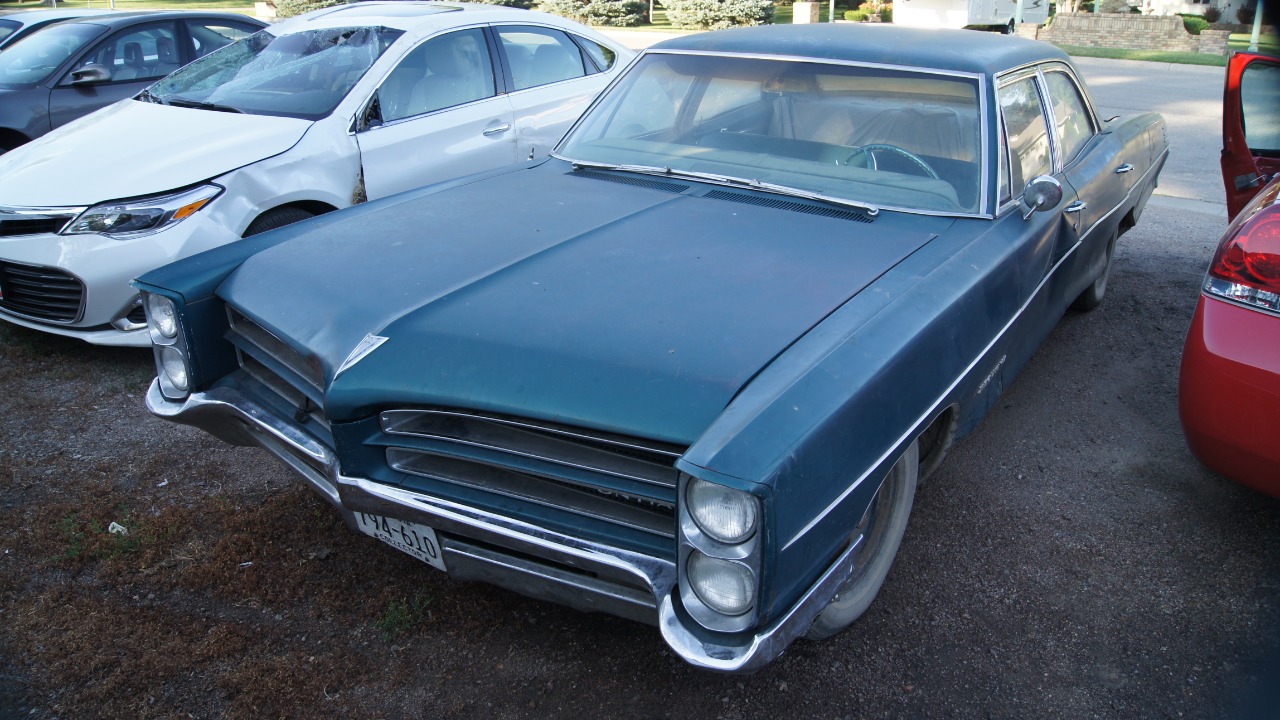
On the outside, the Star Chief Executive balanced Pontiac’s emerging performance image with the conservative tastes of its target buyers. The body shared the brand’s full‑size proportions, but the detailing was more restrained than on the flashier Grand Prix, with clean flanks and measured use of chrome. Enthusiasts who document these cars often point to Its two‑tone paint jobs and chrome‑laden exterior as a true slice of mid‑century Americana, but the overall effect is more dignified than ostentatious, especially on the four‑door hardtop that many executives and managers favored.
That visual restraint was part of a broader design philosophy at Pontiac. The brand had long been known for straight‑eight engines that were Designed and priced for conservative lower middle class buyers, with Pontiacs filling a slot between the most popular Chevrolets and the more expensive Oldsmobiles in the Market. By 1966, that heritage of subtlety had been wrapped in a more modern, squared‑off body, but the underlying message was the same: this was a car for people who wanted to look successful without looking like they were trying too hard.
More from Fast Lane Only: