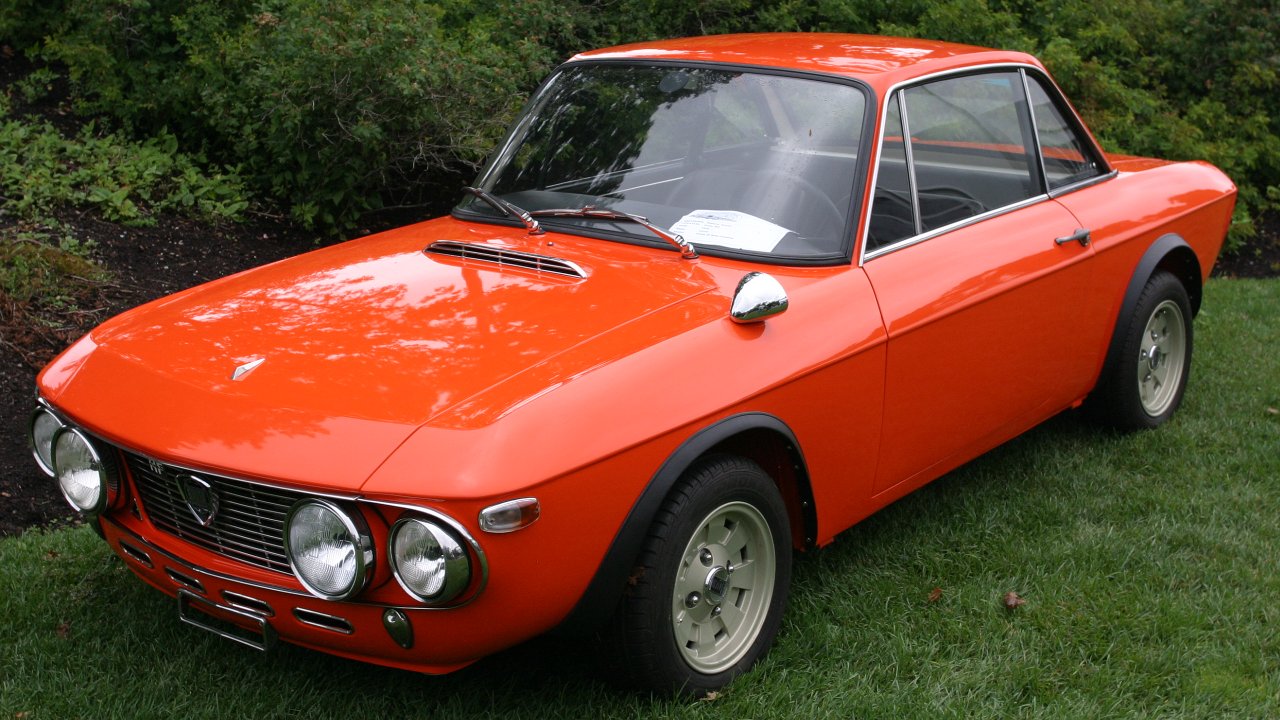
The 1967 Lancia Fulvia HF did not look like a typical world-beating rally car, yet it reshaped the sport with precision engineering, clever weight saving, and relentless consistency. Rather than relying on brute power, it turned agility and reliability into weapons, setting a template that later rally icons would refine but rarely surpass.
By the time the Fulvia HF was finished rewriting the record books, it had shown how a relatively small coupé could dominate rough stages, national championships, and marquee events through meticulous design and focused evolution. Its impact still echoes today, from historic rallies to modern reinterpretations that revisit its rallying roots.
From elegant coupé to HF weapon
The Fulvia began life as a refined front wheel drive coupé, but the HF versions stripped away comfort in pursuit of speed. The Fulvia Coup spawned the HF variants with more spartan trim, no bumpers, aluminium doors and bonnet, and lighter side windows, all in the name of cutting mass and sharpening responses. This transformation turned a stylish road car into a focused competition tool that could withstand the punishment of gravel, snow, and tarmac stages.
Under the skin, the HF treatment paired the lightweight body with more powerful narrow angle V4 engines and uprated suspension, creating a compact package that rewarded committed driving. The Fulvia HF raced as a prototype until it received FIA homologation in 1969, which opened the door to full international rally competition and allowed the factory team to exploit its engineering in the top categories. With the homologated Fulvias, Lancia could field a car that combined road manners with race-bred toughness, a balance that would prove decisive on long, mixed-surface events.
How the 1967 HF carved out a rally advantage
The 1967 Fulvia HF capitalised on its light weight and front wheel drive layout to dominate tight, technical rallies where traction and precision mattered more than outright horsepower. Period accounts describe Le Fulvia as central to Lancia’s rally push, with the model securing the Campionato Internazionale Rall, a key international rally championship that showcased its ability to perform across varied conditions. The HF’s compact dimensions and low polar moment of inertia let drivers place the car accurately on narrow mountain roads, while the driven front axle pulled it out of slippery hairpins with remarkable stability.
That combination of agility and grip translated into a run of national success that underpinned its global reputation. With the exception of 1970, Fulvias won the Ita rally championship every year from the late 1960s into the early 1970s, a streak that highlighted how well the HF package suited the demanding Italian calendar. The same traits that made it unbeatable at home, from its responsive steering to its robust drivetrain, carried over to international events where reliability over long distances often mattered more than peak speed on a single stage.
Signature design details that made it a winner
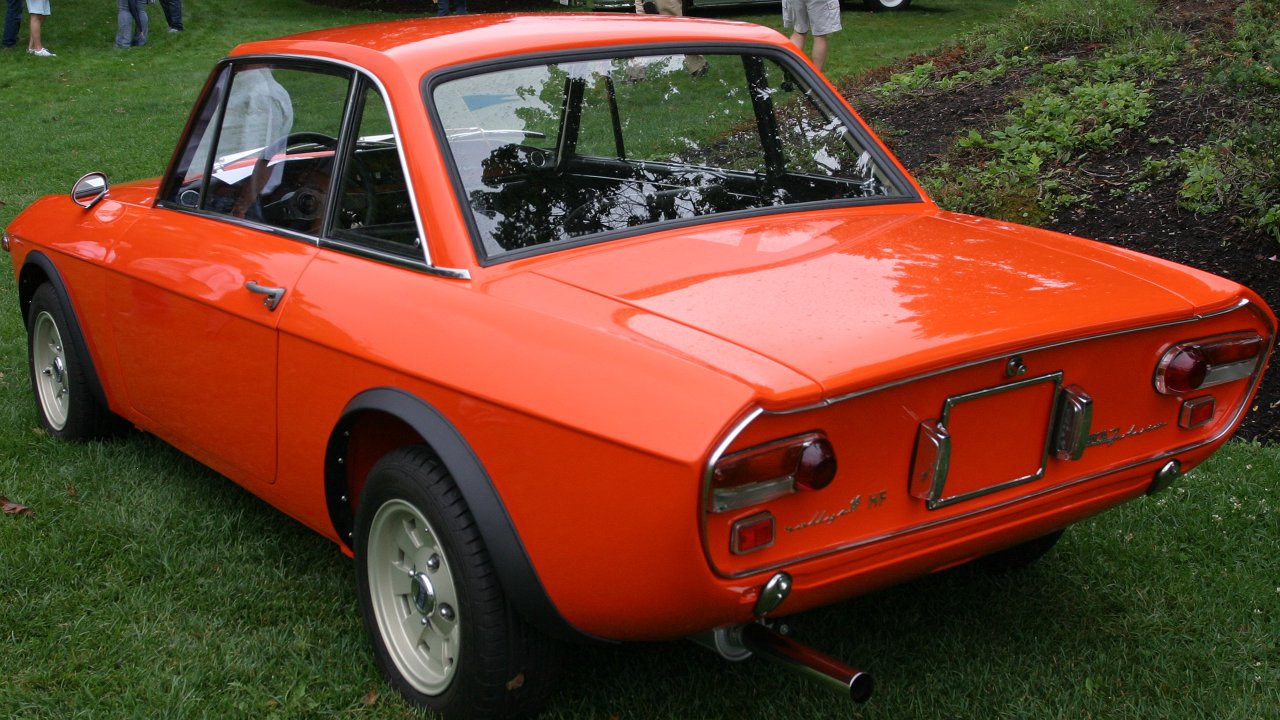
Visually, the Fulvia HF signalled its intent with purposeful details that were more than cosmetic. The most famous evolution, often referred to as the Fanalone, used oversized headlights that improved night visibility on long stages and gave the front end a distinctive, slightly aggressive look. The Fulvia Coup HF models also featured widened steel wheels, flared arches, and a lower stance, all of which improved grip and stability without sacrificing the car’s inherently tidy proportions.
Inside, the HF cabin balanced sportiness with the elegance that defined Lancia in that era. Reports on later Fulvia Coup examples describe interiors with a wooden dashboard and steering wheel, clear instrumentation, and a driving position that felt more like a grand tourer than a stripped-out racer. Even when the HF versions deleted some trim and equipment to save weight, they retained a sense of craftsmanship that set them apart from more utilitarian rivals, proving that a rally winner could still feel sophisticated.
Results that justified the HF badge
The Fulvia HF’s competition record validated every gram shaved and every engineering gamble taken. The car’s international breakthrough came as it moved from prototype status into full FIA homologation, allowing Lancia to contest the biggest rallies with a fully legal, production-based machine. Once eligible, the Fulvias quickly became fixtures at the front of the field, combining stage wins with the kind of mechanical reliability that turned finishes into championships.
That legacy has endured far beyond the model’s original competitive window. Historic rally events continue to showcase the Fulvia’s capabilities, with a Fulvia Coup winning the Rallye Monte-Carlo Historique in 2023 and reminding modern spectators how effective the basic package remains. The fact that a decades-old car can still conquer a demanding event like Monte-Carlo, even in historic form, underlines how well the original HF concept was conceived and executed.
From Fulvia HF to Stratos HF and beyond
The Fulvia HF’s success gave Lancia the confidence and resources to pursue an even more radical idea, a car designed from scratch for rallying rather than adapted from a road model. That project became The Lancia Stratos HF, a mid engined wedge with a short wheelbase and balanced weight distribution that transformed rallying. Car Info on the Stratos HF notes that it was the first car created specifically for the sport, and it went on to secure three consecutive world titles and a string of Monte-Carlo wins, achievements built on the competitive foundation the Fulvia had laid.
In that sense, the 1967 Fulvia HF dominated not only through its own results but by proving that a focused, factory backed programme could turn rallying into a laboratory for advanced engineering. The progression from the relatively conventional Fulvia HF to the purpose built Stratos HF shows how quickly the sport evolved once manufacturers saw what was possible, and it is difficult to imagine that leap happening without the earlier coupé’s consistent success.
A cult icon in the modern era
Today, the Fulvia HF occupies a rare space where historic competition credibility meets everyday usability. Enthusiasts still drive these cars hard on public roads and in club events, with some owners describing their Fulvia as probably the most used example in Europe, a testament to the car’s durability and approachable character. Modern commentators who have driven the Launcher Fulvia 1600 HF, also known as the Falone, highlight how its light steering, rev happy engine, and compact footprint make it feel alive at legal speeds, a quality that many newer performance cars struggle to replicate.
The model’s appeal has even inspired contemporary reinterpretations that revisit its rallying roots with new technology. Electric Classic Cars, led by Richard, has showcased an Alansia Fulvia conversion that swaps the original V4 for an electric drivetrain while preserving the coupé’s classic lines and balanced chassis. This kind of project underlines how the Fulvia’s core virtues, from its tidy packaging to its communicative handling, remain relevant in an era of alternative powertrains and changing regulations.
Why the Fulvia HF still feels underrated
Despite its achievements, the Fulvia HF often lives in the shadow of later legends, including the Stratos HF and the turbocharged monsters that followed in the 1980s. Contemporary reviewers have pointed out that the Lancia Fulvia is still underrated, noting that its subtle styling and modest power figures can cause enthusiasts to overlook its depth. Yet once behind the wheel, drivers tend to discover a car that feels cohesive and rewarding, with a chassis that flatters both novices and experts.
That under the radar status may actually enhance its charm. Compared with contemporaries like the Alfa Romeo GTV, which has long enjoyed broad recognition, The Lancia Fulvia coupé feels like a more discreet choice, one that reveals its motorsport pedigree only to those who know where to look. For collectors and drivers who value history they can still use, the 1967 Fulvia HF offers a rare combination of proven rally dominance, everyday practicality, and enduring character that continues to earn respect on stages and back roads alike.
More from Fast Lane Only: