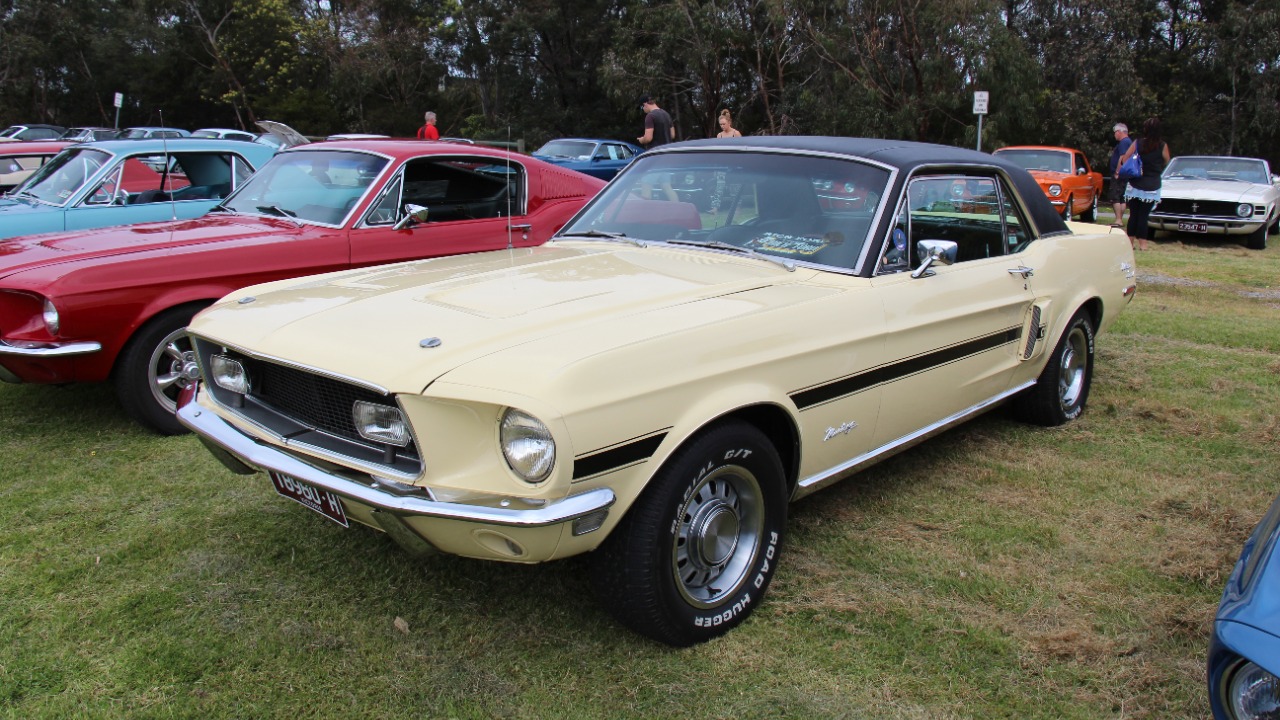
The 1968 Ford Mustang California Special arrived as a regional experiment and ended up as one of the most distinctive offshoots of the Mustang family. Instead of simply wearing new stripes, it pulled together Shelby-inspired hardware, dealer pressure from the West Coast, and a bold marketing pitch that treated California as its own automotive universe. In the process, it carved out an identity that still feels separate from the standard pony cars that shared its showroom space.
When I look at the California Special story, I see a car that was never meant to be a mainstream model yet became a touchstone for how far a regional package could go. It was born from local sales ambition, shaped by a few key personalities, and wrapped in styling that made everyday commuters feel like they were driving a limited-run custom.
From regional idea to factory reality
The California Special started as a push from dealers rather than a top-down corporate program, which is a big part of why it feels so personal. Southern California retailers were already moving huge numbers of Mustangs, and Of the regional Mustangs, the 68 California Special stood out as a promotion put on by Southern California Ford dealers who wanted something unique to keep customers excited. That local pressure helped convince Ford to greenlight a package that went far beyond the usual decal-and-badge treatment.
Inside the company, the idea found a champion in Lee Grey, a regional sales manager who understood how much image mattered in the Golden State. Reporting on the program notes that Lee Grey attended the Ford Preview event for the new 1968 Fords at the Los Angeles Coliseum, where he saw a Shelby prototype nicknamed Little Red and pushed for a production version tailored to his territory. That connection between a one-off show car and a dealer-driven request is what ultimately produced the Mustang GT/CS, a factory package that still feels like a custom build.
Marketing a Mustang that “California made”
Ford did not hide the fact that this car was aimed squarely at West Coast buyers, and the marketing language made that point loudly. The campaign used a theme built around the phrase California made it, a twist on the broader Mustang slogan that put the state itself at the center of the story. In other words, the car was sold as something that could only exist because of California’s appetite for style and speed.
That message was reinforced by the way Ford positioned the car in relation to the rest of the lineup. The official description of the package notes that the marketing theme for this limited edition was “California Made it Happen!”, a deliberate variation on the national Mustang pitch that highlighted how different it was from the standard models available elsewhere. When I read that, it is clear the company was not just selling a trim level, it was selling the idea that owning this car meant joining a specific California story.
Styling cues that went beyond stripes
Visually, the California Special separated itself from other Mustangs with a mix of Shelby-inspired parts and unique trim that made it instantly recognizable. Contemporary descriptions point out that The California Special (GT/CS) was a base model hardtop fitted with Shelby taillight and rearend treatment, side scoops, mid-body striping, and a deleted Mustang pony and corral in the grille. That combination gave the car a more aggressive, almost custom look while still starting from the most accessible body style in the range.
Even in an era when Tape stripe packages were everywhere, the GT/CS stood out because it was “assembled from some things borrowed” from Shelby and other specials rather than relying on decals alone. Detailed breakdowns of the car’s features explain that the Mustang GT/CS included fog lamps, side scoops, and a unique rear treatment that had little to do with the GT package itself, as noted in coverage of the Mustang GT /CS features. When I picture one on the road, it is that blend of Shelby hardware and regional badging that makes it feel like its own sub-brand rather than just another option code.
Production limits and regional reach
Part of the California Special’s mystique comes from how briefly it was built. Factory records and later restorers point out that Production ran for only 5.5 m from mid-February 1968 to early August 1968, a short window that kept total numbers relatively low. That compressed schedule helps explain why collectors now treat surviving cars as something special rather than just another late‑sixties appearance package.
Although the name suggests a purely coastal footprint, the car’s reach was a bit wider. Owners and historians note that the 1968 California Special was a Mustang that Ford never had any plans of creating, but it ended up being sold primarily in California and also in the Denver, Colorado area, as described in a detailed California Special discussion. That limited regional distribution, combined with the short production run, is a big reason why the car feels like a local secret that escaped its original boundaries.
How it differed from other “specials”
Ford experimented with several regional and limited editions in the late sixties, but the GT/CS pushed that formula further than most. Commentators looking back at the era point out that Most specials, such as the 67 Indy Pace-setter, offered little more than a tape stripe, while the California program drew on a more ambitious limited-editions strategy created in 1966. By contrast, the GT/CS combined bodywork, lighting, and badging changes that made it feel closer to a Shelby than to a simple dealer dress‑up kit.
Ford also used the California Special as a template for another regional variant, the High Country Special, which targeted buyers in the Rocky Mountain states. Documentation on these cars explains that they were treated as a Special Model from the Very Start, with the California Special GT and the High Country Special marketed side by side. Instead of the letters GT/CS on the air intakes, there was a crest-like badge with the words High Country Special stylized mountain motif, underscoring how the California car had inspired a broader strategy of region-specific identity.
More from Fast Lane Only: