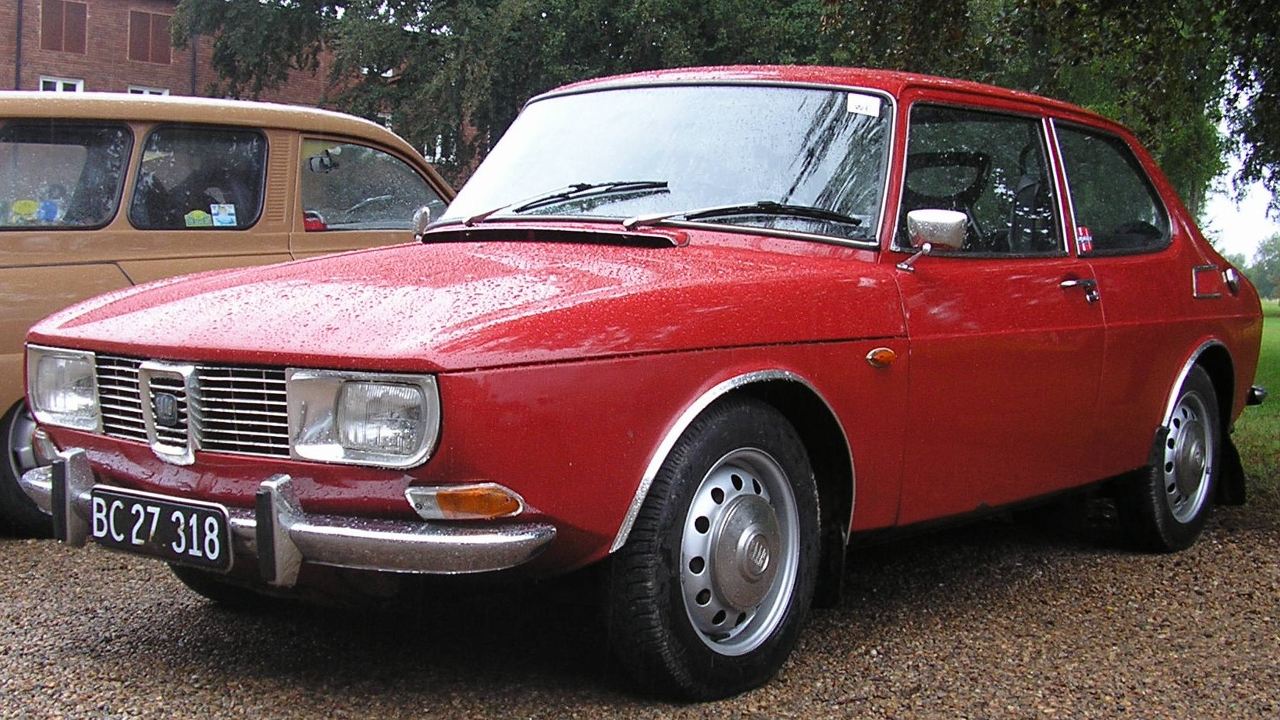
The 1968 Saab 99 arrived as a mid‑size family car, but it read like a sketchbook for how everyday vehicles would look and behave decades later. From its safety‑first cockpit to its turbocharged performance and aerodynamic body, it anticipated priorities that now define mainstream automotive design. I want to trace how that single model quietly pointed toward the future that most drivers now take for granted.
A clean-sheet shape for the wind and the driver
When Saab unveiled the 99 at Teknorama in Nov, it was not a gentle evolution of the earlier 96 but a clean break that treated aerodynamics and ergonomics as core engineering problems rather than styling extras. Internal engineering material on the SAAB 99 stressed that drag had been treated as “absolutely essential,” and the car was given a carefully profiled body with an air drag coefficient as low as 0.37, a figure that would not look out of place on a modern hatchback. The relatively tall glasshouse, short overhangs and smooth flanks were dictated less by fashion than by airflow and visibility, a contrast to the chrome‑laden three‑box sedans that still dominated European roads at the time.
That focus on the person behind the wheel was just as radical. The 99’s cabin wrapped around the driver with a high, curved dashboard and large, clearly marked instruments, an approach that contemporary reviewers noted felt more like an aircraft cockpit than a conventional car interior. Period road impressions describe the 1968 Saab as light and adaptable to drive, with steering that became more communicative as speed rose, reinforcing the sense that the car had been tuned for long, fast journeys rather than short urban hops. By prioritising low drag, clear sightlines and a driver‑centric layout, the 99 previewed the way later family cars would be shaped by wind tunnels and human‑factors research rather than by tailfins and ornament.
Safety and usability as design principles, not options
Long before “safety sells” became a marketing line, Saab treated occupant protection and usability as non‑negotiable engineering goals, and the 99 became the test bed for that philosophy. The car introduced a reinforced safety cage around the passenger compartment, carefully engineered crumple zones and doors that wrapped up over the sills to protect against side impacts, features that were still rare outside a handful of premium brands. Inside, the dashboard and steering column were designed to deform in a collision, and the ignition key was moved to a floor‑mounted lock between the seats, away from the driver’s knees, a layout later echoed in other Saab models and cited in analysis of the 99’s long life cycle.
Usability details were just as forward‑looking. The Saab 99 saloon featured a dedicated heating duct to the rear window, controlled by a lever between the front seats, at a time when many rivals still relied on external stick‑on elements or simple airflow to clear condensation. Controls were grouped logically around the driver, and the gear stick, rather than the steering wheel, carried key functions, reflecting a belief that the driver’s hands should stay on the wheel as much as possible. These touches previewed the integrated demisting, ergonomic switchgear and safety‑driven layouts that would become standard expectations in later family cars, even if they were initially seen as quirky Saab signatures.
Powertrains that bridged old habits and new technology
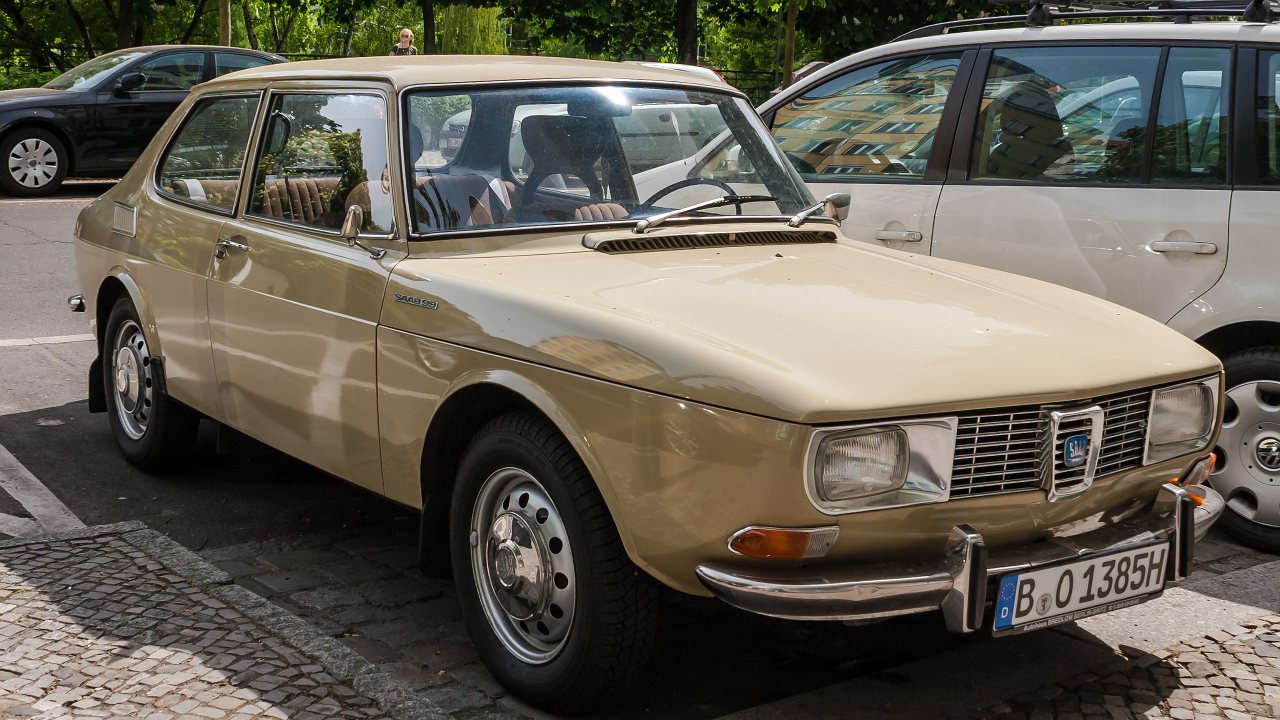
Under the skin, the 99 charted a path from traditional mechanical thinking to the more sophisticated drivetrains that would define later decades. Early 99s carried over the freewheel transmission concept from the Saab 96, allowing the engine to decouple on the overrun to reduce wear and fuel consumption, a feature that felt unusual but hinted at later interest in efficiency‑focused driveline strategies. That system was phased out with the arrival of a 1.8 litre engine, but the willingness to experiment with how power reached the front wheels set the tone for the model’s evolution.
The base engines themselves were modest but carefully developed. The car launched with a 1.7 litre four‑cylinder, and by 1972 the 1.7 unit was dropped in favour of an updated engine that delivered 88 hp (65 kW) in carbureted form, paired with a choice of manual gearboxes and an automatic supplied by Borg‑Warner. This combination of front‑wheel drive, relatively compact engines and a focus on tractable, real‑world performance rather than headline power figures anticipated the template that would later dominate the European C‑segment. The 99 showed that a family car could feel light and responsive without needing a large displacement engine, a lesson that manufacturers would revisit repeatedly as fuel prices and emissions rules tightened.
Turbocharging and the birth of the practical performance car
The most obvious way the 99 previewed the future came when Saab bolted a turbocharger to its sensible family shell and created one of the first truly mainstream turbocharged road cars. The 99 Turbo, launched in the late 1970s and showcased at the Frankfurt motor show, took the basic package and transformed it into a performance machine that could still carry a family and their luggage. Contemporary accounts describe how the car stole attention from more conventional show stars, underlining how radical it was to see a mid‑size hatchback using forced induction for everyday speed rather than for exotic racing specials.
Driving impressions from later retrospectives emphasise how the Turbo blended strong mid‑range shove with the same stability and feedback that defined the base 99. One detailed test notes that the brakes felt softer and more servoed than on an earlier non‑turbo example but remained admirably effective, and that the boosted engine delivered its power in a way that made long‑distance travel effortless rather than frantic. Later enthusiasts who revisited the 99 Turbo on modern roads have highlighted how its blend of usable performance, robust engineering and subtle styling cues anticipated the entire genre of practical performance cars, from hot hatchbacks to quick diesel estates. By proving that turbocharging could be civilised and reliable in a family car, the 99 helped normalise a technology that is now ubiquitous across petrol and hybrid line‑ups.
A template that outlived the badge
The 99’s influence extended far beyond its own production run, which stretched from 1968 to 1984 and overlapped with its direct successor, the 900. Analysts who have looked back at the 99 and 900 era describe how the basic boxy silhouette, upright glass and front‑wheel‑drive layout became both Saab’s greatest strength and, eventually, a constraint as the company struggled to move beyond a range dominated by evolutions of the same core design. Yet that “box” also contained ideas that other manufacturers would adopt, from the floor‑mounted ignition lock to the emphasis on crash protection and winter‑friendly ergonomics.
Modern commentators who drive surviving 99s, including later EMS and Turbo variants, often remark on how contemporary the cars feel in daily use. A video review of a 1974 99 EMS, for example, frames the car as an object of beauty but also notes how its ride, steering and visibility still make sense on current roads, while another overview of the model’s history from SAR underlines how its production from 1968 to 1984 bridged eras of automotive thinking. Even if the Saab name has disappeared from new‑car showrooms, the 99’s combination of aerodynamic efficiency, safety‑led design, ergonomic interiors and turbocharged performance can be seen echoed in everything from compact crossovers to electric family cars. The future it previewed has arrived, and most drivers are living in it, whether they recognise the Saab 99 in their daily commute or not.
More from Fast Lane Only: