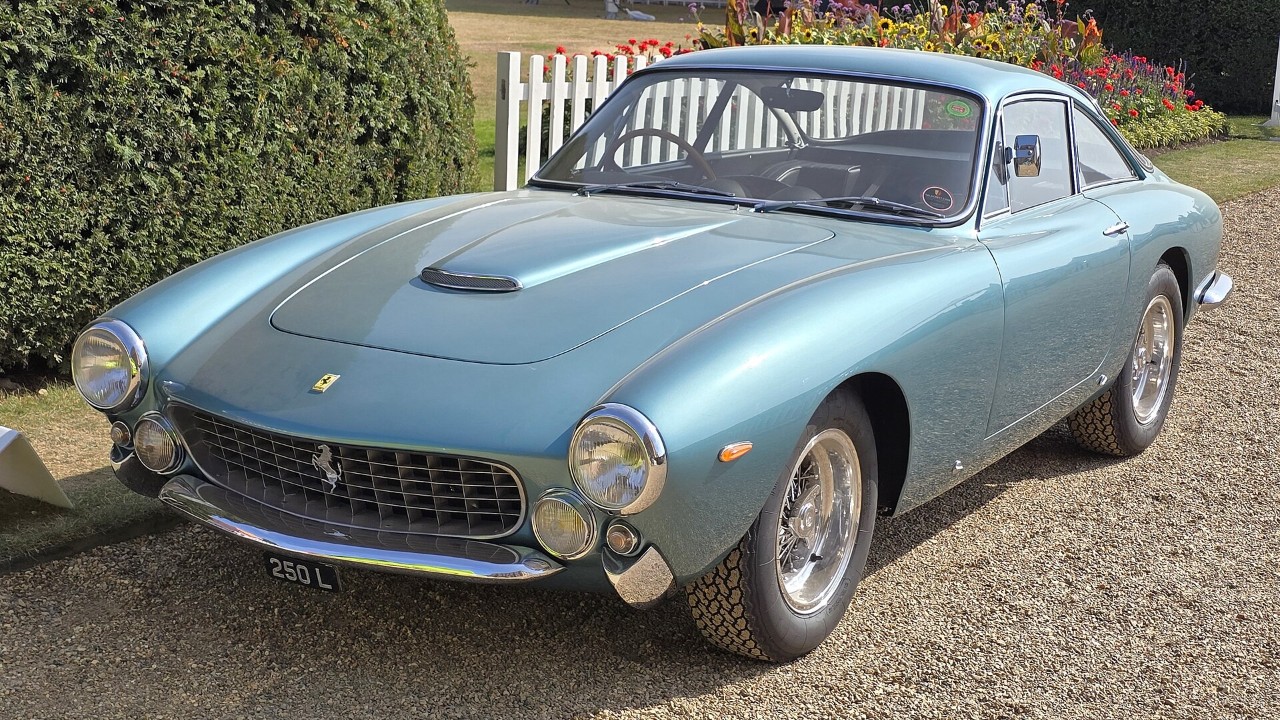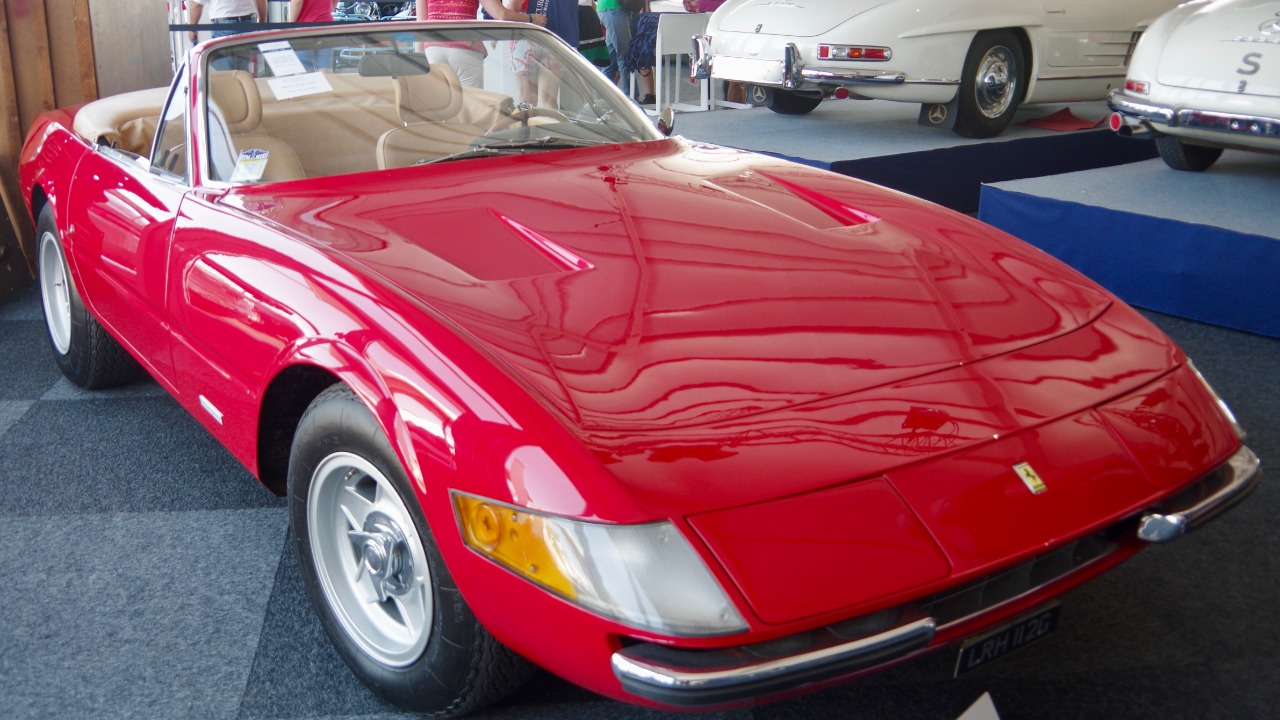
The Ferrari 365 GTB/4 Daytona is often remembered as the car that proved Maranello could still build a front engined V12 thoroughbred in the age of the mid engined revolution, yet its arrival was anything but punctual. By the time the production car reached customers in 1969, the world had already seen the prototype, and the market around it had shifted. That lag, and the quiet adjustments Ferrari made while the clock ticked, are what turned a fast new coupe into a slightly late but enduring icon.
From Paris spotlight to production limbo
When I trace the Daytona story back to its roots, I always start in Paris, because that is where the 365 GTB/4 first stepped into the light. The 365 GTB/4 (often casually shortened to Daytona) was shown for the first time at the Paris Salon in 1968, and it did so twice, once on the stand of Ferrari and once at Pininfa, a neat illustration of how closely the factory and the design house were intertwined on this project. That double debut made the new 365 G coupe look ready for the road, yet the car that dazzled the Paris Salon crowd was still effectively a prototype, a rolling promise that would take time to turn into a fully sorted production model, as later research into the original show car confirms through detailed study of the prototype and subsequent chassis.
The gap between that glamorous reveal and the first customer deliveries is where the Daytona’s “late arrival” really begins. Analysts who have gone back through build records and period photos describe roughly an 18 month delay between the prototype’s appearance and the point when the production 365 GTB/4 was truly representative of what buyers would receive, a span long enough for the original 1969 Frankfurt Motor Show car to feel slightly out of step with later examples. That lag is not speculation, it is drawn from close comparison of the Frankfurt Motor Show display car with later production cars, a methodical approach that shows how many developments were made during production and how the early showpiece diverged from the Daytonas that enthusiasts now know best.
Why Ferrari’s front engined flagship took its time

Looking at the broader Ferrari range, the timing of the 365 GTB/4 makes more sense, even if it frustrated impatient buyers. The company was juggling the demands of racing, the shift toward mid engined layouts, and the need to keep a traditional front engined 12 cylinder grand tourer in the catalogue, especially for the USA, where regulations and customer tastes still favored that format. The 365 GTB/4 ended up being the last 12 cylinder Ferrari to be sold new in the USA through official channels until the Testarossa arrived in the 1980s, which underlines how much regulatory and market pressure was bearing down on this car and helps explain why Ferrari took extra time to refine it before committing to full scale exports.There was also the matter of design details that had to be reworked as rules evolved, and that process does not happen overnight. Early cars sported fixed headlamps covered under a plexiglass panel that stretched across the width of the car, a sleek solution that looked perfect on the show stand but soon ran into changing safety interpretations, particularly in key markets. As those interpretations hardened, Ferrari had to engineer pop up headlamps to replace the original plexiglass treatment, a change that required fresh tooling and testing and that, according to period buyers and restorers, contributed to the sense that the Daytona’s final specification arrived a little later than its Paris debut had promised.
How the delay reshaped the car itself
What fascinates me most is how that extra time in the oven subtly reshaped the Daytona’s character. The 365 GTB/4 that enthusiasts drive today is not a frozen copy of the Paris Salon prototype, but the product of incremental tweaks that accumulated during that 18 month window. Detailed guides to the model point out that, as a result of the delay since the prototype had been displayed, the original 1969 Frankfurt Motor Show car ended up differing in several respects from later production examples, with those differences documented through careful comparison of body details, interior trim, and mechanical updates that were introduced as Ferrari learned from early testing and customer feedback.
Those running changes are not just trivia for concours judges, they are the fingerprints of a car that was still being finished in public. Period road tests and modern reviews both note that the Daytona feels like a thoroughly mature grand tourer, with a chassis and drivetrain that seem more resolved than many of its contemporaries, and that sense of polish is easier to understand once you accept that Ferrari effectively used the time between Paris and full production to refine the package. When I listen to a modern road review that walks through the way the Daytona steers, rides, and delivers its power, I hear the voice of a car that benefited from being held back until its makers were satisfied that the 365 GTB/4 name would stand up to scrutiny.
The convertible that arrived right on cue
The story of lateness becomes even more interesting once the open version enters the frame. While the coupe’s gestation stretched out, the Ferrari 365 GTS4 convertible made its debut at the 1969 Frankfurt Motor Show with a confidence that suggests Ferrari had learned from the coupe’s extended rollout. The 365 G open car, which shared the basic mechanical package with the 365 GTB/4, arrived with a design that is still striking today, and its timing at Frankfurt placed it neatly after the coupe’s development curve, so it could benefit from the lessons already baked into the closed car.
In my view, the 365 GTS4’s punctual appearance helps explain why the Daytona family feels so cohesive despite the coupe’s earlier delays. By the time the convertible bowed at Frankfurt, Ferrari had already navigated the headlamp issue, settled on the core chassis tune, and established the car’s position as a flagship grand tourer rather than a pure sports racer. That meant the open car could step onto the stage as a fully formed sibling instead of a rushed derivative, and it is no coincidence that collectors now talk about the coupe and convertible in the same breath, treating them as two expressions of a single, well resolved idea rather than as separate experiments.
Living with a car that finally caught up
All of this history would be academic if the Daytona did not deliver on the road, but the way people still talk about driving it shows how thoroughly it overcame its slow start. Owners and specialists who spend time with these cars describe the early fixed headlamp examples, with their plexiglass panels, as particularly pure, yet they also acknowledge that the later pop up headlamp cars benefit from the incremental improvements Ferrari made once the model was in full swing. Guides aimed at prospective buyers walk through these distinctions in detail, explaining how the earliest cars differ from those built after the Frankfurt Motor Show of 1969 and why some enthusiasts seek out specific chassis ranges to capture a preferred blend of originality and refinement.
From behind the wheel, the Daytona’s late arrival fades into the background, replaced by the immediacy of a long bonnet, a V12 ahead of you, and a cabin that still feels purposeful. Modern reviewers who climb into a well kept example often start by noting that, officially, Ferrari never called the car Daytona, yet the nickname has stuck so firmly that it now feels inseparable from the 365 GTB/4 identity, a testament to how the car’s legend has outrun the bureaucratic details of its launch. Listening to one such review, recorded in Sep and focused on how the Daytona behaves on real roads, I am struck by how little the conversation dwells on the delays and how much it celebrates the way the car finally arrived as a complete, deeply satisfying machine.
For me, that is the real lesson of how the 1969 Ferrari 365 GTB/4 Daytona arrived late. The lag between prototype and production did not doom the car, it quietly improved it, allowing Ferrari to adjust styling details, navigate regulations, and refine the driving experience before the model faced the full glare of the market. By the time the last 12 cylinder Ferrari sold new in the USA through official channels before the Testarossa had settled into showrooms, the Daytona had turned its slow start into a strength, emerging as a grand tourer whose maturity on the road more than justified the wait.
More from Fast Lane Only: