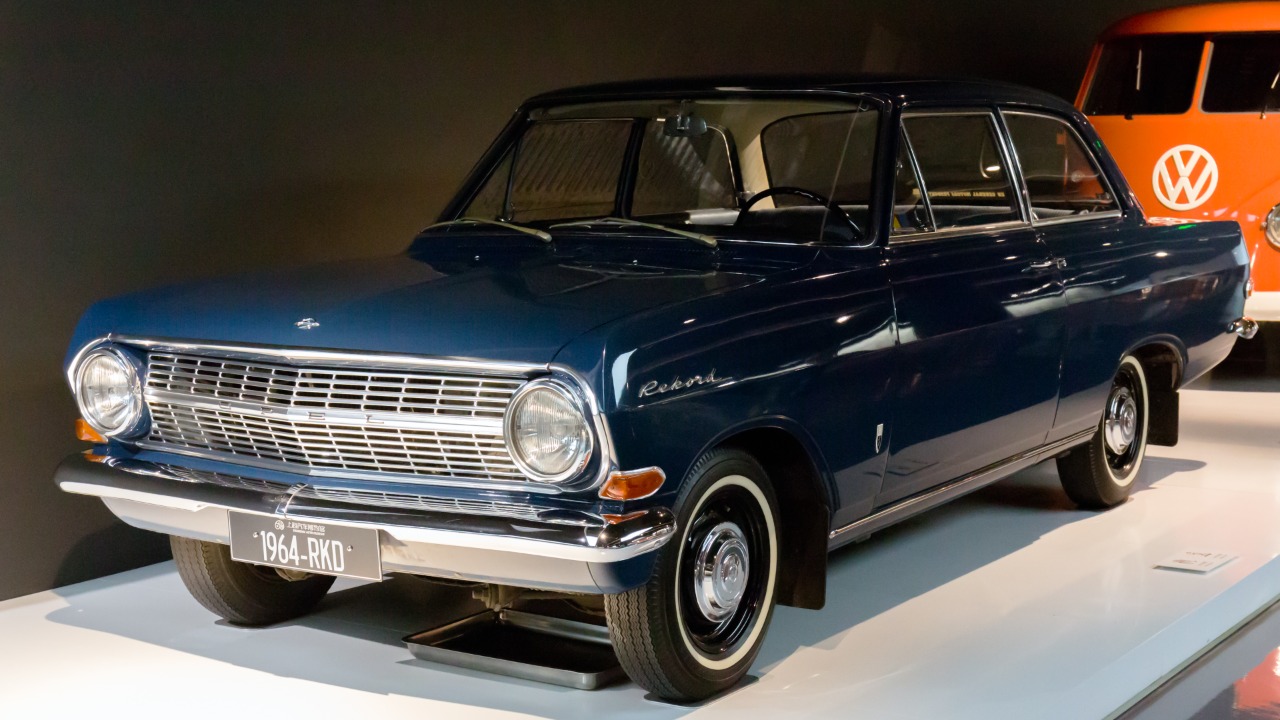
The 1965 Opel Rekord sat at a crossroads in European motoring, where postwar pragmatism met a new appetite for style and speed. It was neither a luxury flagship nor a bare‑bones economy box, yet it managed to feel modern enough for growing families while staying simple enough for everyday mechanics. That balance is exactly why the car still feels relevant to enthusiasts and historians today, long after its production run ended.
When I look at the 1965 Rekord, I see a car that quietly defined what a middle‑class European sedan could be, and then kept evolving just fast enough to stay in step with its drivers. Its story stretches from the first Olympia Rekord after the war to the alphabetic Rekord generations that followed, and each chapter helps explain why this unassuming saloon still commands attention in museums, classifieds and club meets.
From Olympia Rekord roots to a modern family car
The 1965 Opel Rekord did not appear out of thin air, it grew out of a postwar strategy that treated the family car as a tool of social mobility. When Prosperity began to return in West Germany, Opel answered with the Olympia Rekord and its smooth pontoon body, a shape that signalled a break from prewar austerity and a readiness for the growing amount of traffic. That car set the template: practical size, approachable price and styling that made ordinary buyers feel they were stepping into the future rather than settling for leftovers from the past.
By the time the Rekord A arrived, Opel had refined that formula into a clear response to rivals. The Rekord that appeared in March 1963 was explicitly pitched as a robust answer to the success of the Ford Taunus 17M, and its designers wrapped the car in a clean, American‑influenced body that still felt European in its proportions. Underneath, the Rekord carried over proven mechanicals, but the way the Rekord squared up to the Ford Taunus showed how seriously Opel took the middle of the market, and why the model line would remain a fixture of European roads for decades.
Why the 1965 Rekord A still feels contemporary
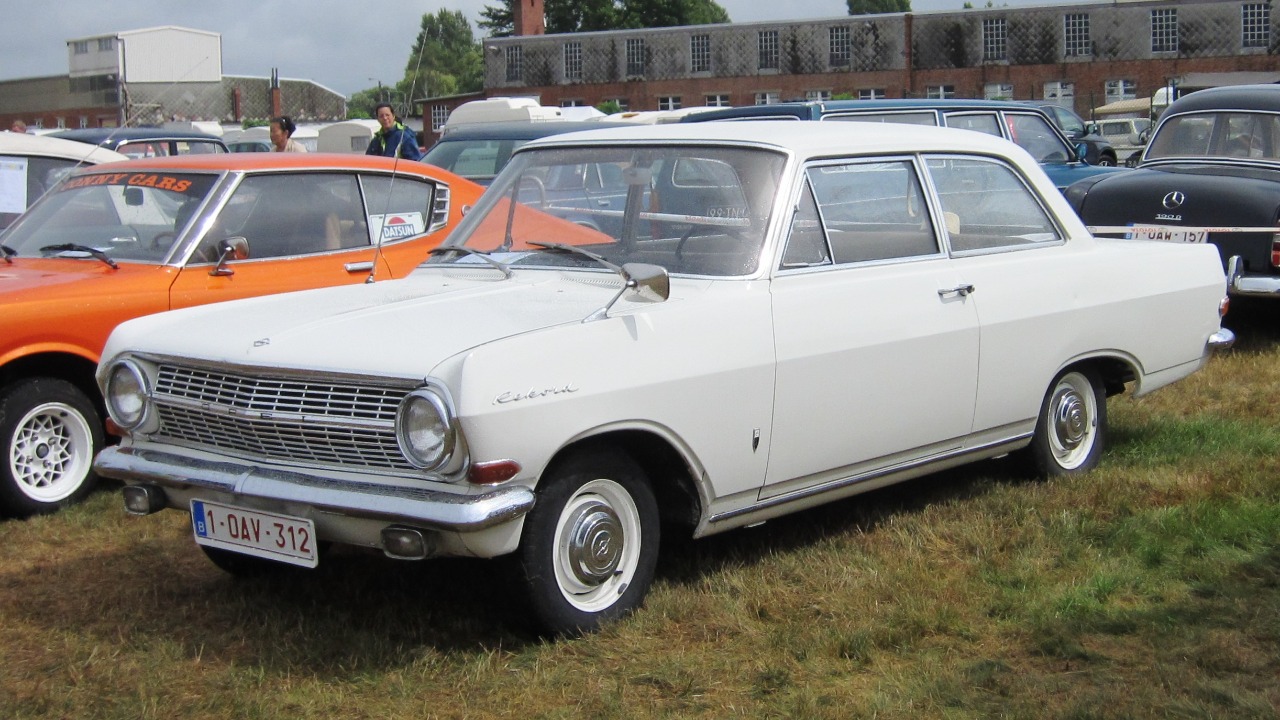
What keeps the 1965 Rekord A from feeling like a relic is how deftly it blended style with continuity. The Rekord (Series A) combined a stylish modern body with a range of engines that were little changed since 1937, a pairing that gave buyers fresh sheetmetal without asking them to trust unproven hardware. That mix of new and familiar is one reason a preserved 1965 Opel Rekord now sits as a museum exhibit, where visitors can see how the Series A carried its prewar mechanical DNA into a very different social era before it was replaced in August 1965.
From a design perspective, the Rekord A also marked a turning point that still reads as crisp and unfussy today. In a detailed video history, the narrator explains how the Opel Record A was the first record to start with the alphabetic name and the first record to truly show its power as a modern mid‑size car, framing it as the car that changed the way Opel thought about its mainstream saloon. Watching that Opel Record story, I am struck by how the 1965 model’s proportions, glass area and restrained chrome could sit comfortably in a contemporary showroom with only minor updates, which is a big part of why it still resonates with younger enthusiasts discovering it for the first time.
The Rekord’s American parallel and global reach
Another reason the 1965 Rekord feels familiar today is that its role in Europe mirrors cars many of us grew up with elsewhere. One writer has argued that The Opel Rekord can be best compared to the traditional full‑sized Chevrolet, not because they shared parts, but because both served as the default family car that anchored their respective markets at a favorable price point. When I picture a driveway in a German suburb in the mid‑sixties, the Rekord fills the same mental space as a Chevrolet in an American cul‑de‑sac, and that parallel helps explain why the Chevrolet comparison keeps coming up among enthusiasts.
The Rekord’s influence also extended far beyond Germany, which adds another layer to its lasting relevance. Later in the line, Opel number ten million was a Rekord C CarAVan or Kombi (Estate), a milestone that underlined just how central the model had become to the brand’s global volume. In export markets, that Rekord C Estate even appeared under the Chevrolet brand, which meant the basic Rekord formula of space, durability and modest running costs was quietly shaping family transport on multiple continents, not just in its home country.
The short‑lived Rekord B and the pace of change
If the 1965 Rekord A showed how to modernise without scaring buyers, the Rekord B proved how quickly expectations were shifting. Produced only until July 1966, it shared the wheelbase and 1,696 mm (66.8 in) width of its predecessor, but Opel reworked the front and rear panels to give it a more modern appearance while keeping the basic package intact. That brief production window, captured in the Produced figures, shows how Opel was willing to iterate quickly on the Rekord’s styling to stay ahead of fashion without abandoning the underlying platform that owners trusted.
Collectors now see that rapid update cycle as part of the Rekord’s charm. One enthusiast account notes that the B was the shortest‑lived of all the Rekord variants, lasting less than a year from August 1965 to July the following summer, which has turned surviving cars into sought‑after curiosities. When I read that Rekord B story, I see how the 1965 A model sits at a sweet spot: old enough to embody the early sixties look, but close enough to the B and C that parts, knowledge and community support remain accessible for anyone tempted to run one as a usable classic.
Design discipline and the Rekord’s lasting appeal
Underpinning all of this is a design philosophy that treated restraint as a virtue, which is why the Rekord’s lines have aged so gracefully. Later in the series, the body was Penned by Chuck Jordan, a GM ‘lifer’ and Opel’s Head of Design, who managed to blend transatlantic cues with a clean, almost ascetic European reserve. That description of how Penned design choices shaped the Rekord line helps me understand why the 1965 car, which already leaned in that direction, still looks sharp rather than fussy when parked next to newer metal.
The Rekord’s story also includes oddities that keep the legend alive among specialists. A recent video dives into what it calls possibly the rarest Opal Record ever made from the factory, highlighting how even short‑run variants and engineering detours have become part of the car’s mythology. That Opal Record deep‑dive might focus on a niche model, but it reinforces a broader point: the Rekord family, anchored by workhorses like the 1965 A, has enough depth and variety to reward close attention, which is exactly what keeps it relevant in a classic‑car world that is spoiled for choice.
More from Fast Lane Only: