If you’ve ever seen a 1970 AMC Rebel Machine in person, you probably remember the paint before you remember anything else. It didn’t whisper “performance” the way some muscle cars did—it practically shouted it. That look wasn’t an accident, and it wasn’t just a graphic designer having fun.
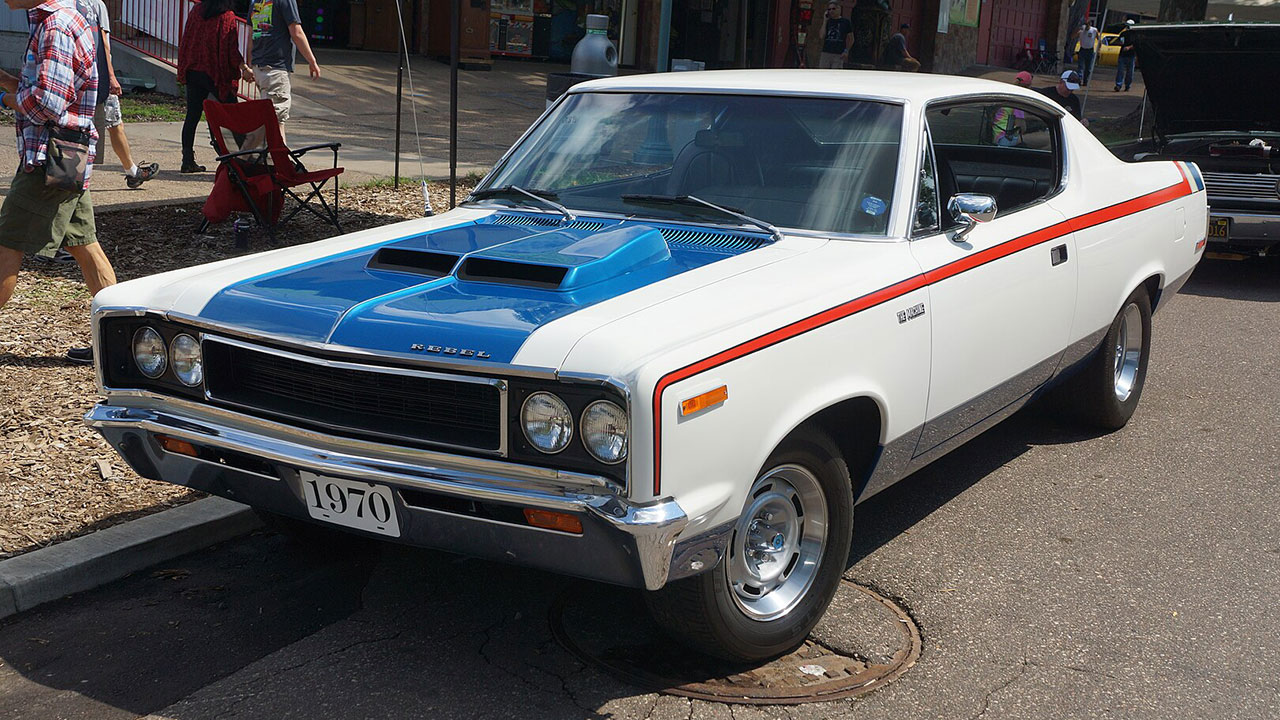
The Rebel Machine’s signature appearance was built around a loud, high-contrast idea: a mostly white body with bold red-and-blue striping that ran the length of the car. The scheme instantly read as patriotic and aggressive, and it matched the era’s taste for high-impact graphics. AMC used it to make sure the car stood out in a crowded muscle market dominated by bigger brands.
AMC needed a visual mic drop
By 1970, muscle cars were everywhere, and the big names had deep budgets for racing tie-ins, ads, and dealer promotions. AMC didn’t have the same resources, so it leaned into smart, attention-grabbing choices. A distinctive paint scheme was a relatively direct way to create instant recognition on the street and in showrooms.
The Rebel Machine was based on the AMC Rebel, a midsize platform that already had performance credibility in earlier trims. But “credibility” and “immediately memorable” aren’t the same thing. The graphics helped turn a quick description—“AMC’s fast Rebel”—into something you could spot from a block away.
The paint wasn’t subtle on purpose
Muscle styling in the late ’60s and early ’70s rewarded boldness: stripes, hood callouts, scoops, and high-contrast colors were part of the language. AMC took that language and pushed it hard. The result was a car that looked like a special model before you ever read a badge.
That mattered because AMC was often fighting the perception that it was the “other” manufacturer. A striking factory scheme signaled that this wasn’t a warmed-over commuter with a big engine—it was a deliberate performance package. The visual impact helped the Rebel Machine feel like a statement, not an experiment.
Where the red, white, and blue look came from
The best-known Rebel Machine appearance combined a white body with red and blue striping, creating a look that many people associate with patriotic imagery of the period. That association was part of the appeal: it felt loud, modern, and very “American” in a way buyers instantly understood. Even without leaning on slogans, the colors did a lot of marketing work on their own.
It also helped that the scheme was easy to recognize in photos and print ads. Muscle cars sold on emotion, and AMC’s colors delivered that emotion at a glance. When a car’s look is that distinctive, it becomes a shortcut in people’s memory.
Graphics as a way to compete with the big guys
Plenty of muscle cars were quick, but not all of them had a personality you could describe in one sentence. AMC used the Rebel Machine’s visuals to build that personality. The stripes weren’t just decoration—they were branding, turning the car into its own rolling logo.
This was also an era when manufacturers were naming and packaging performance trims more aggressively. Having a clear “hero” look made it easier for dealers to point at a car on the lot and say, “That’s the one.” The Rebel Machine’s paint made it hard to ignore, which is exactly what AMC needed.
It wasn’t only about looks—performance had to back it up
A flashy paint scheme only works if the car can deliver, and the Rebel Machine was positioned as a serious performer. The model is closely associated with AMC’s 390-cubic-inch V8, one of the company’s well-known high-performance engines of the time. That pairing—real V8 muscle with an unforgettable look—kept the graphics from feeling like a gimmick.
In the muscle era, buyers expected the visuals to hint at what was under the hood. AMC’s decision to go big on appearance made a promise, and the Rebel Machine was built to make that promise believable. The stripes were the headline; the hardware was the proof.
How factory paint schemes become instant mythology
Some cars become famous because they won races; others become famous because they look like nothing else. The Rebel Machine falls into that second category for a lot of enthusiasts. Once a factory scheme becomes iconic, it starts to define the entire model in the public imagination.
That can be a double-edged sword, because people sometimes forget the broader lineup and focus only on the best-known look. But it’s also why the Rebel Machine remains such a recognizable AMC. The paint became a calling card that outlived the original showroom moment.
What made the scheme feel so bold in 1970
Contrast is a big part of why the Rebel Machine’s colors hit so hard. White bodywork with saturated stripes creates a clean, high-visibility design that reads clearly at speed and from far away. In a sea of darker paints and more conventional striping, it looked almost graphic-design sharp.
It also helped that the striping wasn’t timid. The bands were large enough to define the car’s profile and draw your eyes along the fenders and quarters. That sense of motion—even while parked—was exactly what muscle styling aimed for.
Restorations and the challenge of getting it right
Because the Rebel Machine’s identity is so tied to its appearance, restorations tend to live or die on details. Reproducing the right stripe placement, proportions, and color tone matters more than it might on a less graphic-heavy muscle car. Small inaccuracies can change the whole vibe.
That’s why original references—period photos, documentation, and known-correct cars—carry so much weight among owners. The goal is usually to capture the factory intent, not to “improve” it. With a scheme this famous, authenticity is part of the appeal.
Why the look still works today
Even decades later, the Rebel Machine’s paint scheme doesn’t read as generic vintage striping. It feels specific, confident, and a little daring, which is what AMC was going for in the first place. Modern performance cars often chase understated aggression; the Rebel Machine reminds you that bold can be its own kind of cool.
And maybe that’s the real reason the scheme endures. It tells you, instantly, that this AMC was meant to be noticed and driven like it meant something. The colors weren’t just paint—they were a declaration that AMC belonged in the muscle car conversation.
More from Fast Lane Only
- Unboxing the WWII Jeep in a Crate
- 15 rare Chevys collectors are quietly buying
- 10 underrated V8s still worth hunting down
- Police notice this before you even roll window down
*Research for this article included AI assistance, with all final content reviewed by human editors.