Station wagons rarely receive the same attention as muscle cars.
When enthusiasts discuss the most memorable vehicles of 1970, the conversation usually centers on high-performance machines such as the Chevrolet Chevelle SS, Chevrolet Camaro Z/28, or Chevrolet Corvette. These vehicles generated headlines, appeared in advertisements, and became symbols of the era’s obsession with speed and performance.
Yet for millions of American families, a station wagon was far more important.
These vehicles carried children to school, luggage on vacations, groceries home from the store, and entire families across the growing interstate highway system. They were among the hardest-working vehicles on the road, expected to handle nearly every task their owners could imagine.
The challenge for manufacturers was making practicality appealing.
By 1970, buyers increasingly wanted more than simple utility. They wanted vehicles that looked attractive, offered comfort, and projected a sense of quality. Chevrolet understood this shift and responded with one of the most impressive wagons of the era.
The Kingswood Estate.
Far from being a basic family hauler, the Kingswood Estate blended functionality with premium styling, comfort, and road presence. It demonstrated that a practical vehicle could still feel special and that utility did not have to come at the expense of appearance.
In many ways, it transformed the station wagon from a necessity into something buyers genuinely desired.
America Loved Station Wagons
To understand the Kingswood Estate’s significance, it’s important to remember the role station wagons played in American life.
Before minivans and SUVs dominated family transportation, wagons served as the default choice for households needing space and versatility. They offered seating for multiple passengers, generous cargo capacity, and the ability to handle long-distance travel with ease.
Demand was enormous.
Manufacturers competed aggressively to attract wagon buyers, recognizing that these customers represented a substantial portion of the market. As competition increased, simply offering space was no longer enough.
Families wanted comfort.
They wanted convenience.
And increasingly, they wanted style.
The Kingswood Estate arrived at exactly the right moment.
Chevrolet Positioned It at the Top
The Kingswood Estate occupied a special place within Chevrolet’s wagon lineup.
Rather than serving as an entry-level family vehicle, it represented one of the division’s most upscale wagon offerings. Chevrolet designed it for buyers who wanted the utility of a station wagon without sacrificing comfort or prestige.
This positioning shaped every aspect of the vehicle.
The Kingswood Estate received premium features, upscale trim, and styling details intended to distinguish it from more ordinary transportation. Buyers were not simply purchasing cargo capacity.
They were purchasing an experience.
Chevrolet understood that perception mattered.
The Kingswood Estate reflected that philosophy throughout its design.
Simulated Woodgrain Became a Signature Feature
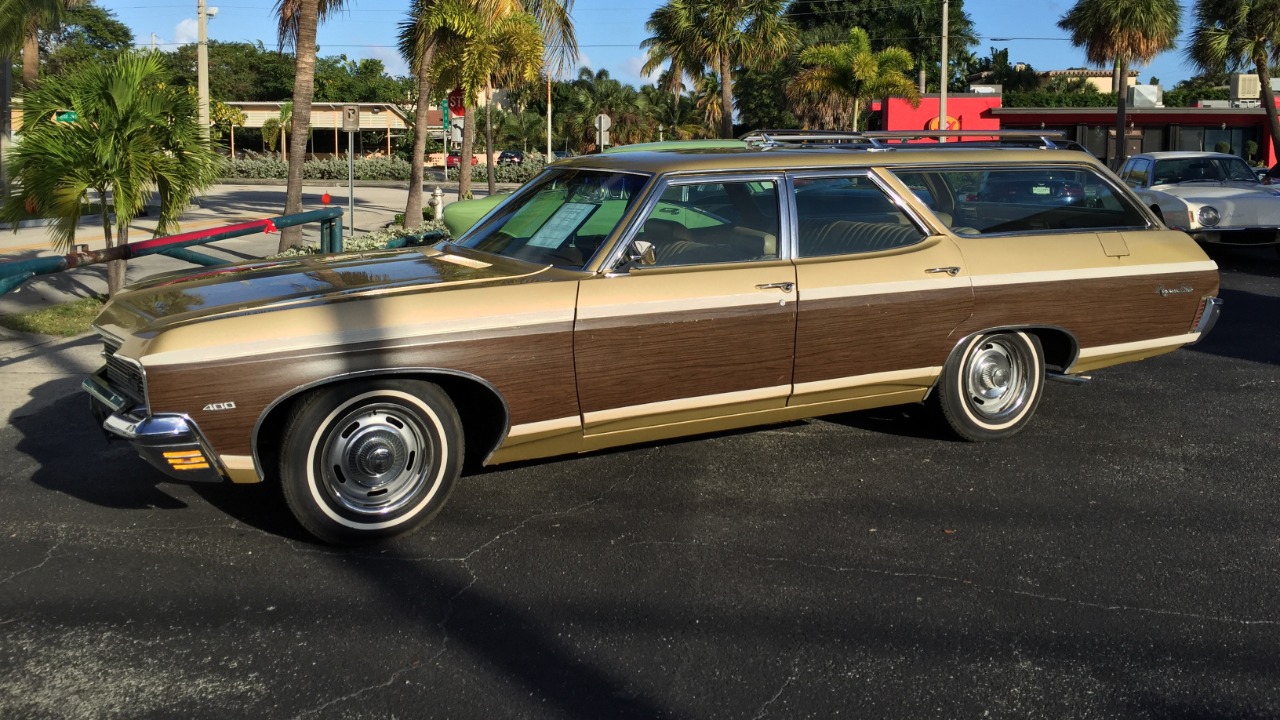
Perhaps the most recognizable aspect of the Kingswood Estate was its exterior woodgrain trim.
While simulated wood panels had appeared on station wagons for years, the Kingswood Estate embraced the look in a particularly effective way. The trim added warmth, character, and visual distinction that helped separate the wagon from standard passenger cars.
The effect was surprisingly sophisticated.
Rather than appearing purely utilitarian, the vehicle projected a premium image that resonated with buyers. The woodgrain became a defining part of the wagon’s identity and contributed significantly to its enduring appeal.
It also reflected broader design trends of the era.
Manufacturers increasingly sought ways to make practical vehicles feel more luxurious.
The Kingswood Estate executed that strategy exceptionally well.
It Offered the Presence of a Luxury Car
One reason the Kingswood Estate stood out was its sheer road presence.
Built on Chevrolet’s full-size platform, the wagon possessed substantial dimensions and a commanding appearance. It looked important, whether parked in a driveway or traveling down the highway.
The design helped reinforce this impression.
Long body lines, carefully integrated trim, and upscale details created a vehicle that felt far more prestigious than many people expected from a station wagon. Chevrolet successfully blurred the line between family transportation and premium automobile.
Buyers appreciated that distinction.
The Kingswood Estate allowed them to enjoy practicality without feeling as though they were sacrificing style or status.
That balance became a major selling point.
Comfort Was a Priority
Practicality alone would not have been enough to justify the Kingswood Estate’s premium positioning.
Chevrolet therefore devoted significant attention to comfort.
The spacious interior provided room for passengers and cargo alike, while available features helped make long trips more enjoyable. Families could spend hours on the road without feeling cramped or fatigued.
The wagon excelled during vacations and extended highway travel.
Its size, ride quality, and interior accommodations created an environment that encouraged relaxed cruising. For many owners, the Kingswood Estate became an essential part of family memories and travel experiences.
This emotional connection mattered.
The vehicle was not simply useful.
It became part of daily life.
The Cargo Capacity Was Remarkable
Despite its upscale image, the Kingswood Estate never forgot its primary mission.
The wagon offered enormous cargo space and exceptional versatility, allowing owners to transport everything from luggage and camping equipment to furniture and household supplies. Few vehicles of the era matched its combination of passenger and cargo capacity.
This flexibility contributed heavily to its popularity.
Families appreciated owning a vehicle capable of adapting to changing needs. The Kingswood Estate handled routine errands as easily as major road trips.
That adaptability represented genuine value.
Owners could rely on the wagon for almost anything.
And many did.
V8 Power Made the Difference
Another factor that elevated the Kingswood Estate above ordinary transportation was its available engine lineup.
Chevrolet offered V8 engines that provided the power necessary to move a large vehicle confidently, even when carrying multiple passengers and significant cargo. These engines delivered smooth performance and abundant torque.
The driving experience benefited greatly.
The wagon felt capable rather than burdened by its size. Highway merging, passing slower traffic, and towing duties became far easier thanks to the available power.
This capability enhanced the vehicle’s versatility.
The Kingswood Estate could handle demanding tasks without sacrificing comfort.
That combination proved extremely attractive.
It Reflected Changing Consumer Expectations
The success of vehicles like the Kingswood Estate reflected broader shifts within the marketplace.
American buyers increasingly expected practical vehicles to offer comfort, style, and premium features alongside utility. Manufacturers that ignored these changing preferences risked falling behind.
Chevrolet recognized the opportunity.
The company understood that buyers wanted more than basic transportation, even when purchasing family-oriented vehicles. The Kingswood Estate addressed these desires directly.
It combined utility with aspiration.
That formula would eventually influence future generations of family vehicles.
The wagon helped lead the way.
The Wagon Became a Lifestyle Vehicle
One reason the Kingswood Estate remains memorable today is that it represented more than transportation.
For many families, the vehicle became associated with vacations, road trips, outdoor activities, and everyday adventures. Its practicality enabled experiences that smaller vehicles often could not accommodate.
This emotional role strengthened its appeal.
Owners developed genuine affection for their wagons because they played such important parts in family life. The Kingswood Estate became a trusted companion rather than merely a machine.
Few vehicle categories inspire that kind of loyalty.
The station wagon often did.
And the Kingswood Estate was among the best examples.
Collectors Have Rediscovered Its Appeal
For many years, station wagons remained overlooked by collectors.
Recently, however, enthusiasts have begun appreciating their historical significance, unique styling, and cultural importance. The Kingswood Estate has benefited from this renewed interest.
Collectors recognize that it represents a fascinating chapter in American automotive history.
The wagon combines style, practicality, comfort, and nostalgia in a way few vehicles can match. Its distinctive appearance and premium positioning make it particularly appealing.
The Kingswood Estate tells a story.
And people are listening.
The Family Car That Refused to Be Ordinary
Looking back, the Kingswood Estate succeeded because Chevrolet understood that practical vehicles deserved thoughtful design and premium features.
The company refused to treat the wagon as merely a utility product. Instead, it created a vehicle capable of delivering comfort, style, and versatility in equal measure.
That decision transformed the ownership experience.
And helped the Kingswood Estate stand apart from competitors.
When Utility Became Desirable
The 1970 Chevrolet Kingswood Estate turned practicality into style by combining exceptional versatility with premium design, comfort, and road presence.
Its distinctive woodgrain trim, spacious interior, powerful available V8 engines, and upscale positioning demonstrated that a station wagon could be far more than basic transportation. Chevrolet successfully created a vehicle that handled family responsibilities while still offering a sense of pride and personality.
More than fifty years later, the Kingswood Estate remains a reminder that practicality and style are not opposites.
Sometimes the most useful vehicles are also the most memorable.
And few station wagons proved that better than the 1970 Kingswood Estate.
More from Fast Lane Only