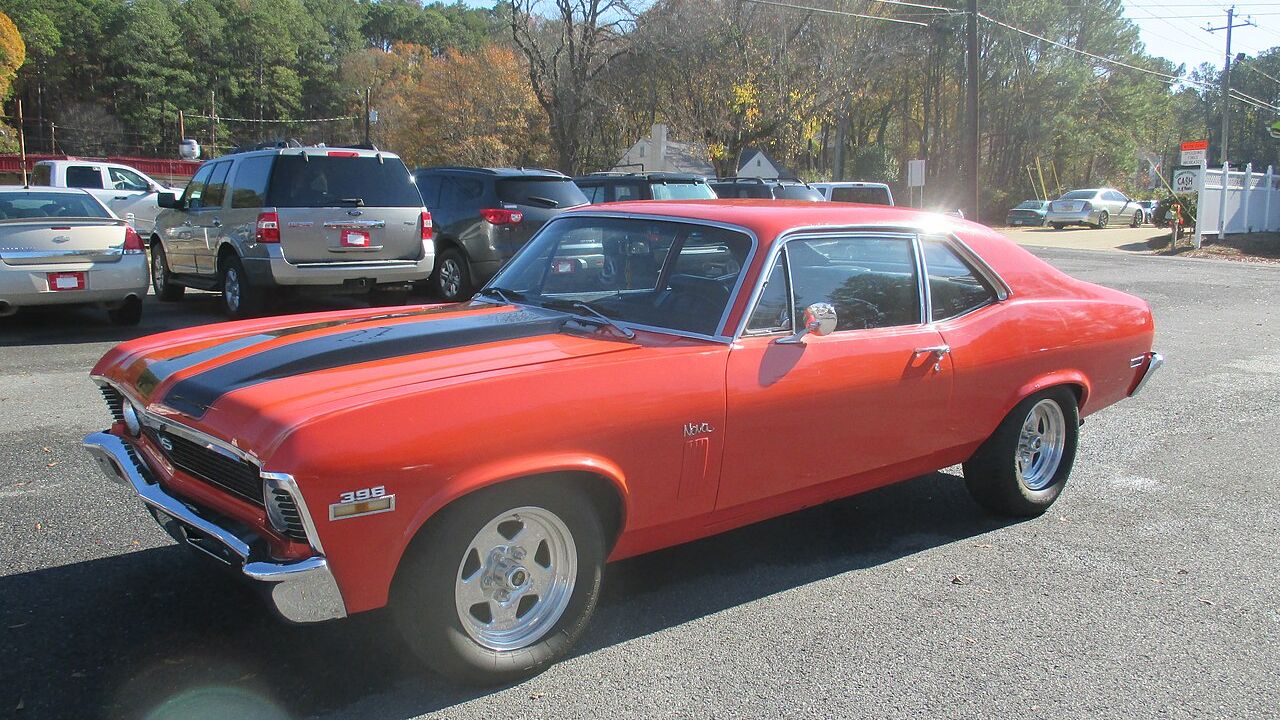
By 1970, Chevrolet’s performance story was getting complicated. The Camaro had become the youthful hero, the Chevelle SS was the big-ticket brawler, and the Corvette sat on top as the halo car. Then the Nova showed up with a different kind of message: you could get serious small-block power in a smaller, simpler package that didn’t need to shout.
The 1970 model year didn’t introduce a radical new Nova body, but it landed at a moment when buyers were paying close attention to power-to-weight and straight-line speed. Chevrolet had already proven the Nova could play in that space, and 1970 reinforced the idea that the brand’s performance identity wasn’t limited to the obvious nameplates. In that sense, the Nova helped broaden what “performance Chevrolet” could look like.
A compact that fit between Camaro and Chevelle
Chevrolet’s lineup had clear rungs, and the Nova occupied a useful middle. It was more practical and upright than a Camaro, and generally smaller and less expensive than a Chevelle. That meant it could appeal to buyers who wanted V8 punch without stepping up to a full-blown muscle-car image or price.
This placement mattered because it gave Chevrolet another performance-flavored option without cannibalizing one single model. A Camaro buyer might be chasing style and a sporty feel, while a Chevelle customer might want a bigger car with room to spare. The Nova could meet drivers who cared most about a responsive, straightforward car that still had real power available.
SS packaging brought muscle cues to a modest shape
By 1970, the Nova SS package had already established a blueprint: take a compact platform and dress it with the right equipment and attitude. The SS name carried weight inside Chevrolet, and putting it on the Nova helped legitimize the idea that compact cars could be part of the performance conversation. It wasn’t just about stripes or badges; it was about offering a combination that felt purpose-built.
The result was a car that looked less dramatic than some of its siblings, yet still read as performance-minded to people who knew what they were seeing. That subtlety became part of the appeal. For Chevrolet, it also meant the SS identity wasn’t locked to one size of car, which made the whole performance lineup feel broader and more flexible.
Small-block V8 power did the heavy lifting
Chevrolet’s small-block V8 was a cornerstone of the brand’s performance reputation, and the Nova benefited directly from that. In 1970, buyers could still configure a Nova with serious V8 motivation, and that mattered more than any single styling tweak. The Nova didn’t need exotic engineering to feel quick; it needed the right engine, gearing, and a chassis willing to put it to use.
In the broader lineup, that helped Chevrolet emphasize a repeatable performance formula. You didn’t have to buy the largest platform to get into a genuinely fast Chevrolet. The Nova showcased how the small-block could make a lighter, simpler car feel eager in everyday driving and strong when you leaned into it.
The “sleeper” effect reshaped how people viewed Chevy performance
Not every performance car has to look like it’s on its way to a trophy. The Nova’s shape was clean and conservative, especially compared with flashier muscle cars of the same era. That made it a natural sleeper candidate, and the idea of a low-key compact running with bigger-name cars became part of the Nova’s mystique.
This had a ripple effect for Chevrolet’s image. Performance didn’t have to be a single flagship model; it could be hidden in plain sight across the range. When a brand has a car like that, it subtly tells buyers that speed is available in more than one aisle of the showroom.
A different kind of performance value proposition
Chevrolet already had prestige performance (Corvette) and high-profile muscle (Camaro and Chevelle). The Nova added something else: attainable performance that didn’t demand a premium platform. For plenty of buyers, that meant money left for tires, maintenance, insurance, or the kinds of upgrades people were already doing in their garages.
That value angle mattered inside Chevrolet’s lineup strategy. It helped the company keep performance buyers in the brand even if they weren’t shopping at the top of the price ladder. In other words, the Nova didn’t just sell as a compact; it could sell as a smart performance choice.
Fit for drag strips, commutes, and everything in between
The Nova’s straightforward layout made it easy to live with, which wasn’t always true of more specialized performance cars. It could be a daily driver without the same level of drama, while still offering real acceleration when equipped accordingly. That dual-purpose nature made it attractive to people who wanted one car to do multiple jobs.
From Chevrolet’s perspective, that’s another way the Nova influenced the performance lineup. It kept performance from being boxed into weekend-only machines. A Nova could be someone’s practical transportation and their fun car, which expanded the audience for Chevrolet performance beyond pure hobbyists.
How it shifted attention inside Chevrolet’s own hierarchy
When a smaller, less expensive model can deliver meaningful performance, it changes how the lineup is perceived. The Nova didn’t dethrone Camaro or Chevelle, but it did complicate the pecking order. Buyers could make a case for speed and simplicity over size and swagger.
That pushed Chevrolet’s performance identity toward something more modular: multiple cars, multiple ways to get there. The Nova helped prove that performance wasn’t only tied to the biggest engines or the most iconic silhouettes. It could also be the result of smart packaging and a strong engine lineup in a compact shell.
The legacy: a reminder that performance can be understated
Today, when people talk about classic Chevrolet performance, the same few models often dominate the conversation. The 1970 Nova keeps showing up in that discussion because it represents a different flavor of fast—one that’s more discreet and more approachable. It’s the kind of car that makes sense on paper and still feels right in the real world.
Most importantly, it helped broaden Chevrolet’s performance narrative at a pivotal time. The lineup wasn’t just about the headline stars; it could include a compact that punched above its weight. That shift in perception is a big part of why the Nova still matters when people look back at how Chevrolet built its performance reputation.
More from Fast Lane Only
- Unboxing the WWII Jeep in a Crate
- 15 rare Chevys collectors are quietly buying
- 10 underrated V8s still worth hunting down
- Police notice this before you even roll window down
*Research for this article included AI assistance, with all final content reviewed by human editors.