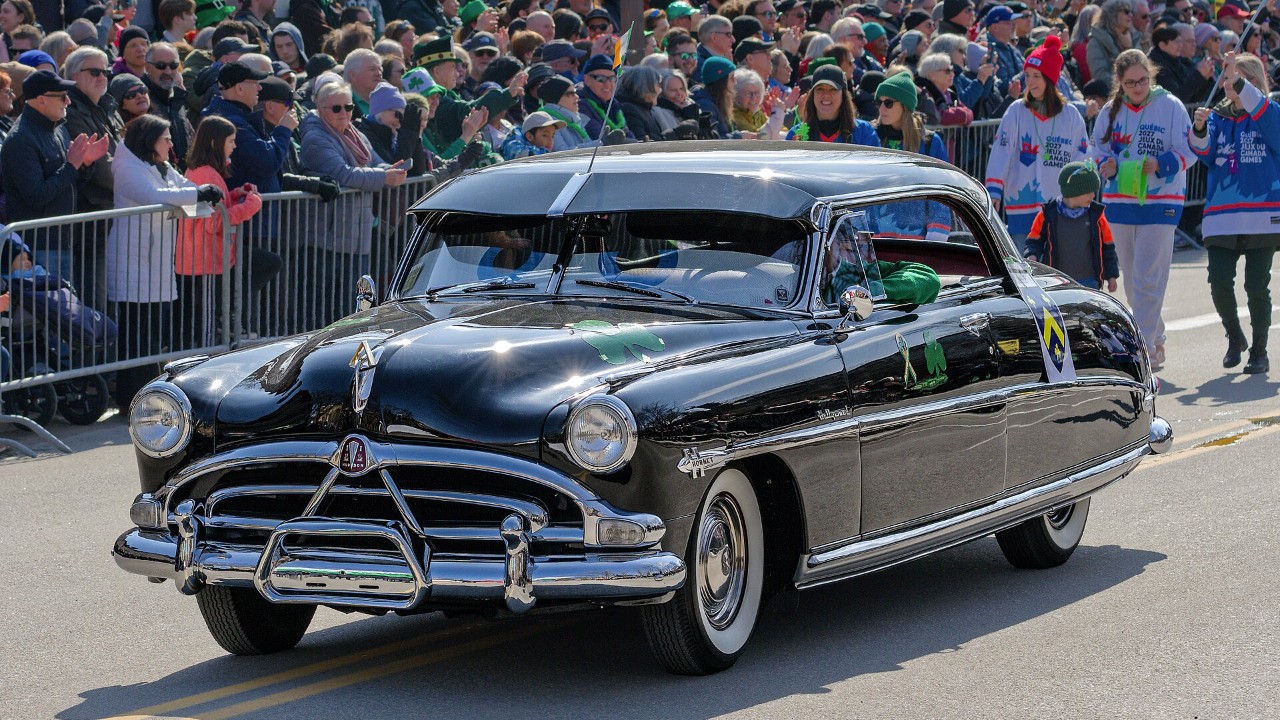
The 1970 Chrysler 300 Hurst arrived at the height of the muscle car wars with a very different attitude, wrapping big-block power in a tuxedo instead of a T-shirt. It was part luxury coupe, part outrageous street bruiser, and that tension is exactly what makes it so fascinating today. I see it as the moment Chrysler decided that comfort and excess did not have to apologize to performance, they could sit in the same leather bucket seat.
The strange idea that actually made sense
By 1970, the muscle market was crowded with stripped-down intermediates that shouted about quarter-mile times and little else, so Chrysler tried a quieter kind of provocation. Instead of building another bare-bones drag special, the company took its full-size 300 and let Hurst turn it into a halo car that mixed plush appointments with serious speed hardware. The result was a machine that looked ready for a country club valet line but had the heart to run with the era’s loudest performance cars, a contrast that still feels bold rather than confused.
That intent shows up in how the project is remembered, with the 1970 Chrysler 300 Hurst often described as one of the more unusual performance cars of its era. It did not chase the lightweight formula of smaller Mopars, instead leaning into size, comfort, and visual drama while still delivering the kind of acceleration buyers expected from a serious 300. That willingness to ignore the prevailing template is exactly where the “luxury and lunacy” mix starts.
From high-end 300 to limited-run Hurst special

Underneath the fiberglass and decals, every Chrysler 300 Hurst started life as a well-equipped 1970 300, which meant the foundation was already more boulevard cruiser than bare shell. Chrysler Supplies High, End, Model hardware gave Hurst a platform with power accessories, upscale trim, and the sort of quiet cabin that made long interstate runs feel effortless. I like that the car’s madness was layered on top of genuine refinement rather than pretending to be something it was not.
The production story only adds to the mystique. All 485 Chrysler 300 Hurst Edition cars began as regular 300s before being converted, a far cry from the roughly 2,000 units that were initially discussed, which leaves the final tally at just 485. That small number, combined with the fact that each one carried the 300 M heritage in its nameplate lineage, turns what could have been a marketing exercise into one of the rarer big-body Mopar experiments of the period.
Styling that shouted while the cabin whispered
Visually, the 300 Hurst did not try to hide its intentions, and that is where the madness really shows. The car wore a distinctive fiberglass hood with a raised center section and integrated scoop, plus a unique decklid with a built-in spoiler that made the rear look almost like a concept car. All Hurst 300s had satin-finish accents and a white-and-gold paint scheme that made the long body look even more imposing, details that are still highlighted in restorations like the Hurst 300 project cars enthusiasts follow today.
Open the door, though, and the tone changes from wild to almost restrained. The interior leaned heavily on the standard 300’s upscale layout, with deep bucket seats, a full-length console, and generous use of brightwork that felt more executive than outlaw. I find that contrast compelling: from the curb, the car looks like a showboat, but once you settle into the cabin, it is clear Chrysler still wanted owners to feel like they were in a high-end 300, not a stripped racer with a decal package.
Big-block power with gentlemanly manners
Under the hood, the 300 Hurst backed up its attitude with serious displacement, even if it was tuned more for effortless thrust than for drag-strip heroics. The big Chrysler V8 delivered the kind of torque that could shove the heavy coupe down the highway with ease, and that broad powerband suited the car’s dual personality. I appreciate that the engineers did not chase a peaky, temperamental setup, instead giving drivers a powertrain that felt relaxed at a cruise but ready to surge when the long hood was pointed at open road.
Chassis tweaks helped keep that power in check. The suspension also got some attention by way of bigger torsion bars up front and stiffer leaf springs in the rear for better control of the 300’s considerable girth, changes that made the car feel more composed than its size suggests. Those upgrades are still cited as key to how the suspension transformed the driving experience from floaty to surprisingly disciplined, especially in fast highway sweepers where the Hurst could stretch its legs.
Why this rare Mopar still feels subversive
Today, the 1970 Chrysler 300 Hurst sits in a strange but appealing corner of the collector world, especially among Mopar faithful who know how unusual it is. This is the rarest Hurst performance-built Mopar you have probably never heard of, a one of just 485 special editions that shows up in enthusiast videos and auction listings as a kind of secret handshake. When I watch walkarounds that call it out as a standout Hurst Mopar, I am reminded how far it sits from the mainstream image of a muscle car, even within its own brand.
Part of that enduring appeal comes from how clearly it pushed against the era’s norms. It was the muscle car era, loud, wild and untamed, But Chrysler had a different idea, asking What if raw power came dressed in elegance instead of bare metal. That narrative still resonates in modern retrospectives that frame the car as a moment But Chrysler chose to wrap aggression in formality, and I find myself drawn to that choice every time I see one of these cars glide across an auction block.
The 300 Hurst’s place in Chrysler lore
Looking back, the 300 Hurst also marks an interesting chapter in the broader 300 story. The 1970 Hurst 300 lacks the single-letter suffix of its forebears and appeared five years after the last Letter Serie cars, yet it still carried the spirit of those earlier high-performance flagships. In my view, it acted as a bridge between the traditional 300 M image and the changing tastes of the early seventies, keeping the idea of a fast, luxurious Chrysler alive even as the market began to shift.
That bridge role is echoed in how enthusiasts and historians group it with other notable 300 variants, often pointing to the way Chrysler Supplies High, End, Model cues were blended with Hurst’s more extroverted touches. Coverage of survivor cars and auction appearances, including detailed looks at a well-preserved 300 Hurst example, underline how carefully the factory and Hurst worked together to get the Hurst cars made. For me, that collaboration is the final piece of the luxury-meets-madness puzzle: a big American manufacturer and a performance specialist betting that comfort, style, and excess power could coexist in one very memorable 300 M.
Even now, when I think about the 1970 Chrysler 300 Hurst, I see more than a curiosity from the muscle era. I see a confident, slightly unhinged answer to a question Oct enthusiasts still ask: how far can you push luxury before it becomes lunacy, and is that exactly where the fun begins.
More from Fast Lane Only: