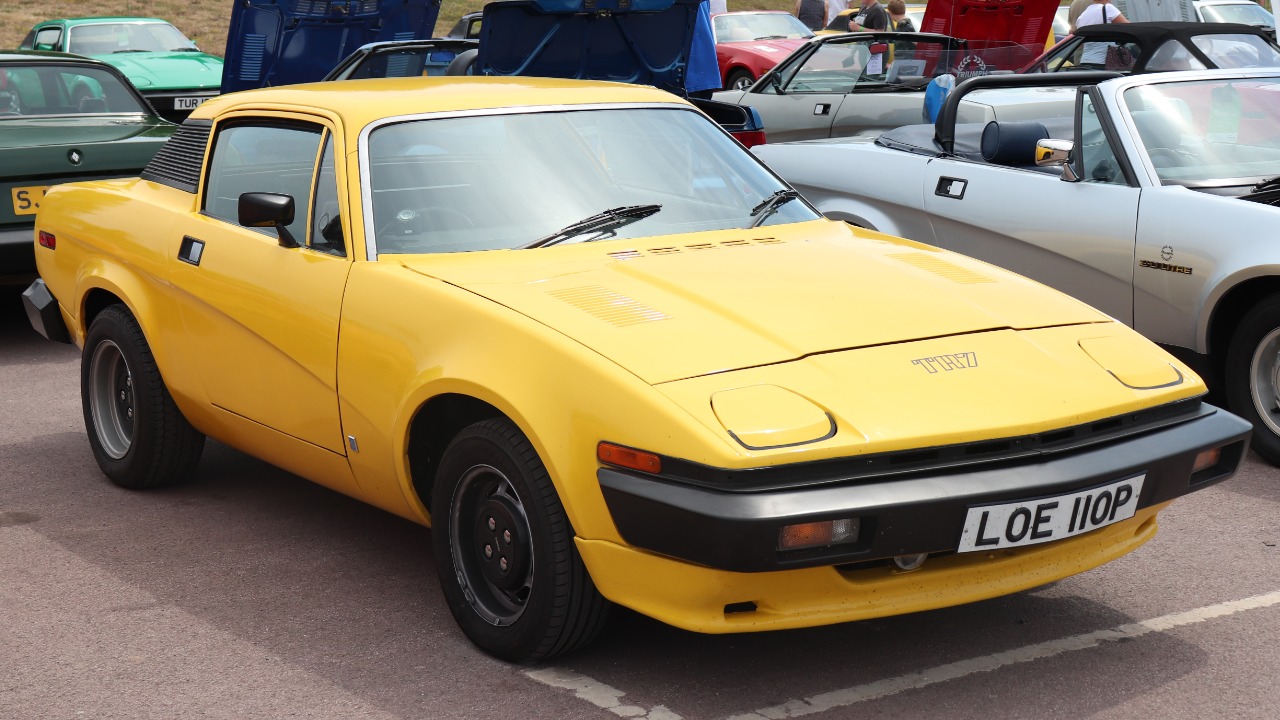
The 1976 Triumph TR7 arrived with the weight of a legend on its shoulders and a shape that looked like it had landed from another planet. Instead of uniting sports‑car fans behind a bold new direction, it split them into camps that are still arguing today. I want to unpack why this sharply creased coupe could be hailed as forward‑thinking by some enthusiasts and dismissed as a betrayal by others.
At the heart of the debate is a clash between what the Triumph TR badge had meant for decades and what the TR7 actually delivered. The earlier Triumph TR models had set expectations for open‑top, mechanical simplicity and a certain rough‑edged charm, while the TR7 tried to drag the brand into a more modern, mass‑market era. That tension between heritage and reinvention is what keeps the car so polarising.
The burden of the Triumph TR legacy
When I look at the TR7 story, I start with the badge itself. The Triumph TR name had been built on a line of cars that enthusiasts often shorthand as Triumph Roadst, a family of open sports machines that defined what a British two‑seater should be in the mid‑20th century. By the time the TR7 appeared, that heritage had hardened into expectation: a Triumph TR was supposed to be a traditional roadster, not a radical wedge‑shaped coupe. One detailed video analysis even stresses that this car is not a Triumph TR in the sense that had been defined decades earlier as meaning Triumph Roadst, which captures how deeply some fans felt the break with the past when they first saw the new model from Sep.
That sense of betrayal was not just about nostalgia, it was about identity. Buyers who had grown up with side screens, separate chassis and wind‑in‑the‑hair driving suddenly faced a fixed‑roof car that looked more like a concept sketch than a continuation of the line. The wedge profile, the high beltline and the more enclosed cabin all signalled a shift away from the raw, open‑air experience that had made the earlier Triumph TR cars icons. When critics argue that the TR7 was the most controversial sports car ever built, they are really pointing to this collision between an established definition of Triumph Roadst and a product that seemed to ignore it, a point that comes through strongly in that same deep dive on the Triumph TR.
Design shock: “America gets a wedgie”

Even if you set the badge aside, the styling alone was enough to divide people. The TR7’s sharp nose, dramatic wedge and bold swage line were a world away from the curvy, chrome‑laden shapes that had come before. In period, some American observers joked that “America gets a wedgie,” a phrase that neatly captures how abrupt the change felt when the car reached showrooms. One long‑form retrospective argues that the TR7 was a car that could have never survived its first year if there had been an internet in 75, and I find that a revealing way to think about how brutal online Feedback would have been for such a polarising shape.
From my perspective, the styling controversy boils down to timing. In isolation, the wedge design looks like a logical step toward the angular sports cars of the 1980s, but in the mid‑1970s it landed in a market still emotionally attached to chrome bumpers and flowing fenders. Fans who embraced the TR7 saw a modern, almost futuristic profile that promised better aerodynamics and a more contemporary feel. Detractors saw a car that looked like it had been folded out of sheet metal with a ruler, and they linked that visual break with what they perceived as a broader abandonment of the Triumph TR spirit. The “wedgie” nickname stuck because it captured both the visual shock and the sense that the car was forcing a new aesthetic on an audience that had not asked for it.
Engineering reality versus enthusiast expectations
Under the skin, the TR7 was also a departure, and that fed the split in opinion. Instead of a separate chassis and simple mechanicals, the car used more modern construction and a specification aimed at comfort and safety as much as raw performance. For drivers who wanted a daily‑usable sports coupe with decent refinement, that was a welcome evolution. For purists, the softer suspension tuning, the fixed roof and the focus on practicality felt like compromises that dulled the edge that had made earlier Triumph TR models so engaging. When I compare those viewpoints, I see a classic case of a manufacturer trying to broaden its audience while its core fans wanted the opposite.
The later development of the TR8, with its V8 power, shows how the same basic platform could be pushed in a direction that appealed more to traditional performance enthusiasts. A detailed exploration of the model line notes that The Triumph TR7 and TR8 were the final cars of the Triumph TR series, which defined the British sports car in the 20th century, and that context matters when judging the engineering choices. By the time those last cars arrived, the company was trying to reconcile safety regulations, emissions rules and cost pressures with the expectations attached to a storied badge. That tension is laid out clearly in a video that digs into the TR7 and TR8 controversy, and it helps explain why some owners praise the car’s usability while others dismiss it as over‑civilised.
Quality woes and the British car industry’s troubles
Design and engineering choices might have been enough on their own to make the TR7 contentious, but quality problems turned irritation into outright hostility for some buyers. Built during a turbulent period for the British car industry, the TR7 suffered from inconsistent assembly and reliability issues that quickly became part of its reputation. When I talk to owners, I hear stories of electrical gremlins, water leaks and trim that did not age gracefully, all of which fed the narrative that the car was not just different from earlier Triumph TR models but also less robust. In the United States in particular, that perception hardened quickly and coloured how enthusiasts viewed the car for decades.
Those problems were not entirely the car’s fault, they were symptoms of a wider industrial crisis. The same factories that produced the TR7 were wrestling with labour disputes, cost cutting and outdated equipment, and the car became a visible symbol of those struggles. Retrospectives on the period point out that management decisions and production chaos were at least as responsible for the car’s flaws as the underlying design. When critics say the TR7 could not have survived its first year in the age of instant online Feedback, they are really highlighting how quickly stories of breakdowns and poor fit and finish would have spread. In that light, the car’s controversial status is as much about the collapse of confidence in British manufacturing as it is about any single mechanical weakness.
A “divided” classic in today’s market
Fast forward to today and the TR7 has settled into a curious niche. It is no longer just the butt of jokes about “wedgies” and missed opportunities, but it has not been fully embraced as a blue‑chip classic either. Instead, it sits in that interesting middle ground where some collectors see a bargain entry into classic Triumph ownership and others still walk past without a second glance. A recent feature By Classic Yorkshire contributor Tony Lofthouse describes the Triumph TR7 as a “divided” classic and notes that, while it might not be everyone’s cup of tea, interest in the wedge‑shaped car is growing as enthusiasts reassess its place in history and as more examples are restored and kept on UK roads. That perspective, from By Classic Yorkshire contributor Tony Lofthouse, captures how opinions are still split but perhaps softening.
From where I sit, that evolving reputation makes sense. Younger enthusiasts do not carry the same emotional baggage about what a Triumph TR “should” be, so they are more likely to judge the TR7 on its own merits: an affordable, distinctive classic with a usable cabin and a look that stands out in any car park. At the same time, long‑time fans who once dismissed the car are starting to recognise its role as a bridge between the old Triumph Roadst era and the more modern sports coupes that followed. The very qualities that once made it controversial, from the wedge styling to the focus on comfort, now give it a unique character in a world where many classics can feel interchangeable. That is why, even though the arguments about the 1976 Triumph TR7 have not gone away, they have shifted from anger about betrayal to a more nuanced debate about how we balance heritage, innovation and the messy realities of carmaking.
More from Fast Lane Only: