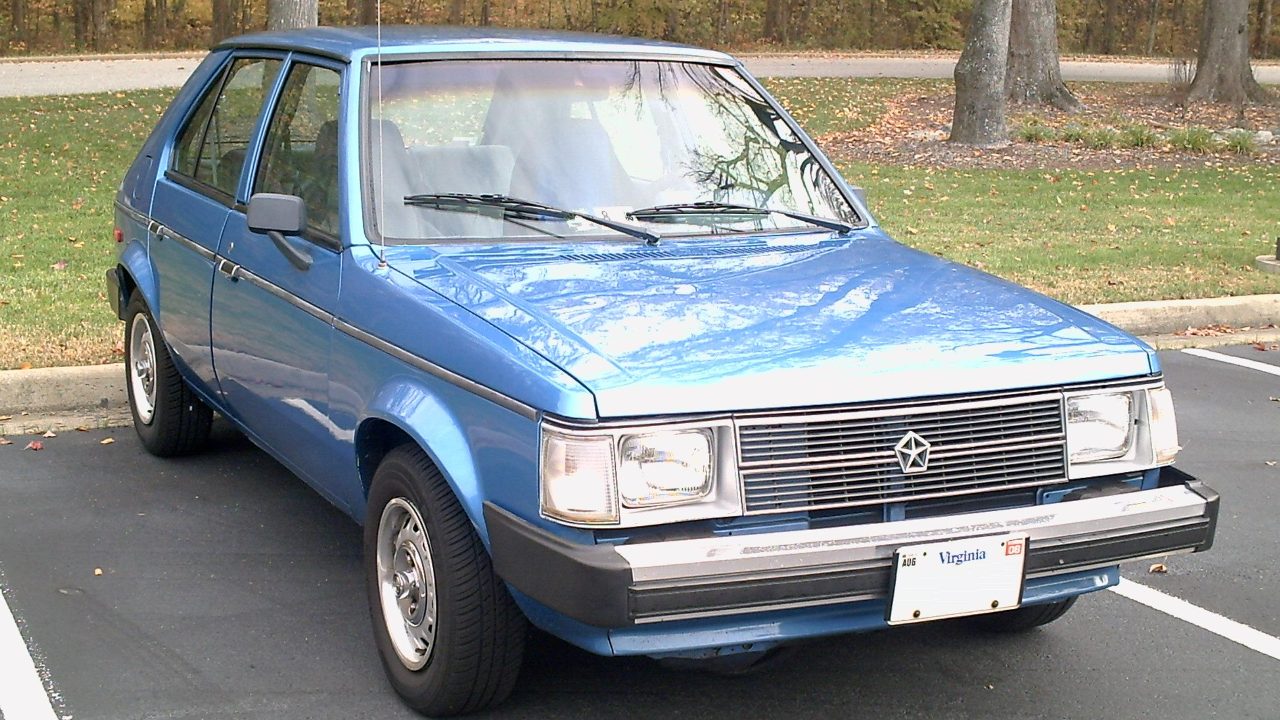
The 1985 Dodge Omni GLH arrived looking like a sensible economy hatchback, then proceeded to embarrass cars that were supposed to be the heroes of American performance. Built from a humble front wheel drive commuter, it turned skeptics into believers by delivering real speed, sharp responses, and a dose of Carroll Shelby attitude in a package that still wore steel wheels and boxy sheet metal. I see its impact most clearly in how often it is still used as a benchmark when people talk about unlikely performance cars today.
From economy box to “Goes Like Hell”
The starting point for the 1985 Dodge Omni GLH was about as unglamorous as it gets, a compact hatch that had been designed to haul families and groceries, not to chase down pony cars. That is exactly why the transformation hit so hard. Instead of building a separate sports model, Dodge took the existing Omni and turned it into the Omni GLH, a car whose name was widely understood to stand for “Goes Like Hell,” a phrase that captured both its straight line punch and its slightly unhinged charm. The contrast between the square, upright body and the performance promise in that name set up the surprise that would define the car’s reputation.
Under the skin, Dodge leaned on a simple formula, more power and better tuning in a light chassis. Reporting on the 1985 Omni GLH Turbo notes that Dodge used two things to build the Omni GLH Turbo, a swear word and a 142 horsepower turbocharged 2.2L four banger, a blunt description that underlines how much extra shove engineers squeezed from a basic four cylinder engine. That 142 figure mattered in the mid 1980s compact segment, because it pushed the Omni GLH into territory usually reserved for larger, more expensive performance models, while the basic body and interior remained recognizably economy car grade.
Carroll Shelby’s unlikely hot hatch canvas
The Omni GLH would not have shocked as many skeptics without Carroll Shelby, whose name was already synonymous with American performance. Instead of working only with rear wheel drive coupes, Carroll Shelby turned his attention to front wheel drive compacts, seeing potential where others saw rental fleet fodder. Coverage of the later Dodge Omni GLH projects describes how Carroll Shelby took this modest hatchback and treated it as a serious performance platform, a decision that ran against the grain of traditional muscle car thinking but aligned perfectly with the emerging hot hatch idea.
Accounts of the Dodge Omni GLH and the related Dodge Omni GLH-S emphasize that Carroll Shelby did not just sign off on badges, he pushed for meaningful upgrades that made the cars genuinely quick. One detailed look at the evolution of these models notes that the 1985 Omni GLH saw a turbocharged engine appear on the options sheet, and that Shelby noticed this development and made them even quicker, a reminder that his involvement was about extracting more from the existing mechanical package rather than starting from scratch. By treating the Omni as a canvas for serious tuning, Carroll Shelby helped legitimize front wheel drive performance in an era when Some American performance cars screamed for attention while Others earned their status by surprising people on the road.
Turbo torque and real world speed

What truly silenced doubters was how the 1985 Omni GLH Turbo performed outside of spec sheets. The combination of a small footprint, relatively low weight, and that 142 horsepower turbocharged 2.2L four banger gave the car a punchy, mid range surge that felt far stronger than its modest displacement suggested. Drivers discovered that in everyday conditions, from stoplights to short highway on ramps, the Omni GLH could keep up with or even outrun cars that looked far more aggressive, a trait that fed its reputation as a sleeper.
Later coverage of the Shelby tuned versions reinforces how potent this basic formula could become. One analysis of the Omni GLH and its successors describes how the turbo engine gained refinements like knock correction, which allowed tuners to safely push boost and timing for more power without sacrificing reliability. Another deep dive into a heavily modified example, a 470HP Dodge Omni GLH reviewed on video, shows how the same basic layout can be tuned to extreme levels, with the presenter noting that the car runs absolutely beautifully even at that output. While that 470HP figure goes far beyond the factory 1985 specification, it illustrates how much headroom the original turbocharged architecture offered and why enthusiasts still see the Omni GLH as a serious performance platform rather than a novelty.
Design understatement and the sleeper effect
Part of the Omni GLH’s shock value came from how little it visually advertised its capabilities. The basic Omni shape was upright and practical, with large glass areas and simple lines that made it look more like a commuter than a canyon carver. Contemporary reflections on the Omni’s design highlight Simple black trim, a fake grille, and a Hoffmeister kink on the rear door that evoke the Omni’s design, details that read as subtle rather than aggressive. The rocker panel molding and modest spoilers on performance variants added some attitude, but the overall impression remained restrained, especially compared with the stripes and scoops that defined many 1980s performance cars.
That understatement made the Omni GLH a classic sleeper. Owners could roll up next to larger coupes and sedans whose drivers assumed the little Dodge was no threat, only to be surprised when the turbo spooled and the hatchback surged ahead. Later interpretations of the Omni’s look, including an electric Omni concept that channels the original, keep the same basic cues, from the simple black trim to the distinctive rear door shape, and even echo the original interior with a focused gauge binnacle and a center console that nods to the performance intent. By keeping the visual language low key, Dodge and Carroll Shelby ensured that the car’s reputation would be built on what it did rather than how loudly it shouted about its abilities.
Legacy, nostalgia, and the GLH-S shadow
The 1985 Omni GLH also has to be understood in the context of what followed, particularly the Dodge Omni GLH-S. Enthusiast reporting on the GLH-S describes it as a crazy fast 1980s hatch that Carroll Shelby built and almost everyone forgot, a car that took the GLH idea and pushed it further with more power and more focused tuning. Another retrospective calls the GLH-S a Camaro beating, blacked out hot hatch, underscoring how far the concept had evolved from the original economy car roots. The fact that the GLH-S could credibly be compared with traditional American performance icons shows how strong the foundation laid by the 1985 Omni GLH really was.
Yet the shadow of the GLH-S has also helped cement the 1985 Omni GLH’s cult status. Enthusiasts who discover the later Dodge Shelby Omni variants often trace the lineage back to the earlier turbocharged Omni GLH, recognizing that the initial decision to bolt a 142 horsepower turbocharged 2.2L four banger into a humble hatchback opened the door for everything that followed. Modern video features on cars like the Dodge Shelby Omni and high power GLH builds keep that story alive, presenting these machines as unusual but important chapters in American performance history. When I look at how often the Omni GLH is invoked in discussions of hot hatches and sleeper cars, it is clear that the 1985 model did more than just surprise skeptics in its own time, it helped redefine what an American performance car could look like.
More from Fast Lane Only: