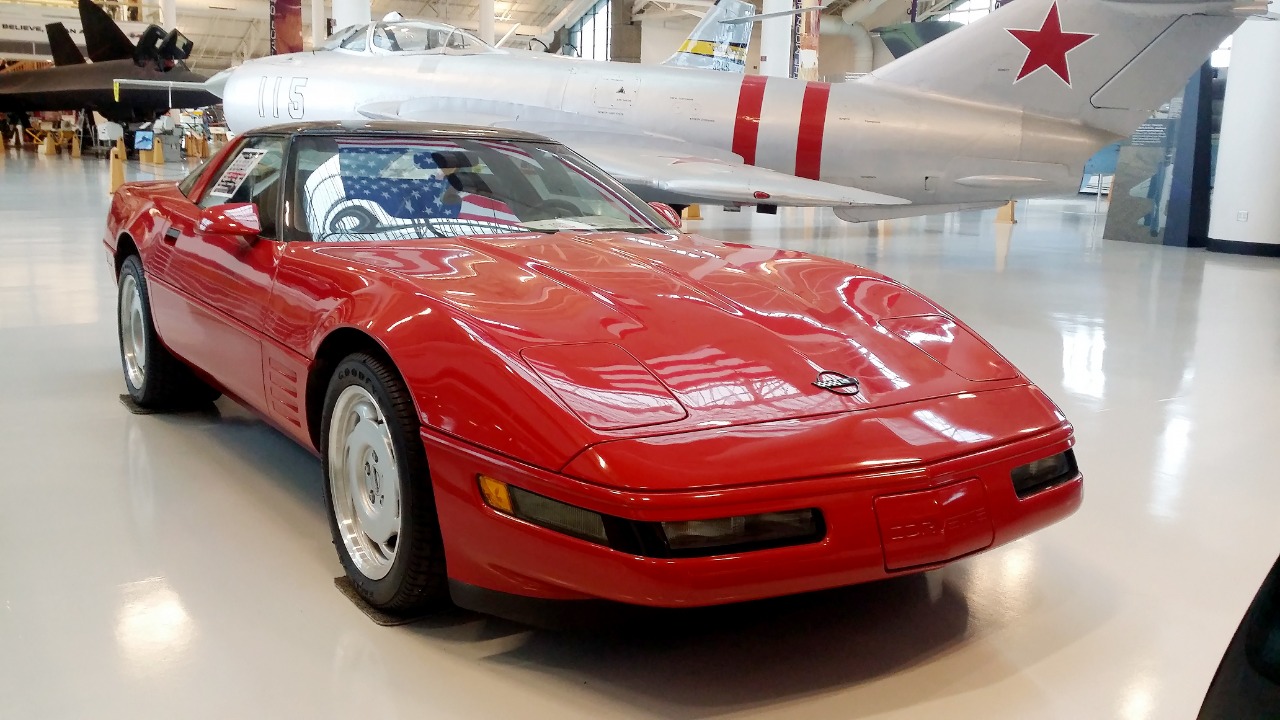
The 1991 Corvette ZR-1 arrived at a moment when American performance cars were fighting to be taken seriously against Europe’s best, and it did not just keep up, it reset expectations. By its third model year, the “King of the Hill” had evolved from a headline grabber into a genuinely rounded supercar you could actually live with, while still carrying the kind of numbers that made period rivals nervous. If you are looking at where the C4 era truly peaks, this is the year when the ZR-1 finally feels fully dialed in.
The halo Corvette that finally felt complete
By 1991, the ZR-1 had moved from shock value to refinement, and you can feel that shift every time you walk around the car. The basic C4 shape stayed familiar, but the high performance flagship gained a cleaner nose, updated rear fascia, and details that made it look more modern without losing the sharp-edged attitude that defined the generation. Period reviewers noted that when the C4 Corvette ZR first arrived it simply overwhelmed competitors on power and grip, but by this model year the styling and cabin updates finally matched the engineering story.
Underneath, the ZR-1 remained the high performance halo for the broader Chevrolet Corvette ZR lineup, engineered to run with Europe’s elite and justify its reputation as “King of the Hill.” Contemporary descriptions of the 1991 Chevrolet Corvette ZR-1 call it a high-performance halo car for its time that was built to rival Europe, and that ambition is exactly what you sense in the way this car is put together. Its combination of advanced engineering, powerful performance, and classic styling is still cited as the reason Its 1991 Chevrolet Corvette ZR1 remains a standout choice for collectors and Corvette enthusiasts today.
The LT5 heart that made the ZR-1 a legend
What truly sets the 1991 ZR-1 apart for you is its Engine, a piece of hardware that still feels exotic decades later. The LT5 V8 was a 5.7 liter, all aluminum, dual overhead cam design that broke sharply from the traditional small block formula, and it gave the car a personality closer to a European exotic than a typical muscle machine. Factory specs list the Engine at 350 cubic inches and 375 horsepower, figures that put it squarely in supercar territory for the early 1990s.
The story gets even more interesting when you look at how that LT5 came to be. The 91 ZR-1 used a lotus designed, mercury marine built 5.7l DOHC LT5 V8 that enthusiasts still describe as a technological powerhouse wrapped in classic C4 styling, a combination that made the 91 car feel like something special even parked next to other Corvettes. Another period description of the same lotus designed, mercury marine built 5.7l DOHC LT5 V8 reinforces how unusual it was to see that level of engineering in an American sports car, and how effectively it turned the ZR-1 into a technological showcase.
Chassis, tires, and that unforgettable gearbox
Power alone would not have been enough for the ZR-1 to mature in 1991, and this is where the chassis and rolling stock quietly did their part. The standard Corvette Coupe already benefited from 17 inch cast aluminum wheels and P275/40ZR-17 Goodyear Eagle unidirectional high performance tires that sharpened grip and response, and the ZR-1 built on that foundation with its own suspension tuning. Those factory details about the Corvette Coupe and Goodyear Eagle setup help explain why the car felt so composed at the limit compared with earlier C4s.
Then there is the transmission, a piece of hardware you notice every time you row through the gears. Owners still talk about how the zf 6-speed transmission has an exotic whine as you row the gears, a trait that gives the car a mechanical soundtrack to match the LT5’s shriek. That same zf 6-speed, supplied by the German driveline specialist behind modern ZF systems, gave the ZR-1 a precise, European feel that matched its engine’s character. Enthusiasts in C4 communities still single out that zf 6-speed transmission and its exotic whine as a defining part of the driving experience, a reminder that the car’s hardware was every bit as special as its badge.
Performance that humbled the 911 Turbo
When you look at the numbers, it becomes clear why The ZR-1 was too expensive to succeed but too good to ignore. Instrumented testing recorded zero to 60 m in 4.5 seconds, and the car had enough power to kiss 180 mph, figures that put it squarely in the realm of contemporary European exotics. Those numbers, cited in modern retrospectives that still call the C4 ZR-1 the last affordable 90s supercar, show how the car’s combination of LT5 power and long-legged gearing let it run with the best, a point underscored by the way 60 m in 4.5 is still quoted today.
The real proof of how far the 1991 car had come is in its showdown with the Porsche 911 Turbo. In a widely cited comparison, The ZR-1 defeated the Porsche 911 Turbo for one reason, it simply goes faster better, and As Rich Ceppos wrote at the time, the car could deliver that pace and somehow make it look easy. That same account of The ZR beating the 911, with The ZR, Porsche, and Turbo for all spelled out, is still used today to illustrate how comprehensively the American car could outpace its German rival. A separate summary of that same matchup repeats that The ZR-1 defeated the Porsche 911 Turbo for one reason, it simply goes faster better, and again credits As Rich Ceppos with capturing how the car could deliver that performance without drama, a testament to how thoroughly the chassis and powertrain had been honed by 1991.
From world record runs to stealth tech inspiration
If you want to understand how serious the ZR-1 program was, you only need to look at its long distance exploits. In a celebrated World Record Run, factory backed drivers took The ZR-1 around a high speed track for hours on end, setting multiple endurance marks and pushing an average of 175.710 mph into history. That event is still remembered in Heritage Series retrospectives as One of the defining moments in Corvette history, and the way the World Record Run is described today underscores how the car’s reliability matched its raw speed.
The ZR-1’s influence even reached beyond the car world into aerospace. In a later interview, a Skunk Works team member recalled that The ZR windshield, with its heat reflecting properties, was one of the clues that directed them toward stealth technology, a small but telling example of how advanced the car’s materials were for its time. That same account of Skunk Works engineers studying The ZR to finally understand the Corvette highlights how the car’s engineering details, from its glass to its aerodynamics, resonated with people who spent their careers on cutting edge projects, and it is why enthusiasts still point to that Skunk Works anecdote when they talk about the car’s legacy.More from Fast Lane Only