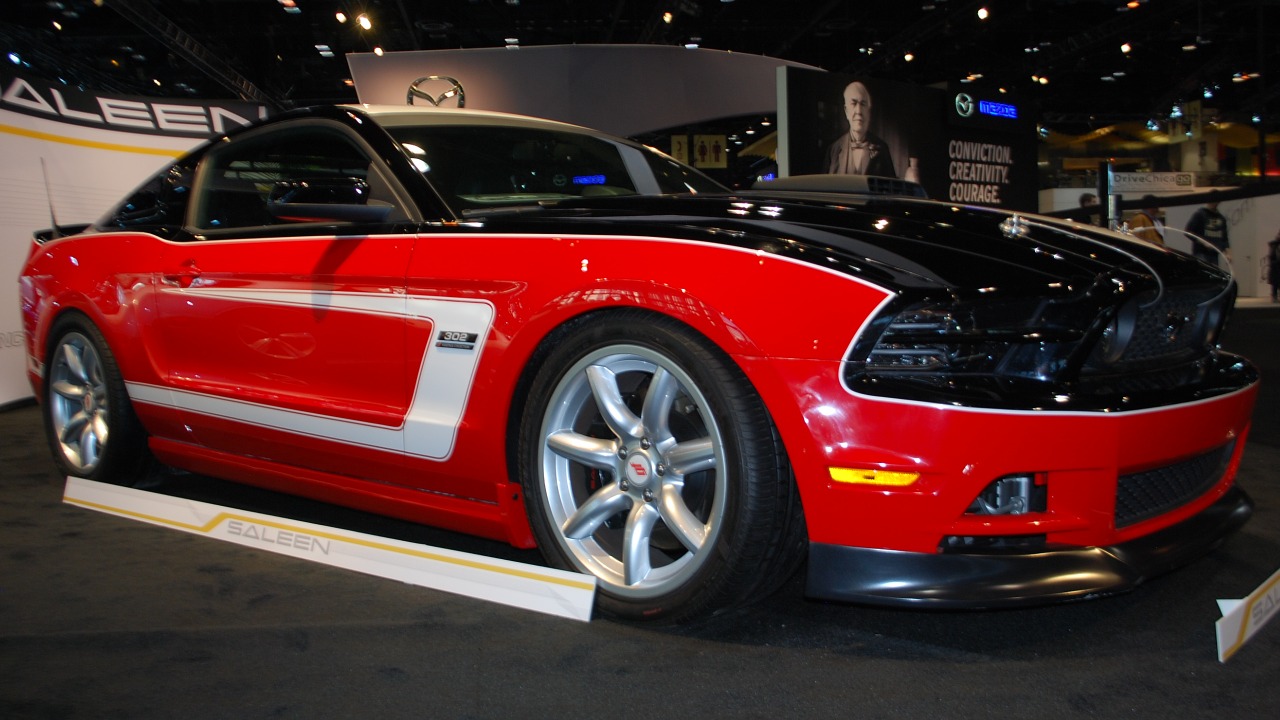
Rarity in the performance-car world is usually measured in six-figure prices and gated communities of collectors. The Saleen Mustang quietly rewrote that equation, turning limited-production exclusivity into something a committed enthusiast could actually see, touch, and drive. By layering race-bred engineering onto Ford’s mass-market pony car, it made scarcity feel less like a distant fantasy and more like a reachable goal.
Across four decades, from Foxbody origins to modern widebody specials, the Saleen formula has stayed remarkably consistent: take a familiar Mustang shell, then elevate it with focused chassis tuning, distinctive bodywork, and serious power. The result is a lineage of cars that remain rare in production numbers yet grounded in the everyday reality of Ford dealerships, club meets, and track days.
From tuner vision to attainable icon
The Saleen Mustang story begins with a simple but radical idea: that a specialist builder could transform a mainstream Ford into a car with the presence and precision of far more exotic machinery, without abandoning the Mustang’s accessible roots. Few names are as iconic in American performance as Saleen, and that reputation was built by taking Ford platforms and reimagining them as complete, cohesive performance packages rather than bolt-on projects. Since the 1980s, Saleen has been transforming Ford products from the Ford Motor Company into limited-production machines that still start life on the same assembly lines as everyday commuters, a foundation that kept pricing and serviceability within reach of serious enthusiasts rather than only investors.
Early cars such as the mid‑1980s Saleen Mustangs showed how this philosophy worked in practice. A blue‑on‑blue 1985 Saleen identified as car number 55, for example, illustrates the period formula: vivid paint, distinctive graphics, and carefully chosen suspension and aero changes that made the car feel special without severing its connection to the standard Mustang underneath. That car’s very 1980s color palette and numbered identity underscore how Saleen cultivated a sense of rarity through specification and serialisation, while the underlying Foxbody architecture kept it grounded in the same ecosystem of parts, mechanics, and driving manners that owners already understood.
Serial numbers, special editions, and the psychology of scarcity
Saleen’s genius was not only mechanical, it was psychological. By assigning individual numbers and building short runs of specific variants, the company created a sense of scarcity that owners could literally read on a dashboard plaque. A Rio Red 1996 Saleen S351 Speedster with just 9,356 miles, highlighted as an ultra‑rare and desirable example, shows how this approach aged into genuine collectability. The S351’s combination of open‑top bodywork, high output, and low production volume turned it into the kind of car that circulates among dedicated collectors, yet it still traces its roots to a familiar Mustang platform that once sat in ordinary showrooms.
Later generations only sharpened that focus. New Edge era Saleen Mustangs, often celebrated by New Edge enthusiasts as some of the rarest factory‑tuned variants, layered superchargers, aggressive aero, and track‑ready suspensions onto the already sharpened SN95 chassis. Reviewing a group of six of the rarest New Edge Saleen models, one presenter framed them as “extremely, extremely special” for Mustang fans, not because they were unobtainable hypercars, but because they represented the upper edge of what a dedicated owner might realistically hunt down and afford. The numbered builds, unique color and trim combinations, and limited production runs created a collector’s mindset around cars that still shared their bones with mass‑produced Mustangs.
Race-bred engineering without the velvet rope
Underneath the graphics and plaques, Saleen’s credibility has always rested on engineering that drew directly from competition. Steve Saleen’s own racing background shaped the way the company approached chassis tuning and aerodynamics, a connection that remains visible in modern test drives of Foxbody Saleen cars in Corona California, where Steve walks through how he “built over 3” decades of Mustang specials. That continuity of vision, from early Foxbody builds to contemporary models, reinforces the idea that these cars are not mere appearance packages but integrated performance machines tuned by someone who understands what works on a circuit.
The Saleen SR widebody program pushed that philosophy to its logical extreme. A 1 of 1 Saleen SR street Mustang and a companion Saleen SR racecar demonstrate how closely the road and track efforts were intertwined, with the street car described as the perfect exotic candidate thanks to its widebody stance and custom composite body with extensive lightweight materials. Yet even here, the core remains recognisably Mustang, which means owners are not dealing with an entirely bespoke platform. That balance, race‑car drama on a familiar base, is what allowed Saleen to flirt with exotic‑car territory without crossing into the financial stratosphere of European supercars.
Dealers, drivetrains, and the everyday reality of owning one
Rarity usually implies difficulty, whether in finding a car, maintaining it, or simply living with it. Saleen softened those edges by working through Ford dealers and keeping the cars serviceable within the broader Ford ecosystem. A dedicated Saleen Ford dealer in Albuquerque, New Mexico, for instance, presents Saleen as a natural extension of Ford performance, emphasising that Few names are as iconic in American performance as Saleen and that customers can access these cars right at a mainstream dealership. By anchoring the brand inside the Ford retail network, Saleen turned what might have been a boutique curiosity into something a buyer could finance, insure, and service much like any other Mustang.
Even drivetrain choices reflect this blend of exclusivity and practicality. In enthusiast discussions, figures such as Jay Ronca note that There are certainly far fewer automatics than manuals in the Saleen Mustang world, a reminder that some configurations are genuinely scarce. Yet the same conversation stresses that rarity does not always translate directly into higher value, especially when it comes to automatic transmissions in a performance‑focused community. That nuance captures the Saleen Mustang’s position perfectly: these cars are limited and special, but they still obey the real‑world logic of the Mustang market, where driver preference, condition, and provenance matter as much as production numbers.
Modern evolutions and the shadow of true exotics
As the Mustang platform evolved, so did Saleen’s interpretation of what an attainable rare car could be. The 2003 Ford Mustang Saleen, for example, took the already aggressive SN95 Mustang and transformed it into a street‑legal performance weapon, with supercharged power and sharpened dynamics that justified its premium over a standard GT. Later, the 2005 Ford Mustang Saleen S281 on the S197 chassis was celebrated by fans as the ultimate factory‑tuned predator that turned the new‑generation Mustang into a street‑shaking beast, complete with social‑media tags that framed it as “SaleenSavage” and “SuperchargedSin.” These cars were aspirational, but they were still recognisably Mustangs, often purchased by the same enthusiasts who might otherwise have considered a well‑optioned GT or SVT model.
Modern commentary on current Saleen Mustangs reinforces that the brand is not trading solely on nostalgia. A recent evaluation of a contemporary model stressed that the chassis communicates clearly, making the car feel connected rather than overpowering, and that it rewards commitment while remaining usable. That description could easily apply to far more expensive European sports cars, yet here it is attached to a Mustang‑based product that can still be bought, financed, and serviced through familiar channels. In parallel, the broader Saleen portfolio includes the S7 supercar, which is often compared with Ferrari and Pagani products. One of the key observations about the S7 is that, unlike Ferrari and Pagani models whose badges alone can drive values into the millions, the Saleen name does not yet command the same speculative premium. That contrast highlights how the Saleen Mustang occupies a different, more grounded space: it delivers a taste of exotic engineering and scarcity without the speculative bubble that surrounds brands like Ferrari.
More from Fast Lane Only