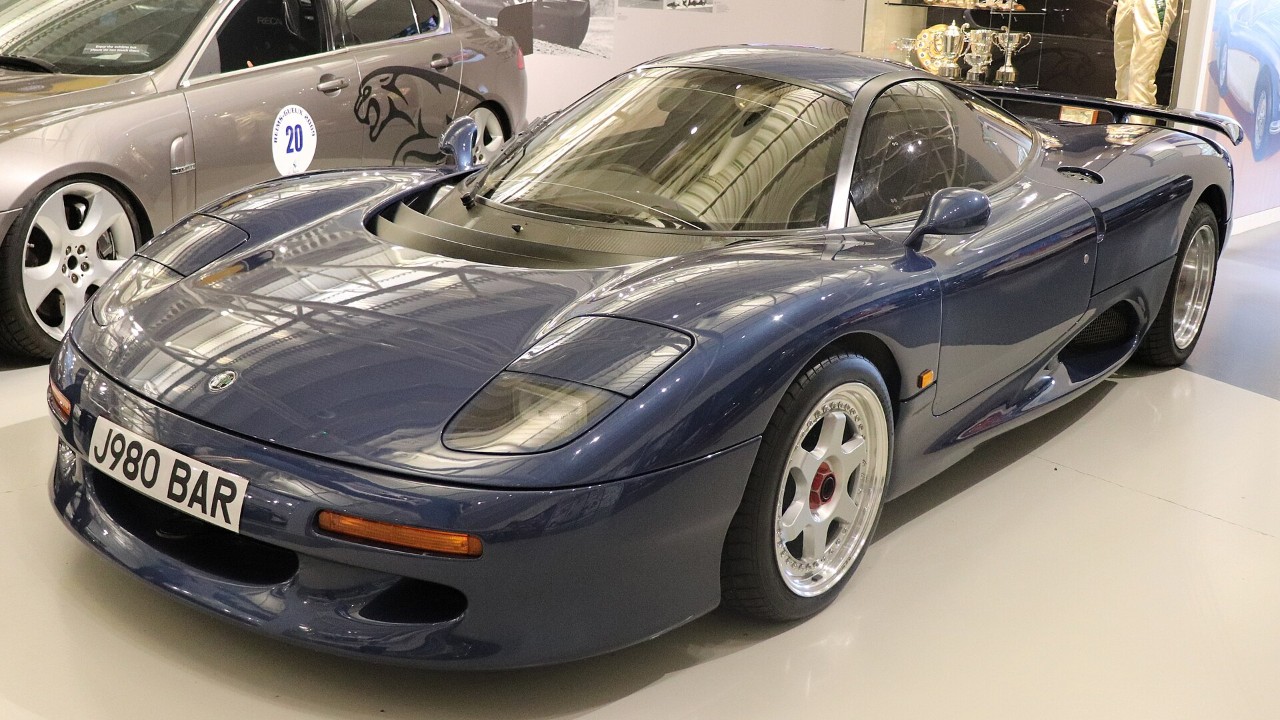
Some performance cars are rare because their makers planned it that way, and others because almost nobody bought them. This list mixes both, from the 53-car Jaguar XJR-15 to a Koenigsegg built only six times. Every one of the 15 was built in numbers small enough that a whole production run could fit in one parking lot.
Most come from the 1990s and 2000s, and many come from small makers in Britain, Sweden, Germany and the US. Each build count below comes from the source linked in that entry.
1. 1992–1994 Jaguar XJ220

The XJ220 that buyers got was not the car Jaguar first showed them. The 1988 prototype had a V12 and all-wheel drive. However, the production car switched to a twin-turbo V6 and rear-wheel drive, and some customers who had paid early deposits sued over the changes.
In fact, that V6 measured 3.5 liters and traced back to the MG Metro 6R4 rally engine. It made 542 hp, according to Supercars.net’s XJ220 guide. Jaguar and Tom Walkinshaw Racing had planned 350 cars. In the end, sales disappointed, and they built 282 from 1992 to 1994.
2. 1990–1992 Jaguar XJR-15

The Jaguar XJR-15 was a race car first. Its carbon and Kevlar tub came from the XJR-9 race car, and Peter Stevens, who later styled the McLaren F1, shaped the body. In 1991, its one-make Intercontinental Challenge paid $1 million to the race winner at Spa, and Armin Hahne took the prize.
Meanwhile, behind the cockpit sat a 5,993 cc naturally aspirated V12 rated at 450 bhp. According to Supercar Nostalgia, the Jaguar XJR-15 cost $960,000. Jaguar planned 50 but built 53, with 18 in race spec and 35 for the road.
3. 1999 Aston Martin Vantage Le Mans
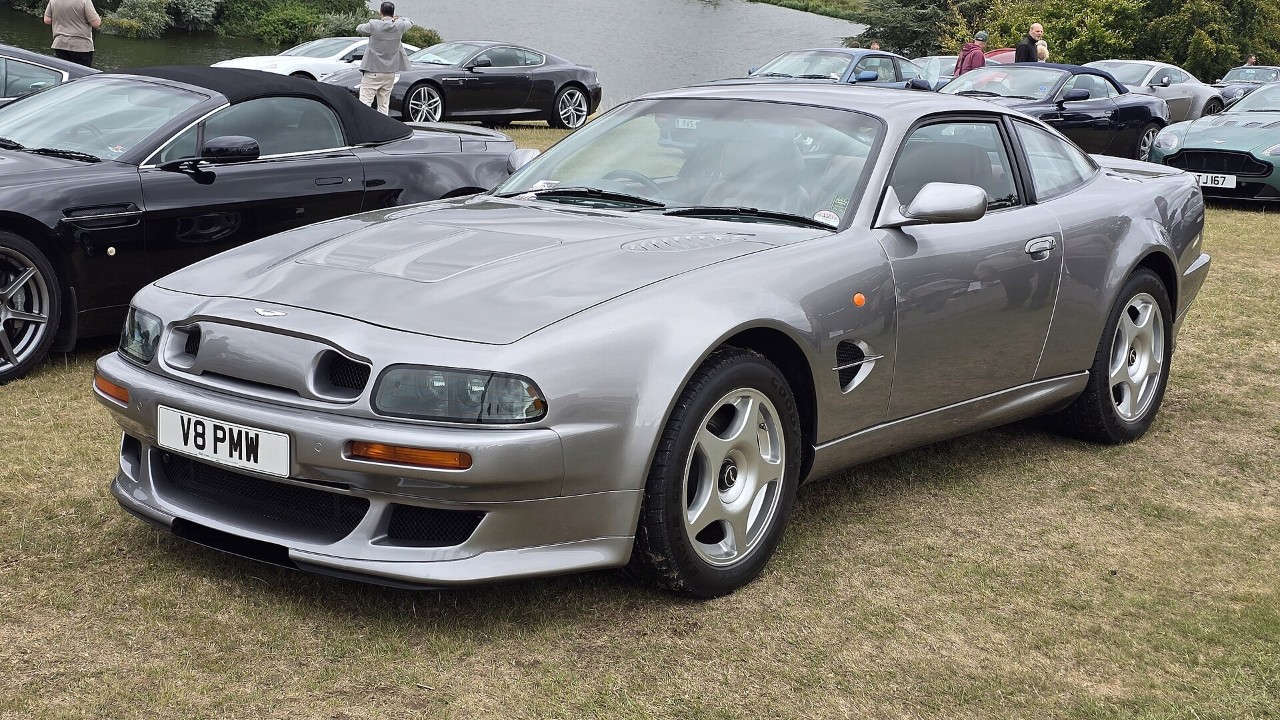
Aston Martin announced the Vantage Le Mans in March 1999 as the last special edition of the Virage-era Vantage. Also, its name honored the DBR1’s 1959 win at Le Mans. Drop-shaped side vents inspired by the DBR1 and magnesium five-spoke wheels set it apart.
The Vantage underneath used a 5.3-liter V8 with two superchargers and 550 hp. Then the V600 package raised that to 600 hp, either from the factory or as a later kit. As Secret Classics reports, Aston limited the car to 40 examples.
4. 1997–2000 Ascari Ecosse
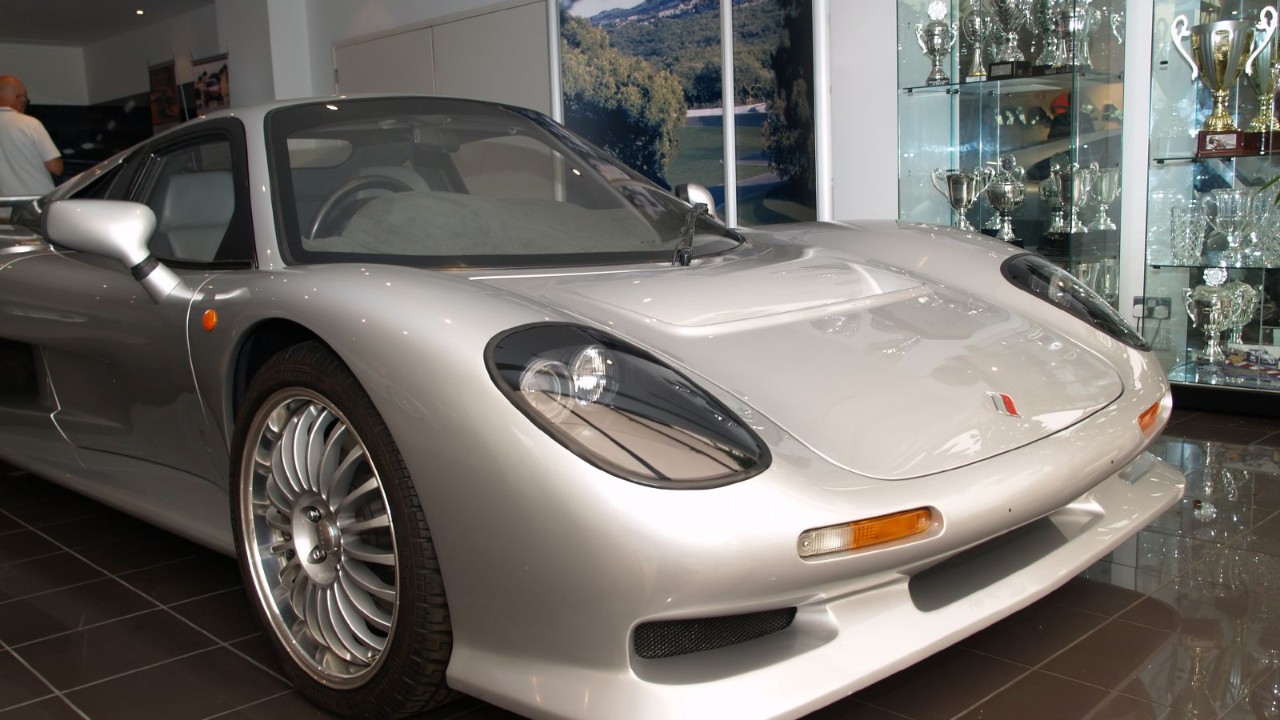
The Ecosse began as the FGT concept, and Lee Noble designed its plastic body. Dutch entrepreneur and racer Klaas Zwart saw that car in 1995 and took over the whole company. Later, he opened the Ascari Race Resort near Ronda, Spain.
Series production ran from 1997 to 2000, and only 17 road cars were built. According to Secret Classics, the base 4.4-liter BMW V8, tuned by Hartge, made 304 hp. Later cars got a 4.7-liter version with 406 hp. Meanwhile, three cars received a 5.0-liter V8 rated at 426 hp.
5. 1999 Lotus Esprit Sport 350
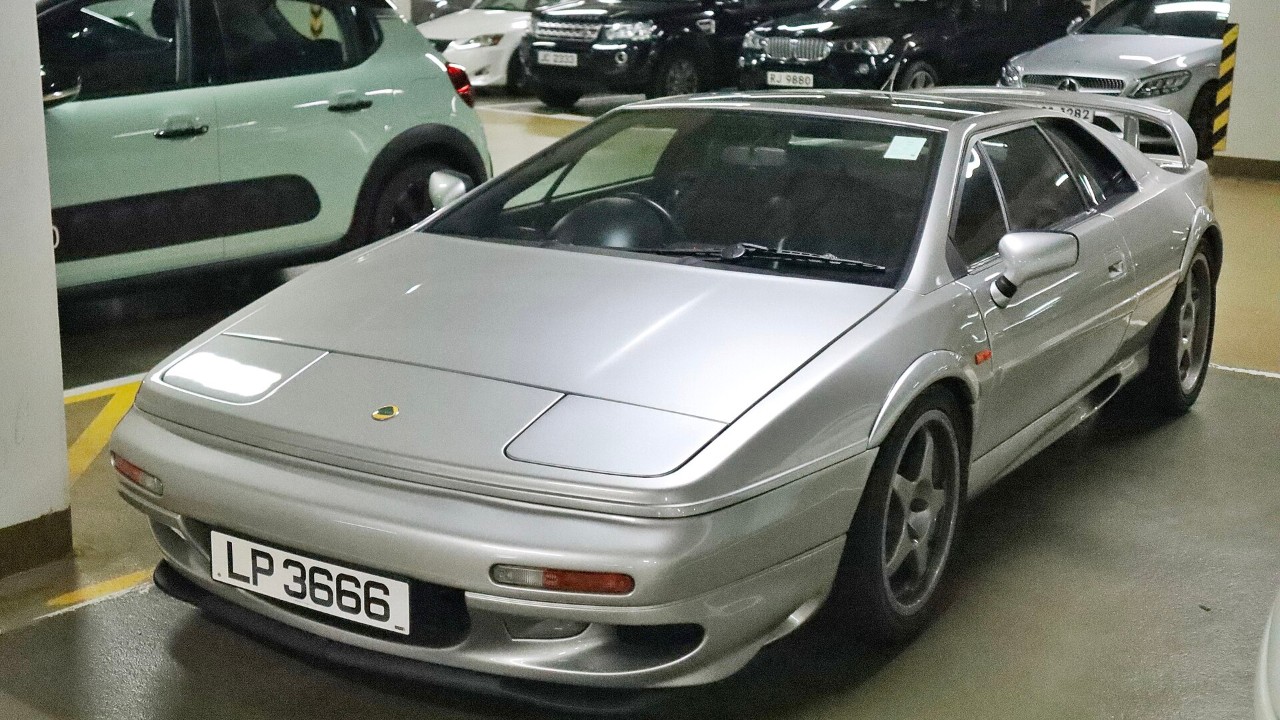
Lotus didn’t add power to make the Sport 350. Instead, it took weight out, about 80 kg compared with the standard V8 GT, using a lighter bodyshell and magnesium wheels. It also added a large carbon-fiber wing related to the one on Lotus’s Type 115 GT racer, plus AP Racing brakes.
Under the engine cover, though, the 3.5-liter V8 used twin Garrett T25 turbos and made 349 bhp, the same as the regular car. Supercars.net puts the launch price at £64,950, about £5,000 above the standard V8. Production numbers vary, with the page citing both 42 and 50, so fewer than 50 is the safe count.
6. 1999 Shelby Series 1

Carroll Shelby’s Series 1 roadster used an aluminum chassis with honeycomb floor panels, plus a body of carbon fiber and fiberglass. Power came from Oldsmobile’s 4.0-liter DOHC Aurora V8, rated at 320 hp at 6,500 rpm.
According to the Museum of American Speed, Shelby built 249 production cars, all titled as 1999 models. Once the 1999 safety certificate expired, later cars left as component cars with no engine or transmission. Also, supercharged prototypes made nearly 600 bhp.
7. 2002–2003 Koenigsegg CC8S
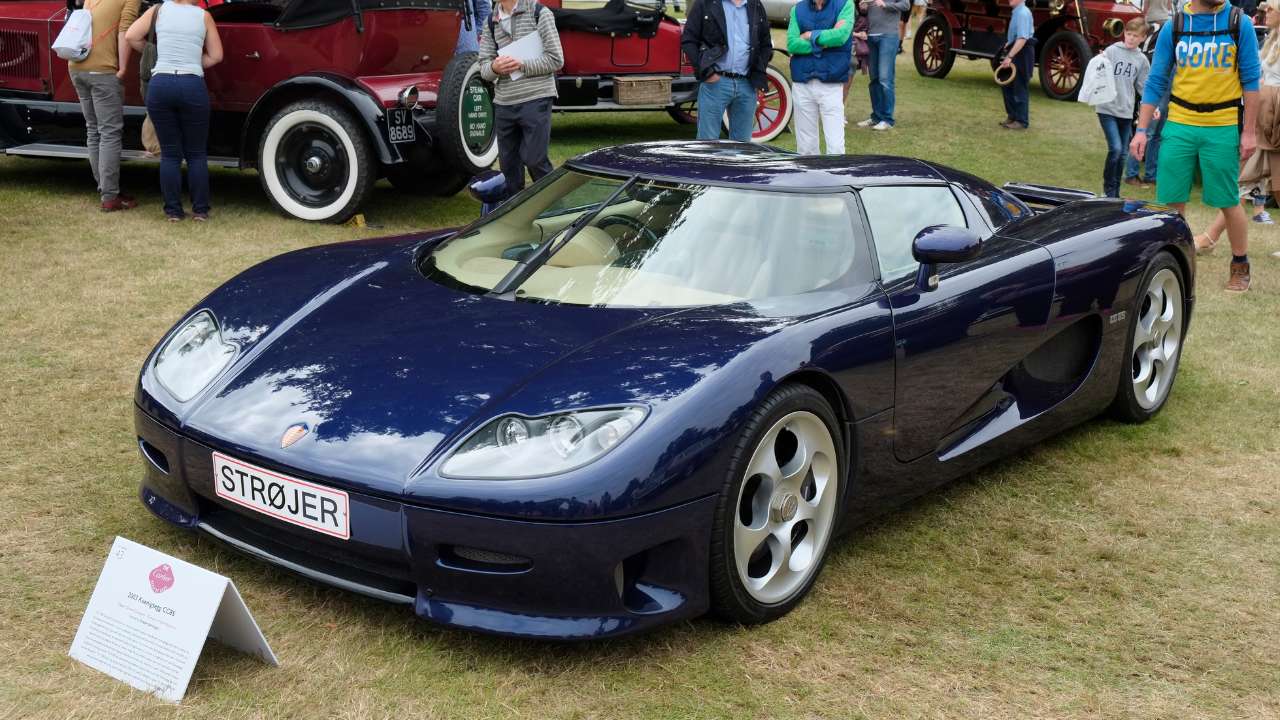
The CC8S was Koenigsegg’s first production car. It debuted at the 2000 Paris show after eight years of development, and it introduced the detachable carbon roof and dihedral doors the brand became known for.
First, its 4.7-liter V8 was built in-house on a Ford modular base, with a centrifugal supercharger. Koenigsegg rates it at 655 hp and 750 Nm, and Guinness recognized it for the most powerful production engine. In 2002 and 2003, the company built just six.
8. 2003 Ascari KZ1
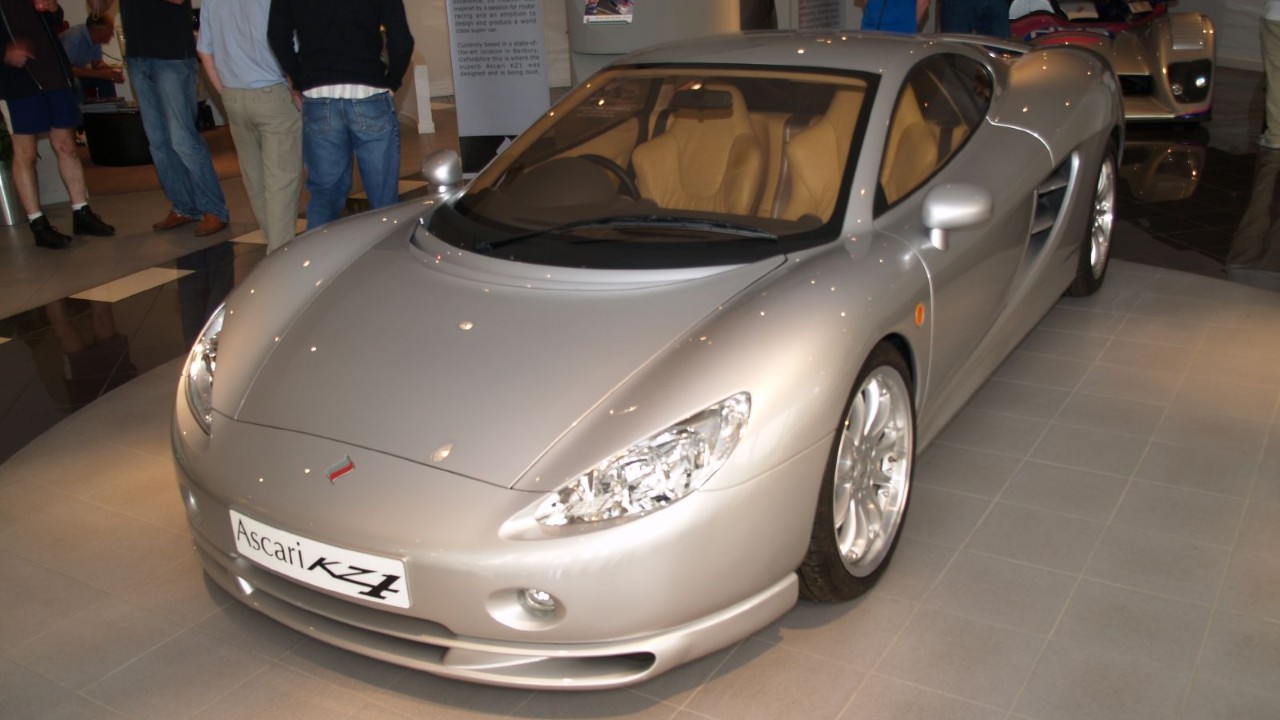
The KZ1 took its name from the initials of Ascari’s owner, Klaas Zwart. Ascari first showed it at the 2000 Birmingham Motor Show as the Ecosse’s replacement. Then it revealed the production car at its own Spanish race resort in 2003.
For power, a BMW-sourced 4,941 cc V8, tuned by Hartge, sat behind the driver. Sources disagree on output, but Conceptcarz quotes about 500 bhp in one place and 520 hp in another. Either way, Ascari limited production to 50 cars.
9. Mosler MT900S

Financier Warren Mosler conceived the MT900 in the late 1990s, and Rod Trenne, known for his work on the C5 Corvette, engineered it. It used a carbon fiber and honeycomb aluminum tub. Behind the driver sat a GM LS-series V8 with a Porsche-sourced transaxle.
Early road cars made about 350 hp, while the MT900S raised that to about 405 hp, according to Motorious. On track, the MT900R won its class at the 2003 24 Hours of Daytona. SlashGear counts about 60 sold before Mosler stopped trading in 2012.
10. 2004–2006 Koenigsegg CCR

The CCR evolved from the CC8S with a larger front splitter, a rear wing, bigger brakes and an upgraded chassis. Power jumped to 806 hp. That gave Koenigsegg a car fast enough to chase a speed record.
In February 2005, Koenigsegg took the CCR to the Nardo test track in Italy and reached 387.86 km/h, about 241 mph. Supercars.net says the run set a Guinness record for the fastest production car. Even so, the company built only 14 between 2004 and 2006.
11. 2006 Ascari A10
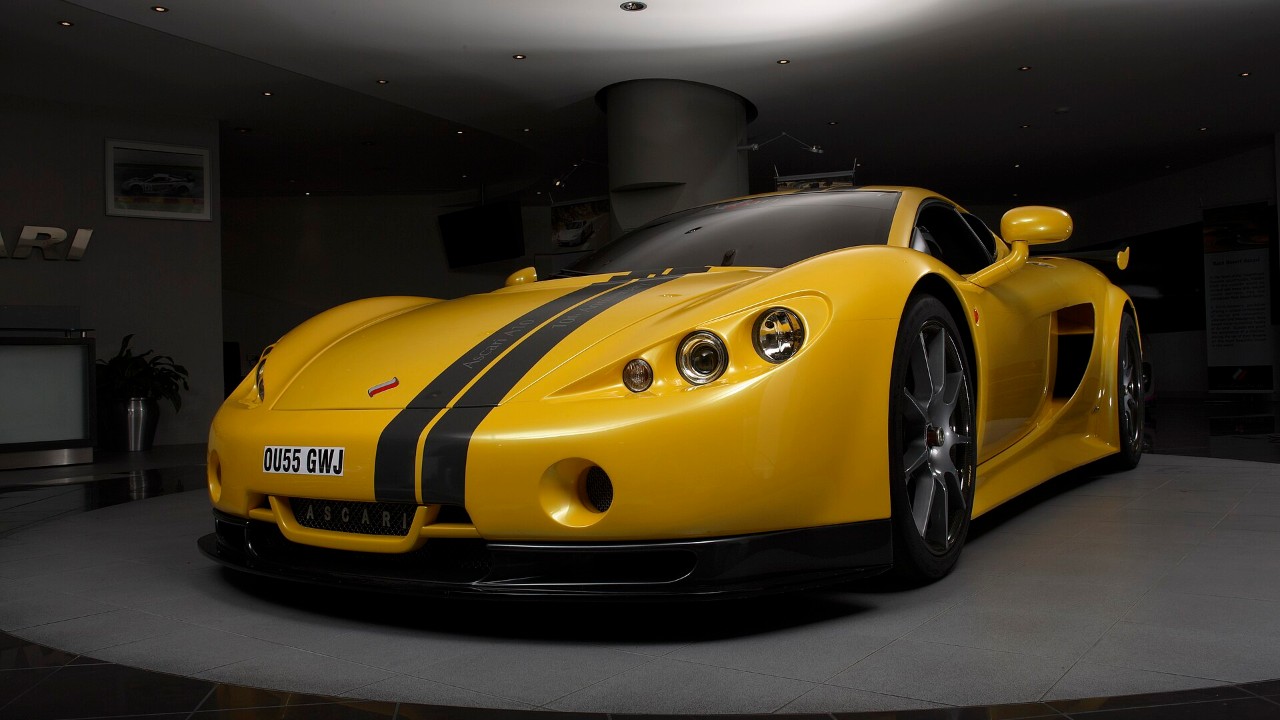
The A10 followed the KZ1 three years later. Ascari, a company based in Banbury, England, built it in 2006, according to Supercars.net’s history of the brand. By then, Zwart’s Ascari Race Resort in Spain had been open for three years.
Power figures for the A10 vary from source to source, so they are left out here. The build count is clearer, though. Ascari produced only 10. By comparison, it built 17 Ecosse road cars and limited the KZ1 to 50.
12. Cizeta V16T
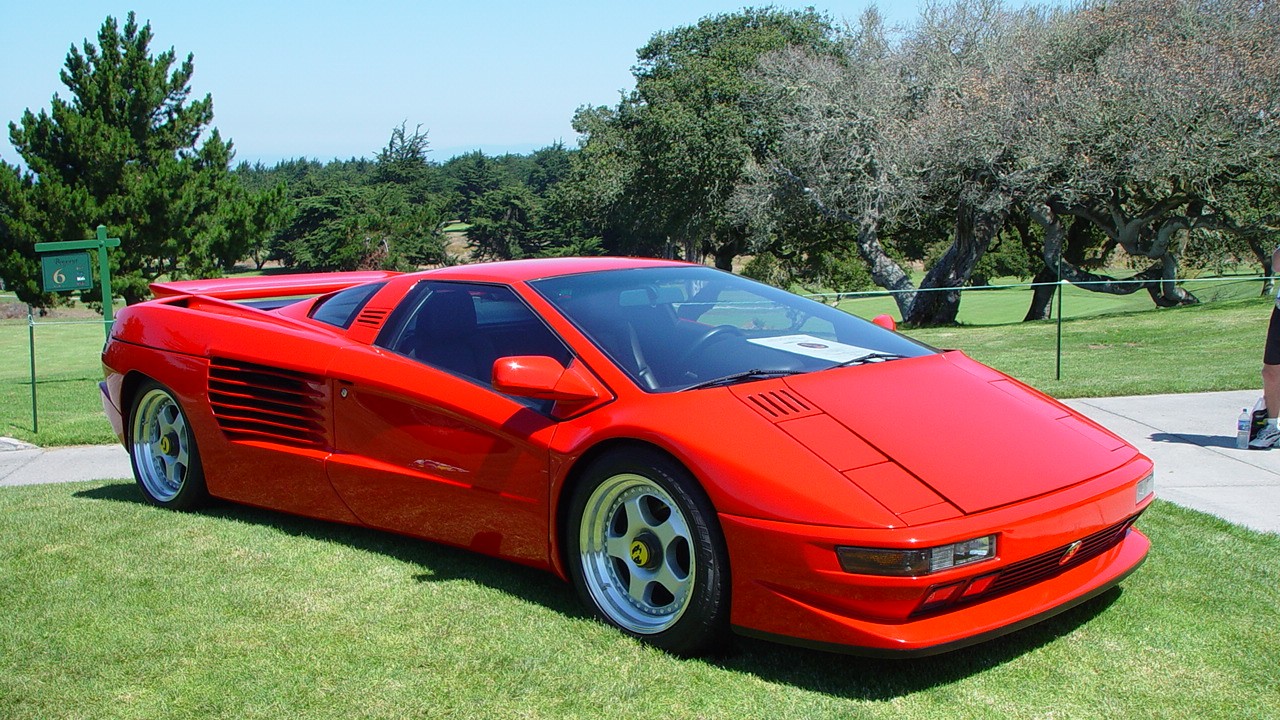
The Cizeta V16T began with a Lamborghini design that never happened. Marcello Gandini drew a car for Lamborghini, but Chrysler vetoed it, and those ideas later fed the Diablo. Gandini then sold the sketches to Claudio Zampolli, who added four pop-up headlights and a longer rear.
Composer Giorgio Moroder financed the project, and the car premiered in December 1988. Its V16 was based on the Urraco’s V8 and enlarged to six liters, and it made 542 hp, according to Secret Classics. The same feature counts a white prototype, nine production coupes and one later Spyder.
13. 2009 Mercedes-Benz SLR McLaren Stirling Moss
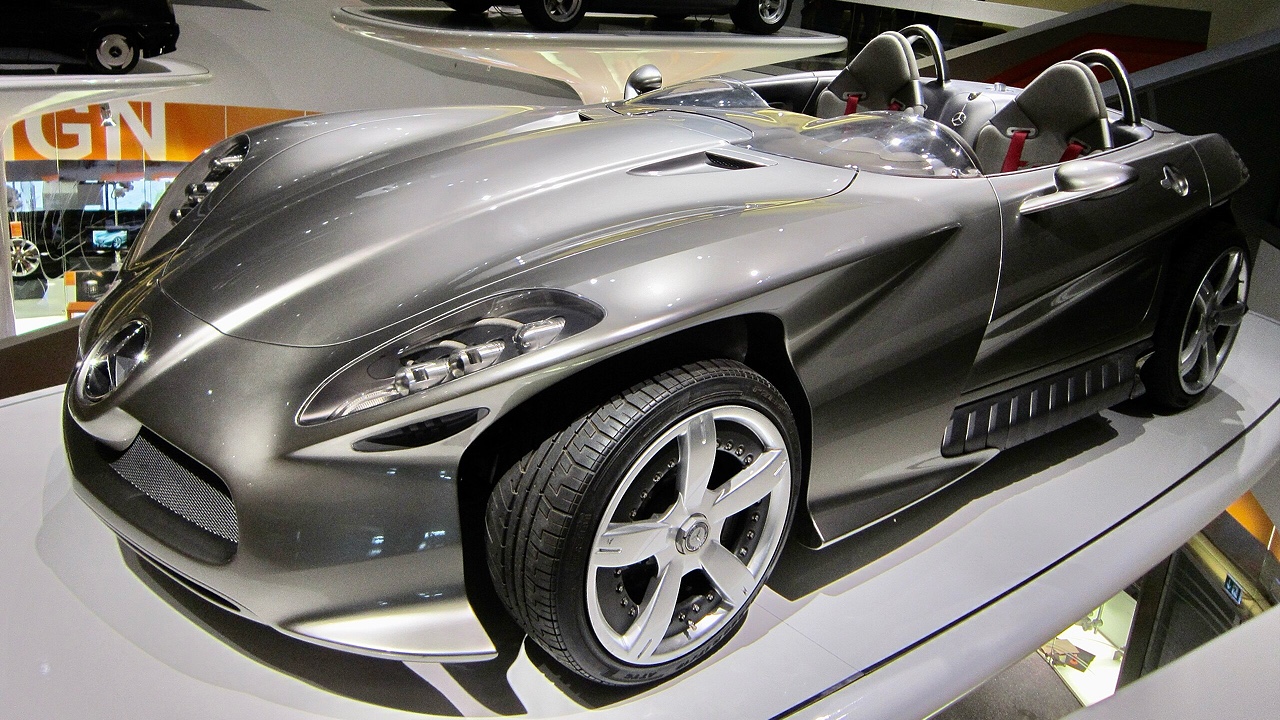
This SLR had no roof, no windshield and no side windows. Instead, two small deflectors shielded the occupants, and two air scoops doubled as roll bars. Mercedes sold it only to its most loyal existing SLR customers, at €750,000.
At the same time, its 5,439 cc supercharged V8 made 641 bhp by one count and 650 hp by another, according to Supercars.net. The car honored Moss, who raced the 300 SLR in the 1950s. Mercedes built 75 between June and December 2009.
14. Wiesmann GT MF5
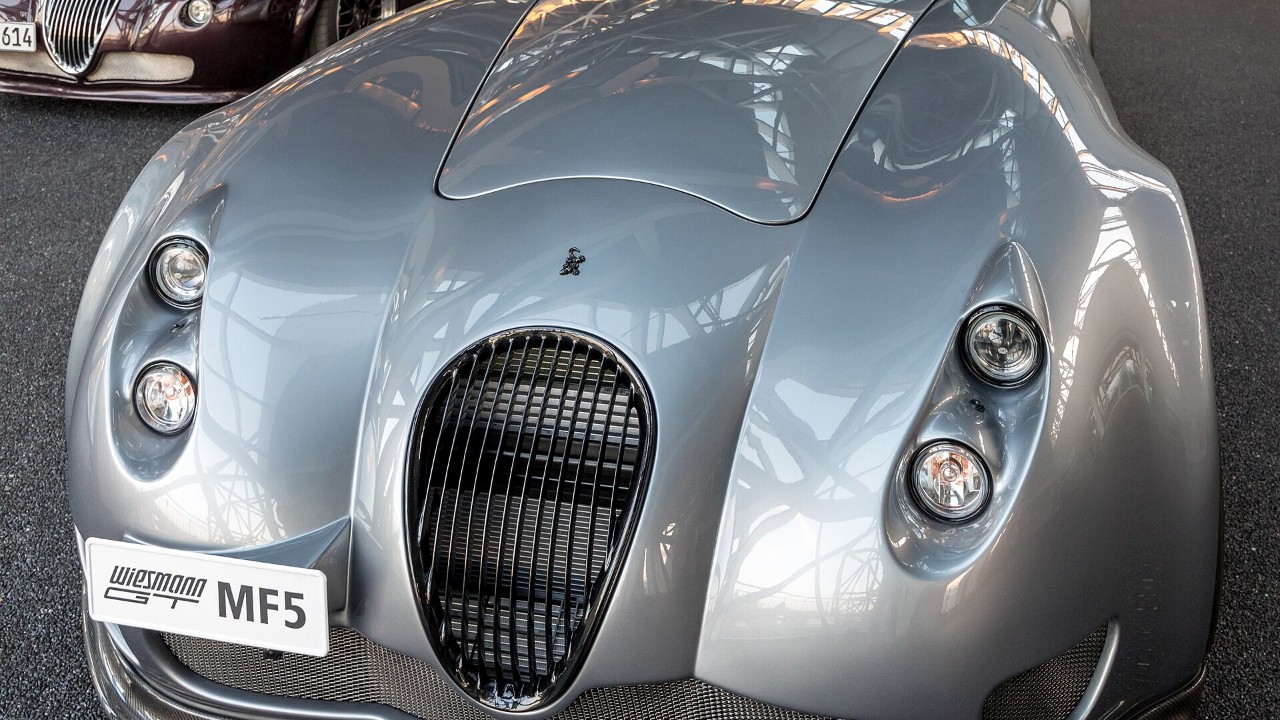
Wiesmann aimed higher with the GT MF5. It priced the car at almost three times as much as its earlier models. Its looks, meanwhile, took cues from the Jaguar XK120.
Earlier Wiesmanns used BMW M3 engines. By contrast, the MF5 got a BMW-sourced twin-scroll turbocharged V8 with 547 bhp and a 193 mph top speed. Car Throttle notes that only 55 were built.
15. Hennessey Venom GT

Hennessey Performance Engineering, based in Sealy, Texas, showed Venom GT concept drawings in 2007 and revealed the coupe in 2010. Its twin-turbo 7.0-liter V8 was rated at 1,244 hp, according to Fox News. The car weighed 2,743 lb.
In 2014, a Venom GT hit 270.4 mph at NASA’s Kennedy Space Center. However, it ran in one direction only, so the speed didn’t count as a world record. Motor Authority reports that Hennessey made just 13, including the original prototype, and the last one sold for $1.2 million.
More from Fast Lane Only