
Kawasaki has put the Ninja name on everything from beginner twins to supercharged hyperbikes, so the Kawasaki Ninja family covers a lot of ground. Some versions chased speed records, others chased racing titles, and one taught a generation to ride. A few of them, in our view, are worth more to an owner than any check a buyer could write.
These seven are our picks of the Ninjas we’d keep in the garage no matter what the offer. The verdict is ours. The facts behind each one are on the record.
1997 Kawasaki Ninja ZX-7R

For 1996, Kawasaki gave its 750 a new engine and moved the ZX-7R name to the standard bike. The update brought a short-stroke four, a 4-2-1 exhaust, dual ram-air inlets and six-piston Tokico front calipers. As a result, claimed output rose to 123 hp. Its racing family also mattered, since Scott Russell won Kawasaki’s first World Superbike title in 1993 on a ZXR-750R. Production ended in 2003, and we would never let a clean late-’90s example go.
Kawasaki Ninja ZX-9R

The ZX-9R made its debut at the 1993 Paris show and went on sale in 1994 with an 899 cc four rated at 139 hp. Then, for 1998, Kawasaki rebuilt it around a new engine that served as a stressed member of the frame. That change also cut the wheelbase by 2 inches, to 55.6. In our view, it was the big, fast all-rounder of its day. It stayed in production until 2003, and that versatility is why we would hang on to one.
2001 Kawasaki Ninja ZX-12R
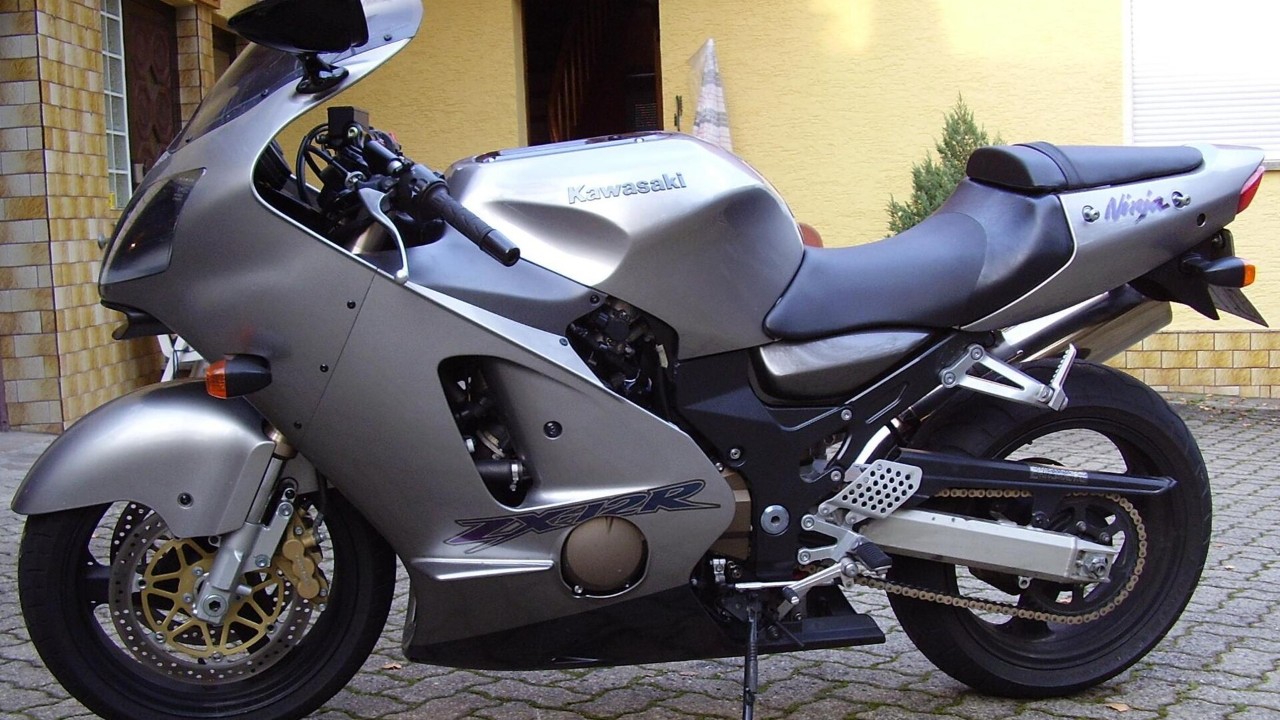
The ZX-12R arrived in 2000 aiming straight at top-speed bragging rights. It had a 1,199 cc four with a claimed 178 hp, plus an aluminum monocoque backbone frame. However, a voluntary agreement among manufacturers to cap speeds at about 300 km/h arrived first. As a result, Kawasaki cancelled a planned launch event and released the bike with a speed-limited ECU. Cycle World still clocked 187 mph. A bike caught in the middle of that speed war is one we’d never sell.
Kawasaki Ninja ZX-6R 636

Bennetts calls the 2002 ZX-6R “the first Ninja model to break the traditional 599cc class limit.” Kawasaki used the extra room that thinner cylinder liners had created, and capacity grew to 636 cc. Kawasaki’s reasoning was simple, because most owners ride on the road, not in 600 cc races. The 2002 bike made a claimed 113 bhp. Bennetts also describes the 636 as “solid, reliable and very old-school.” We’d keep it for that street-first thinking alone.
2010 Kawasaki Ninja ZX-14 Special Edition

The ZX-14 replaced the ZX-12R for 2006 with a 1,352 cc four and a claimed 200 hp with ram air. Like its predecessor, it used an aluminum monocoque frame, and it observed the same voluntary 186 mph limit. Yet Rider also found it easy to live with. Its test bike averaged 37.59 mpg, and the 5.8-gallon tank gave about 181 miles per fill. A hyperbike that tours this well is one we would keep for good.
2009 Kawasaki Ninja 250R

Before 2008, the Ninja 250R had sold for 20 model years essentially unchanged. The all-new version used a 249 cc DOHC twin and sold for $3,499. Kawasaki’s own research found that 62% of buyers were first-time buyers, and about a third were women. In other words, this is the bike that put countless riders on the road. That history alone makes it a keeper for us, even next to the big Ninjas on this list.
Kawasaki Ninja H2
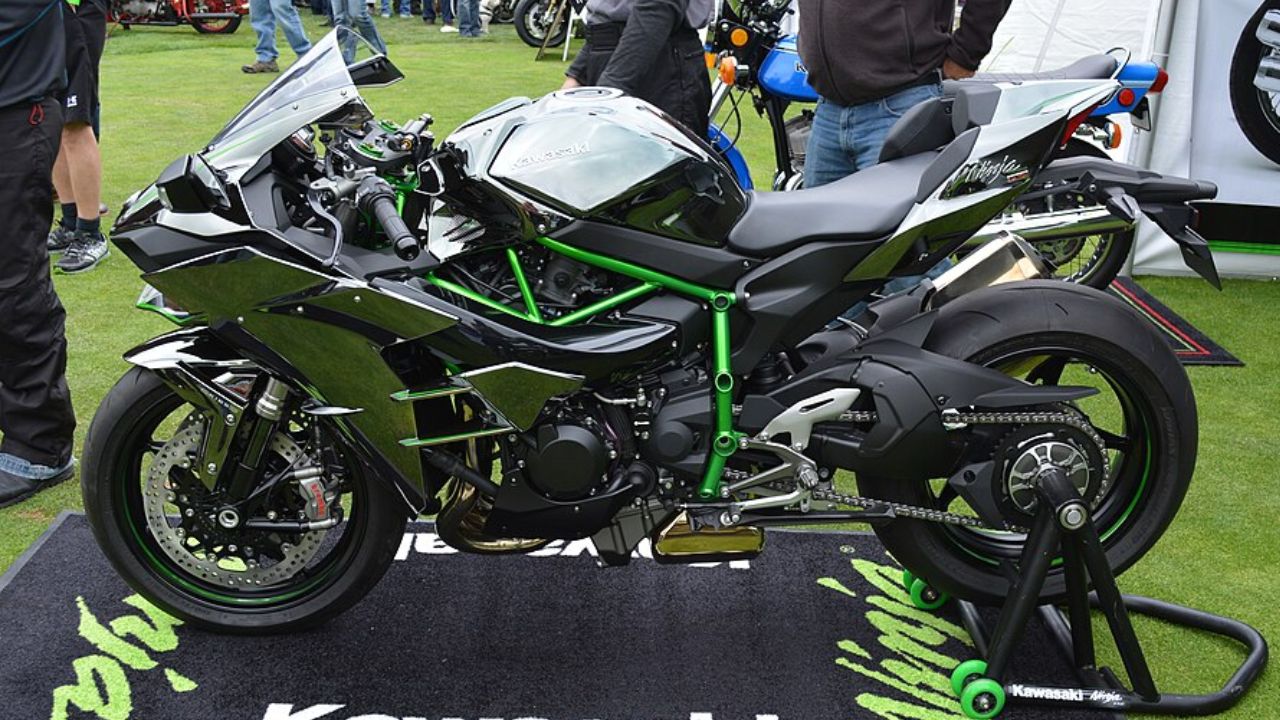
The H2’s supercharger came from inside the Kawasaki group. Rider reports that the motorcycle engineers designed it with help from the Gas Turbine & Machinery Company, the Aerospace Company and the Corporate Technology Division. Its impeller can spin at about 130,000 rpm. It also wears the Kawasaki River Mark, a symbol the company reserves for historically significant models. For a sense of its pace, read our Kawasaki H2 vs. Lamborghini Revuelto story. At launch, the H2 cost $25,000.
More from Fast Lane Only


