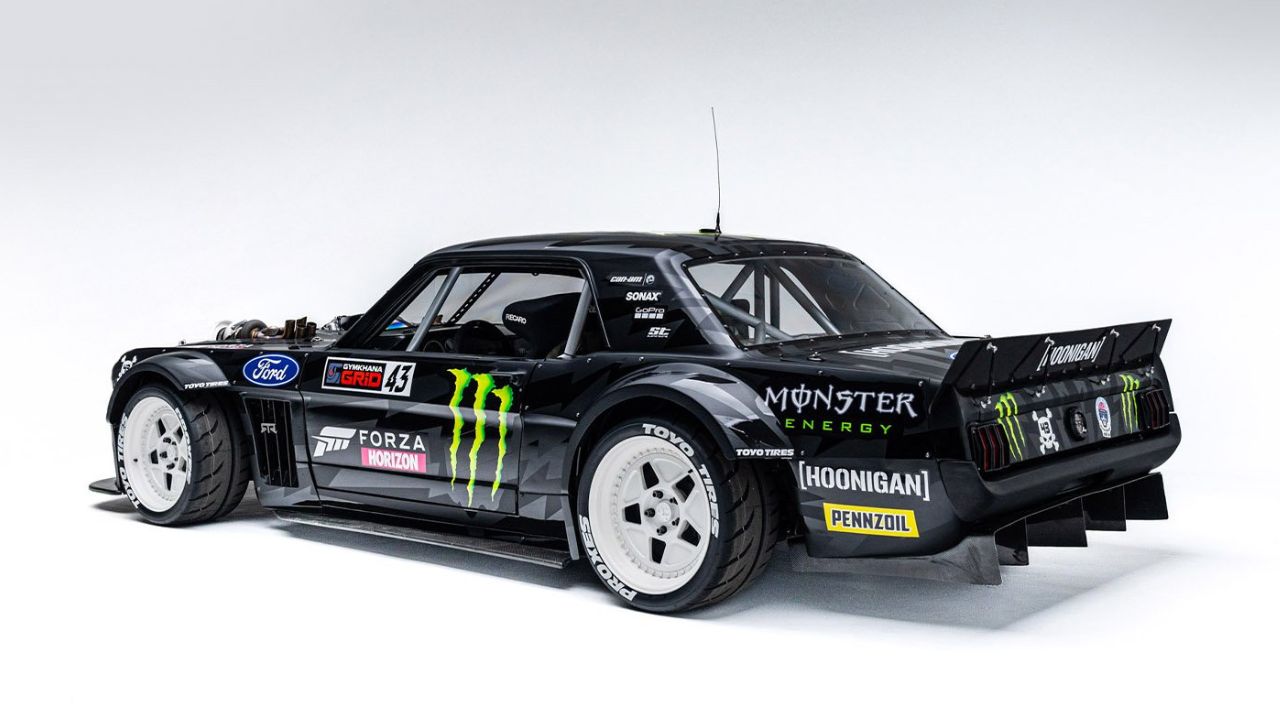
Most custom builds come and go, but the Hoonicorn isn’t just another modified Mustang—it’s a cultural landmark. Built for Ken Block’s outrageous Gymkhana videos, this 1965 Ford Mustang RTR didn’t follow trends; it bulldozed its own path. What started as a vintage silhouette turned into a 1,400-horsepower, all-wheel-drive drift weapon that could tear up tarmac, scale mountains, and smoke tires through downtown London. It wasn’t just about looking cool—it was engineered to do the impossible on camera, and it delivered every time. This article breaks down ten things that made the Hoonicorn one of the most extreme cars ever built.
The All-Wheel Drive Game Changer
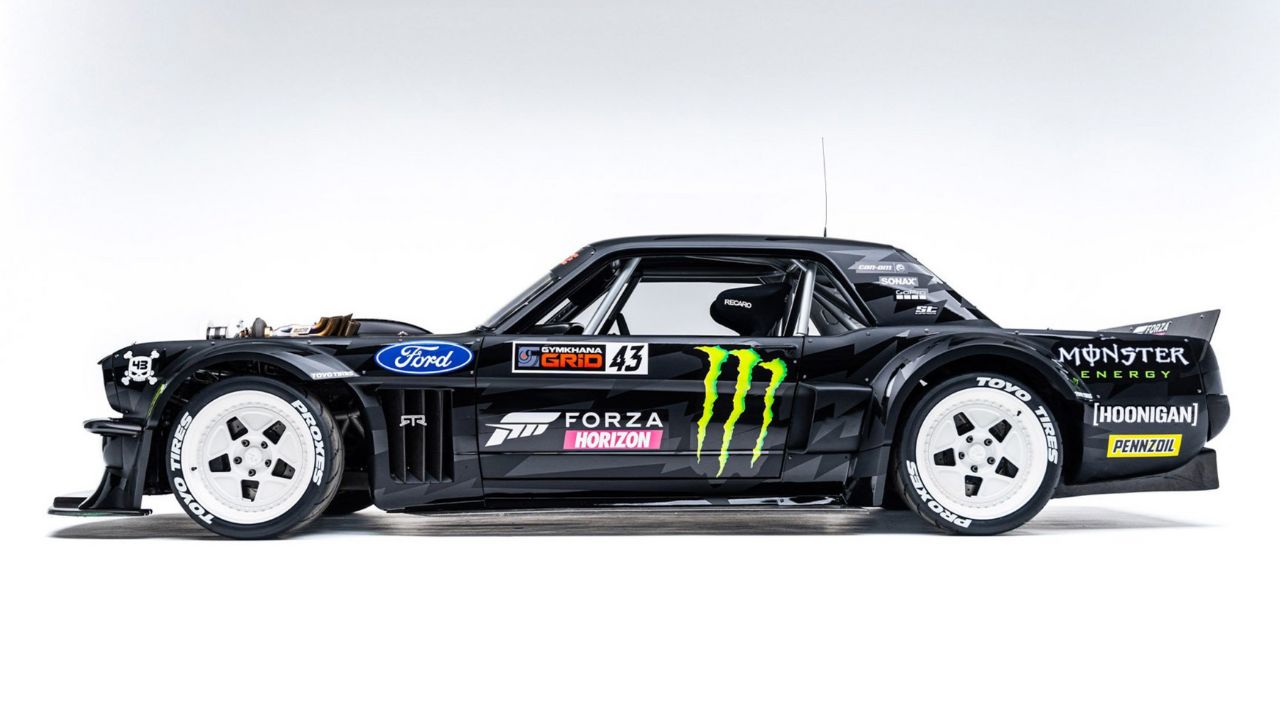
The Hoonicorn shattered expectations by becoming the first AWD Mustang performance build. Most classic Mustangs are rear-wheel drive, but this one was engineered to handle wild slides and instant grip under high horsepower. Built in partnership with RTR and ASD Motorsports, the all-wheel-drive setup was custom-designed for extreme conditions.
The drivetrain features a Sadev 6-speed sequential transmission and a bespoke AWD system that splits power 50/50 between front and rear. This layout allowed Ken Block to throw the car sideways on tarmac, dirt, or snow with precise control—changing how builders looked at Mustang traction.
845 Horsepower Out of the Gate

In its original V1 configuration, the Hoonicorn packed an 845-horsepower 6.7-liter Roush Yates V8. It was naturally aspirated and revved to the moon. This version lit up Gymkhana SEVEN and made the Hoonicorn instantly recognizable.
That Roush Yates motor was based on a NASCAR engine but tuned for throttle response and torque instead of just top-end power. The exhaust note alone was enough to make people stop what they were doing. This was a Mustang like no one had ever seen—or heard—before.
Twin Turbos and Methanol: Version 2.0

Ken Block didn’t stop at 845 horsepower. For Climbkhana, the Hoonicorn was reworked into “V2,” a full-on twin-turbo setup that pushed the output to a brutal 1,400 horsepower. And instead of pump gas, the car ran on straight methanol.
The turbos fed compressed air into the same base Roush Yates V8, but the fuel system, intake, and tuning were completely overhauled. Methanol burns cooler and cleaner, allowing more timing and boost. The power hit like a sledgehammer, which was exactly what Block needed for sliding up Pikes Peak at high altitude.
A Drift Weapon With Surgical Precision

Despite its raw horsepower, the Hoonicorn isn’t just about brute force. Its suspension and chassis setup were dialed in for precision drifting. The coilover suspension was custom-built, and the steering rack was adapted for wide-angle slides.
Even with massive 18-inch wheels wrapped in 295-section tires, Block could rotate the car with surgical accuracy around obstacles. The Hoonicorn danced through city streets and mountain switchbacks like a ballet dancer in a leather jacket—graceful but mean.
Built to Handle the Streets of London

In 2016, Ken Block brought the Hoonicorn to the streets of London for a Top Gear segment called “Ken Block Drifts London.” This wasn’t just a one-off stunt. It showed the car’s ability to perform on narrow urban streets, dodging double-deckers and ripping donuts in Parliament Square.
Shooting in the middle of a live city meant no room for error. The Hoonicorn’s AWD and throttle control made it possible. That episode introduced a whole new audience to what the car was capable of outside the staged Gymkhana sets.
Carbon Fiber and Custom Everything

There isn’t a part on the Hoonicorn that came off a shelf. The body panels are carbon fiber, and the interior is purpose-built. Even the fenders were widened to accommodate massive tires and suspension travel.
Inside, it’s all business—custom digital gauges, minimal padding, and a full roll cage. The car’s look was inspired by 1960s Trans-Am racers but taken to extremes. From the outside, it’s still recognizable as a ’65 Mustang, but under the skin, it’s a space-age drift missile.
Pikes Peak Was the Ultimate Playground

For Climbkhana, the Hoonicorn faced its greatest test—Pikes Peak. The route runs over 12 miles and climbs to more than 14,000 feet, which robs naturally aspirated engines of power. But the Hoonicorn V2 had two turbos and methanol to solve that problem.
The run featured massive drop-offs, hairpin turns, and unpredictable weather. Block slid within inches of cliffs and guardrails, controlling all 1,400 horses with finesse. It wasn’t a timed run, but it was more dramatic than most race-day footage.
Built by RTR and ASD Motorsports

The build was a joint project between RTR (Vaughn Gittin Jr.’s company) and ASD Motorsports. These weren’t just fabricators—they were motorsport engineers with deep experience in Formula Drift, NASCAR, and off-road racing.
They built the Hoonicorn from the ground up using a custom tube chassis, race-grade components, and one-off fabrication. The attention to detail made the car reliable enough for repeated abuse while staying true to Block’s wild vision. This wasn’t just a show car—it was a high-functioning machine.
The Hoonicorn Became a Star on YouTube

The Hoonicorn’s legacy was forged through video, not racing. Gymkhana SEVEN has over 60 million views, and Climbkhana helped redefine what people expected from a “car video.” The Hoonicorn became a cultural icon as much as a technical achievement.
Its aggressive presence, insane power, and flawless camera work created a kind of myth around the car. It wasn’t built for car shows or drag strips—it was built for spectacle, and it delivered that in every frame.
Ken Block’s Legacy Is Built Into It

The Hoonicorn is as much about Ken Block as it is about the car. His unique driving style, media savvy, and refusal to stick to convention gave the car its purpose. Without Block, it wouldn’t have existed. And without the Hoonicorn, his legacy wouldn’t hit as hard.
Even after Block’s passing, the Hoonicorn stands as a reminder of what car culture looks like when it doesn’t care about rulebooks. It’s loud, sideways, and unforgettable—and that’s exactly what Block wanted.
Like what you read? Here’s more by us:
*Created with AI assistance and editor review.