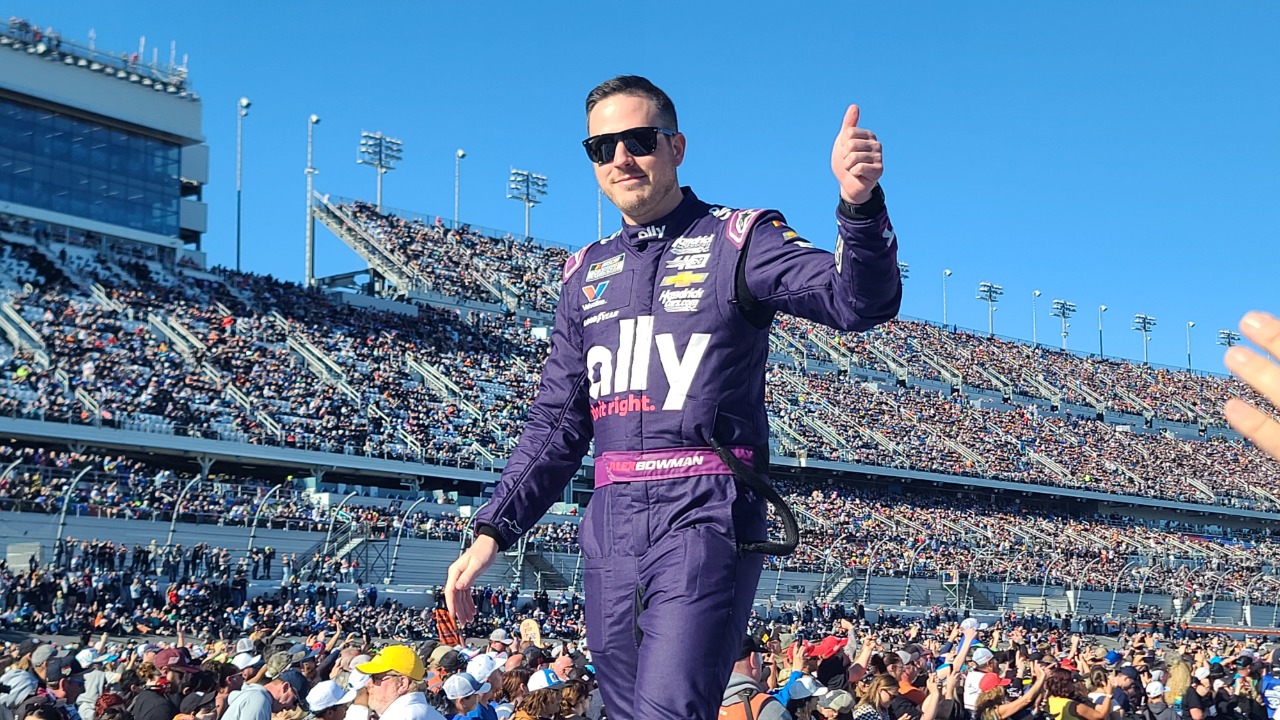
Kevin Harvick has never been shy about saying what others only hint at, and his latest assessment of Alex Bowman’s future at Hendrick Motorsports fits that pattern. The retired Cup Series champion has argued that Bowman is running out of time to convert solid runs into wins, and that the lack of trophies is starting to put real pressure on his place in one of NASCAR’s most coveted seats.
His warning lands in the middle of a contract cycle, a changing driver market, and growing expectations around the No. 48 team. For Bowman, the message is blunt: consistency is no longer enough, and the standard at Hendrick is measured in checkered flags.
What happened
Kevin Harvick raised the temperature on Alex Bowman’s situation by saying that the Hendrick Motorsports driver needs to start winning again if he wants to stay in the No. 48 Chevrolet. In recent commentary, Harvick framed Bowman’s status as fragile, arguing that the combination of limited recent victories and the quality of Hendrick equipment makes the lack of wins harder to defend. His remarks, relayed in detail through recent analysis, cast Bowman as a driver who has run well enough to be visible but not well enough to be safe.
That stance has been echoed in other breakdowns of the situation, which describe his comments as a direct warning to Bowman about his Hendrick future. Coverage of Harvick’s remarks has highlighted his view that Hendrick Motorsports is not just another team, and that a driver in that stable who is not winning regularly will inevitably face questions about whether someone else could do more with the same equipment. One detailed look at Harvick’s comments framed them as a message that Bowman must “step up” and convert opportunities into victories if he wants to avoid becoming vulnerable in future lineup decisions, a theme explored in depth by specialist NASCAR coverage.
Another breakdown of Harvick’s position spelled it out even more bluntly, reporting that the former driver believes Bowman “needs to win” in order to retain his spot at Hendrick. That coverage portrays Harvick as connecting Bowman’s lack of recent wins with the performance standard that comes with the No. 48 car’s history and Hendrick’s current strength across the Cup Series field. In that assessment, Harvick is not merely offering generic criticism, but tying Bowman’s job security directly to whether he can turn speed into trophies over the near term, as detailed in further reporting.
Bowman’s on-track story in the recent period has been complicated by health issues as well as performance. Earlier this year, he was ruled out of the NASCAR Cup Series race at Phoenix because of vertigo symptoms. Hendrick Motorsports confirmed that Bowman would miss the Phoenix event while he dealt with the condition, which forced the team to find a substitute driver and temporarily disrupted the rhythm of the No. 48 program. The decision and its medical explanation were laid out in detail in official reports on his absence.
The Phoenix setback came on top of a broader stretch in which Bowman has struggled to add to his career win total. While he has shown speed at various tracks and has often run inside the top ten, his recent seasons have lacked the kind of breakthrough victories that define Hendrick’s other headliners. Harvick has seized on that gap between potential and results in arguing that Bowman’s margin for error is shrinking.
Why it matters
Harvick’s warning carries weight because of who he is and what Hendrick Motorsports represents. He is a former Cup Series champion and long-time standard-bearer for performance in stock car racing. Earlier in his career, betting markets routinely treated him as a title favorite, with one set of preseason odds listing him as the top choice to win the championship again, as documented in detailed betting analysis. When a driver with that résumé says a current Hendrick driver is underperforming, people inside the garage and fans alike tend to listen.
Hendrick Motorsports itself magnifies the stakes. The organization fields some of the sport’s most coveted rides and has a recent track record of winning with multiple drivers. Within that context, the No. 48 car is not just another entry. It carries the legacy of Jimmie Johnson’s seven championships and years of dominance. That history creates an expectation that whoever drives it will contend for wins and titles, not simply make the playoffs or run near the front on good days.
Bowman’s situation illustrates the difference between being solid and being secure. On paper, his résumé includes multiple Cup Series wins and playoff appearances, which would be impressive at many organizations. At Hendrick, however, the bar is different. Teammates who regularly reach Victory Lane, challenge for championships, or at least win multiple times over a season set a standard that can make a winless stretch feel like underachievement, even if the underlying speed is respectable.
Harvick’s argument is that results, not potential, ultimately determine whether a driver keeps a premier seat. In his view, Bowman has shown flashes of the form needed to justify the No. 48 ride but has not delivered enough race wins to silence questions about whether someone else could do more. That tension is heightened by the fact that Hendrick has a history of attracting top-tier talent and developing young drivers who could be candidates for a Cup seat if one opens.
The health issues that sidelined Bowman at Phoenix complicate the narrative but do not erase the performance questions. Vertigo is a serious condition, and missing a race in a tightly contested points environment can disrupt momentum and chemistry. At the same time, Harvick’s comments suggest that, from a competitive standpoint, the clock does not stop. If anything, absences increase the pressure on a driver to make the most of every race they do run, especially when the team has invested heavily in the car, personnel, and technology around them.
There is also a business dimension. Sponsors that back Hendrick entries typically expect visibility at the front of the field and in victory lane photos. A driver who consistently runs well but does not win may still deliver value, but the marketing impact of trophies and playoff runs is hard to ignore. Harvick’s framing, which connects Bowman’s future to his ability to win soon, reflects the reality that sponsors, team owners, and manufacturers all track results when they decide where to allocate resources.
For the broader driver market, Bowman’s situation serves as a case study in how quickly perceptions can shift. A few years of solid performance can be overshadowed by a more recent drought, particularly when new talent emerges in the lower series. Drivers in the Xfinity and Truck Series who show elite speed and racecraft can quickly become attractive options if a top Cup seat appears vulnerable. Harvick’s commentary effectively signals that, in his view, the No. 48 is not untouchable if the win column stays empty.
The psychological side should not be overlooked either. Public scrutiny from a respected veteran can cut both ways. It can add pressure, but it can also sharpen a driver’s focus and galvanize a team. Bowman and his crew will be well aware of the narrative that Harvick’s comments have helped shape. How they respond, both internally and on the track, will say a lot about the group’s resilience and belief in their own potential.
What to watch next
The next phase of Bowman’s season will be judged on two parallel tracks: performance metrics and visible progress toward victory lane. Finishes inside the top ten and strong stage results will help stabilize his position in the standings, but Harvick’s warning has shifted the conversation to wins. The key question is whether Bowman and the No. 48 team can convert speed into race control late in events, particularly at tracks where Hendrick cars traditionally run well.
Short and intermediate ovals, where driver input and setup work play a significant role, will be especially important. These tracks often produce races where strategy, restarts, and tire management decide the outcome. If Bowman can execute in those areas and put himself in position to lead late, he can begin to rewrite the story that has formed around his recent results. Conversely, more near-misses or late-race fades will only reinforce the narrative that he is close but not closing.
Health will remain a subplot. After missing Phoenix with vertigo, Bowman’s ability to manage his physical condition over a long season will be closely monitored. Any recurrence that forces him out of the car, even for a single race, would raise fresh questions about continuity and rhythm for the team. A stretch of uninterrupted starts with solid performance, however, would help push the medical storyline into the background and allow the focus to return fully to results.
From Hendrick’s perspective, public comments about Bowman’s future are likely to stay measured, but the organization’s actions will speak loudly. Renewed investment in the No. 48 program, visible collaboration with crew chiefs and engineers, and strategic calls that show confidence in Bowman’s ability to deliver under pressure would signal that the team still views him as a long-term piece. By contrast, any significant structural changes around the car, such as a crew chief swap or major personnel shakeup, would hint at impatience with the current trajectory.
The driver market will also be a key backdrop. If high-profile free agents or standout prospects in the Xfinity Series begin to circulate in rumors, that will intensify scrutiny on every Bowman result. Teams rarely make decisions in a vacuum. The availability of alternative options can accelerate moves that might otherwise have been delayed. Observers will watch for any signs that Hendrick is evaluating other drivers more closely or giving expanded opportunities to its development pipeline in other series.
Harvick’s own role as a commentator ensures that his voice will continue to shape the narrative. As races unfold, his analysis of Bowman’s performance will likely highlight whether the driver is answering the challenge or falling further behind the expectations that come with his seat. If Bowman starts winning, Harvick is just as likely to credit the turnaround, which would help shift public perception in a more positive direction.
For Bowman, the path forward is simple in concept but demanding in execution. He needs to win races, or at least put himself in position where a win feels inevitable rather than hypothetical. That means cleaner qualifying efforts to secure better track position, sharper pit road execution, and a willingness to make aggressive decisions when a victory is within reach. It also means minimizing the kind of small mistakes that can turn a potential win into a sixth-place finish.
Fans and analysts will be watching for specific signs that the No. 48 team is trending upward. These include leading significant laps, consistently running inside the top five, and showing strength at a variety of track types, from superspeedways to road courses. A single fluke win would relieve some pressure, but a pattern of front-running speed would do more to convince skeptics that Bowman is maximizing Hendrick’s equipment.
More from Fast Lane Only