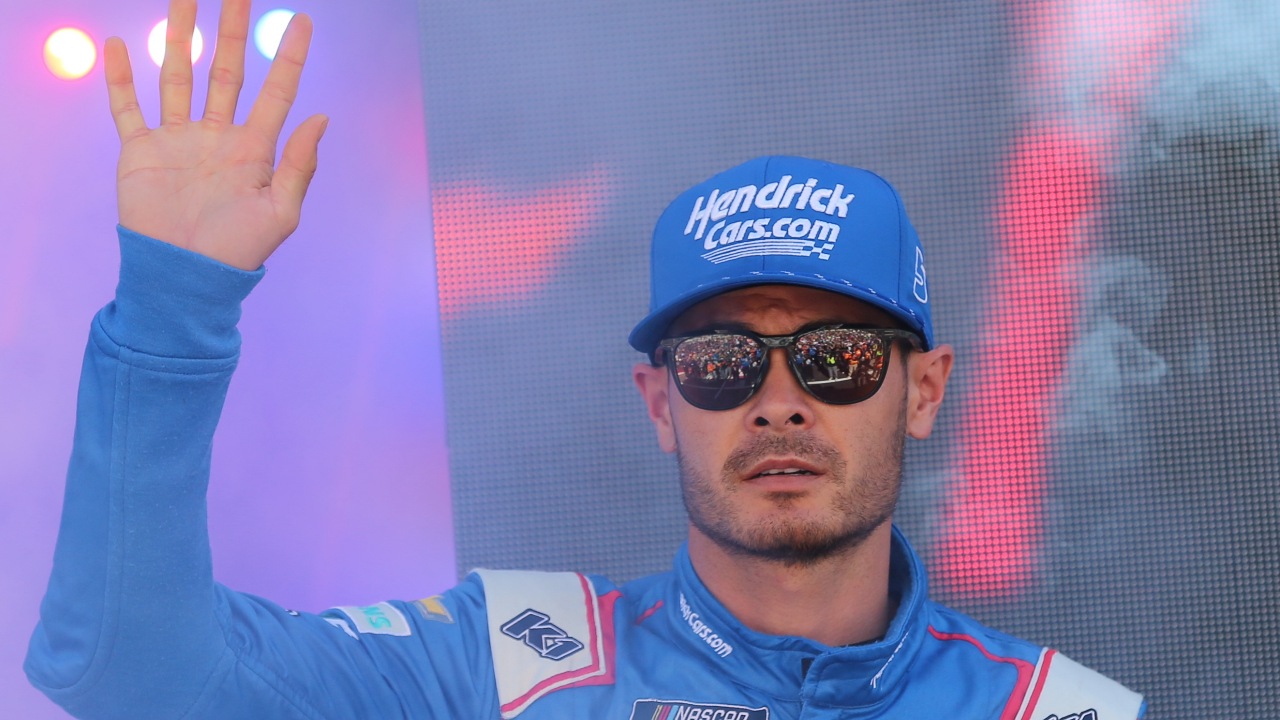
Kyle Larson has reached the point where rivals talk about him in a different tone, the way peers once spoke about Jeff Gordon or Jimmie Johnson. They are not just praising a champion, they are trying to explain a driver whose feel for a race car seems to live a step beyond everyone else’s. When I look at how he races across disciplines and how other drivers react to him, the case for Larson as the most naturally gifted driver of his era becomes hard to argue against.
Raw talent alone does not win a modern NASCAR Cup Series title or keep a driver at the front across dirt, pavement, short tracks, and superspeedways. What separates Larson is how that talent translates into relentless speed, microscopic margins, and a willingness to live on the edge of control that most of his peers only visit in qualifying trim. That is why, when drivers and fans reach for a shorthand label, they keep landing on the same phrase: he is the best doing it right now.
Why other drivers keep calling Larson “the best”
When I listen to how competitors talk about Kyle Larson, what stands out is not just respect, it is resignation to his pace. At the top level, gaps are measured in hundredths, yet one fan explanation that has echoed through the garage is simple: “Because he’s the fastest.” That sentiment captures how rivals see him, a driver who can be off-sequence on strategy or buried in traffic and still carve back to the front through sheer speed and car control.
The numbers behind his reputation are not abstract. Larson’s own team highlights that he won a series-high 10 NASCAR Cup Series races, plus the NASCAR All-Star Race, on his way to the 2021 NASCAR Cup Series Champion crown, a season that reset expectations for what a modern star can do in a single year. That kind of output, in a field this deep, is why conversations about the greatest active driver so often start with his name. Even in broader debates about whether he belongs in the “greatest in the world” tier, the pushback tends to focus on championships as a measuring stick, with voices pointing out that drivers like Kyle and Ryan Blaney need multiple titles to settle that argument, not on any lack of raw ability.
The 110% edge: feel, versatility, and living on the limit
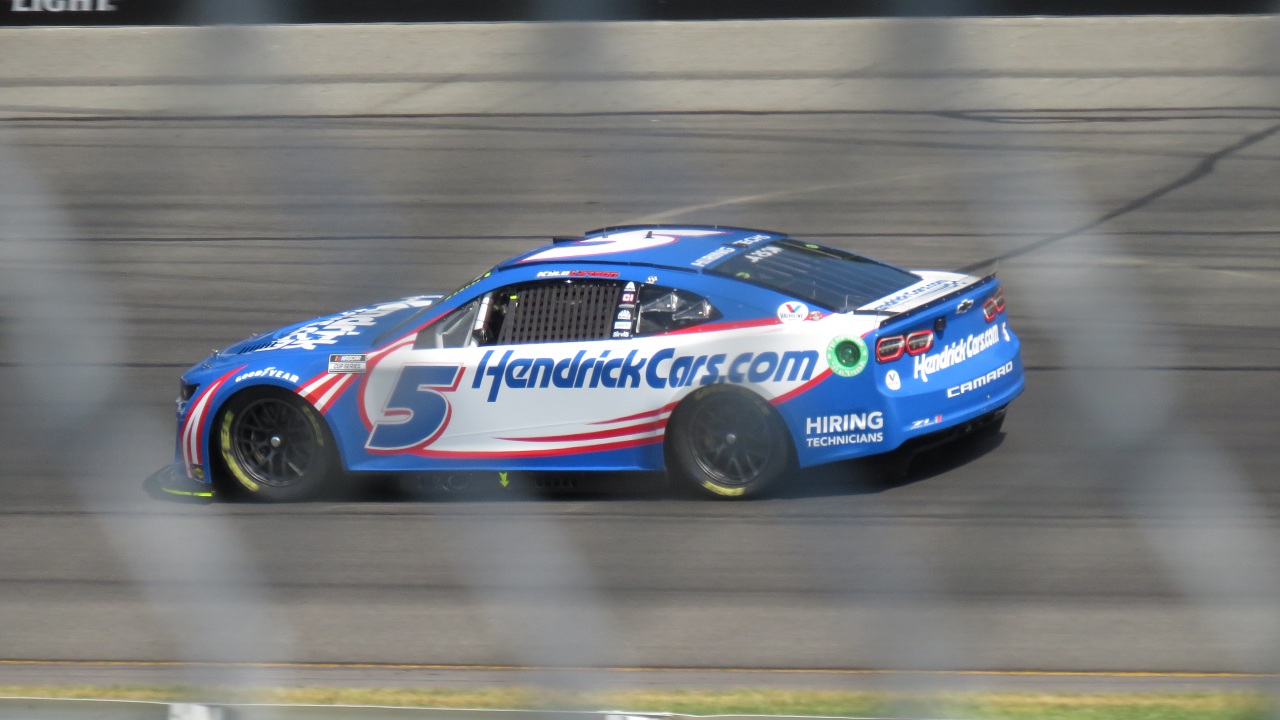
What fascinates me most about Larson is how often people reach for the same description of his driving style. One widely shared breakdown of his strengths argues that what sets Larson above everyone else is his ability to feel and drive the car consistently at 110%. That phrase is not hyperbole in this context, it is an attempt to capture how he can run a line that looks unsustainable, lap after lap, without tipping over the edge as often as logic suggests he should.
That same analysis likens his sense of the car to Jeff Gordon, framing Larson as a modern heir to that kind of intuitive, almost elastic grip on the limit of adhesion. When you watch him arc a Cup car against the wall at Homestead or rip the cushion in a dirt sprint car, the throughline is the same: he is comfortable in a zone where the rear tires are sliding, the steering wheel is alive in his hands, and the margin between hero and heartbreak is razor thin. Even his own assessment of his program leans into that identity, with Larson describing speed as the core strength, saying he feels like his group is really fast at every race track, from road courses to superspeedways, and that execution is what turns that raw pace into playoff success.
From Northern California roots to cross-discipline dominance
To understand why Larson’s talent travels so well, I keep coming back to where he came from and how he learned to race. When he was asked by Lee Spencer of FloRacing about drivers from Northern California, Larson pointed to the style that region breeds, a mix of elbows-up aggression and technical precision forged on bullrings that demand both. Those tracks teach drivers to search for grip, adapt to changing surfaces, and race in tight quarters, habits that show up every time Larson jumps into something new.
That background helps explain why he can hop between a NASCAR Cup Series car, a dirt sprint car, and an Indy car and still look like himself. His own site notes that, even while chasing stock car titles, he continues to run an aggressive dirt race nationwide schedule in 2024, a choice that keeps his instincts sharp and his racecraft varied. When he attempted the grueling “Double,” trying to run the Indianapolis 500 and the Coca-Cola 600 in the same day, the effort underlined both his ambition and his appetite for that thin line of car control. Reports from that run made clear that when you are keen to ride the thin line of car control to the degree Kyle Larson does, there will be occasions when it bites, yet what defines him is how quickly he moves on whenever he makes a mistake.
Why his peers see more strengths than weaknesses
Every great driver has flaws, and Larson is no exception, but the way fans and competitors talk about his shortcomings only reinforces how high his baseline is. In one debate about Kyle Larson’s weaknesses, the pushback to any comparison with teammates was blunt, with one voice arguing you would have to have 0 brain cells to think Bowman is better than Larson or that his season is anywhere close to being better. Strip away the heat of that comment and you are left with a clear hierarchy in the minds of many inside the sport: Larson is the standard within his own camp and, by extension, a benchmark across the field.
Even in more measured conversations about whether he is the greatest driver in the world, the critique rarely centers on speed or adaptability. Instead, people like Reck in one forum thread stress that to be in the conversation you kind of have to win championships, grouping Kyle with Blaney and others who are still building that side of their résumé. That framing matters. It assumes Larson’s raw pace and skill are already at that rarefied level and shifts the debate to longevity and hardware. When I weigh the way he dominates on his best days, the way he carries speed at 110% while still in control, and the way rivals talk about chasing his bumper, it is easy to see why so many in the garage quietly, and sometimes not so quietly, call Kyle Larson the best driver on the track today.
More from Fast Lane Only: