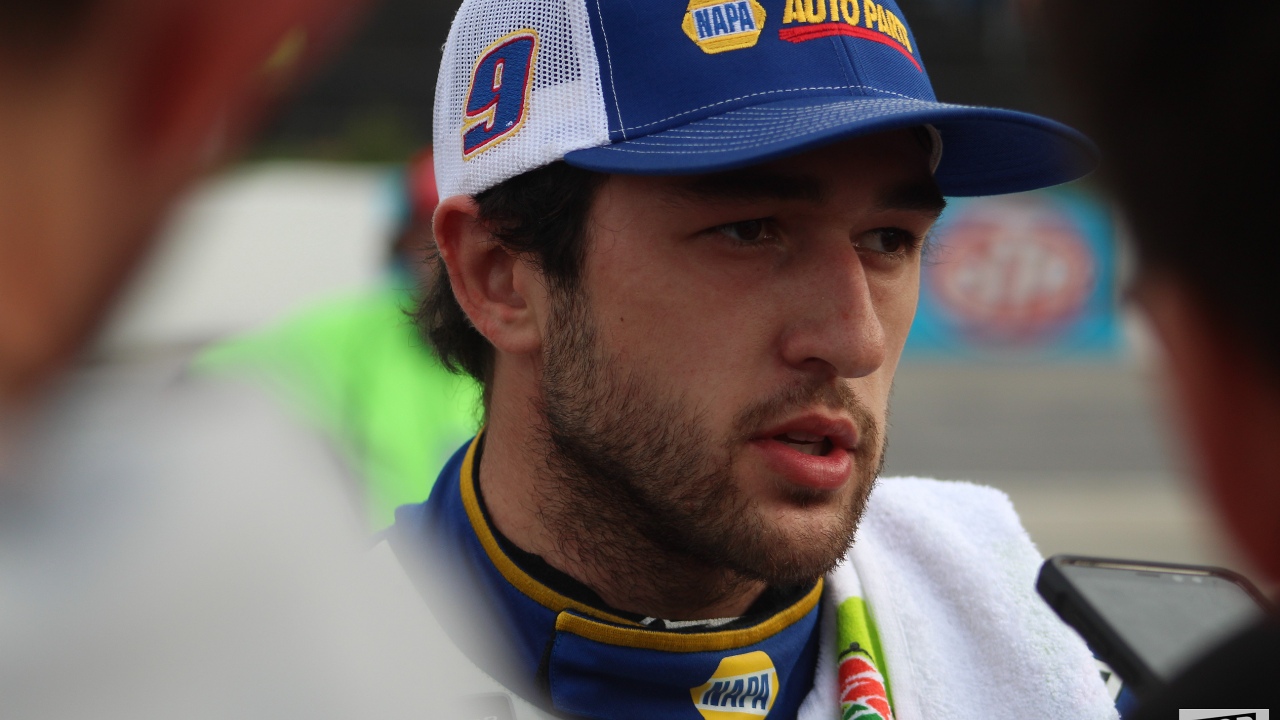
Chase Elliott did not sneak into NASCAR’s spotlight, he grew into it under the weight of a famous name and the expectations that came with it. His rise from prodigy to perennial title threat has reshaped how the sport thinks about its next generation of stars and about what it means to be the face of the Cup Series. To understand how he became the driver so many fans and teams circle as the favorite, I look at the blend of heritage, performance, and personality that now defines his place at the top of the grid.
A legacy name that arrived ready for the spotlight
Any story about Chase Elliott’s ascent starts with the surname stitched across his firesuit. The Elliott name has been a fixture in NASCAR for nearly 40 years, and that history meant Chase entered the Cup garage carrying both opportunity and scrutiny. He is officially listed as William Clyde Chase Elliott II, an American stock car driver whose very name signals continuity with the sport’s past. I see that continuity as a double-edged sword: it opened doors at the highest level, but it also set a bar that would have exposed any hint of complacency or entitlement.
What stands out in the reporting is how quickly he turned that legacy into his own résumé rather than a hand-me-down. The Elliott name had been prominently featured in NASCAR for nearly 40 years before he reached the Cup Series, yet the official biography on his own site now frames him as the one “doing his part to keep it” there. That phrasing matters to me, because it signals a driver who understands that heritage is not a trophy to display, it is a standard to uphold. By the time he settled into the No. 9 car, the conversation had already shifted from whether he could live up to The Elliott legacy to how far he might extend it.
From prodigy to Cup Series Championship force
Pedigree alone never made anyone the favorite in a 400-mile race, and Chase Elliott’s climb into that role has been built on a steady accumulation of results. He began racing go-karts and then moved through late models and national series equipment with a pace that marked him as more than just a familiar last name. By the time he reached the top level, he had already shown that his racecraft could match the expectations that followed him into every garage stall. I see that early seasoning as crucial, because it meant he arrived in the Cup Series as a driver prepared to contend rather than simply learn.
The turning point in his status came with his first Cup Series Championship in 2020, a title that instantly elevated him from promising talent to proven closer. What impresses me even more is what followed. Following that breakthrough, he remained a fixture in the title conversation, returning to the Championship 4 in subsequent seasons and keeping the No. 9 team in the thick of every Cup Series playoff. When a driver wins a Cup Series Championship and then backs it up by repeatedly racing for another, it changes how competitors and fans talk about him. At that point, he is not just a contender, he is the benchmark others measure themselves against.
Why fans keep voting him their favorite

On-track success explains why a driver is feared on restarts, but it does not fully explain why grandstands fill with their merchandise. Chase Elliott’s popularity has grown into its own phenomenon, and I see it as the second pillar of his status as the sport’s top favorite. He has collected the NASCAR Most Popular Driver Award for the Cup Series year after year, a streak that reflects more than just inherited fandom. Earlier in his career, he was already recognized as a fan favorite in lower series, and that loyalty simply scaled up as he moved into the premier division.
What I find telling is how he reacts to that attention. In recent comments, he has framed the award as something he accepts with gratitude rather than entitlement, emphasizing that he wants to represent NASCAR well and carry the sport forward on his own terms. That humility resonates with fans who see him as approachable despite his success. When I look at fan discussions, I see people pointing out that he is “one of the more successful drivers to come into the sport the past few years,” a sentiment that captures how performance and personality have fused into a single, compelling package.
The modern NASCAR star: professionalism and community
Chase Elliott’s rise also reflects how the definition of a NASCAR superstar has evolved. It is no longer enough to be fast on Sundays; the sport now expects its leading figures to be polished representatives from Monday through Saturday as well. He has leaned into that role with a style that feels deliberate rather than manufactured. Profiles describe him as Known for his off-track professionalism and community focus, and I see that as a key reason sponsors and series officials are comfortable positioning him at the center of major campaigns.
That professionalism shows up in the way he handles setbacks as much as in how he celebrates wins. Instead of leaning into controversy, he tends to redirect attention to the team, the fans, and the broader health of the Cup Series. His community work, which includes efforts to help others live healthier and happier lives through initiatives tied to his team, reinforces the sense that he understands the platform he occupies. In a sport that increasingly competes with other forms of entertainment for attention, having a driver who can win a Cup Series Championship and then speak credibly about community impact is a strategic advantage for NASCAR as a whole.
How his ascent reshapes NASCAR’s future
When I step back from the individual seasons and trophies, what strikes me most is how Chase Elliott’s trajectory is reshaping expectations for the next wave of drivers. He has shown that it is possible to carry a legacy name like The Elliott into the modern era without being trapped by it, to win at the highest level of the Cup Series, and to cultivate a fan base that sees him as both a throwback racer and a contemporary figure. That combination is rare. It explains why, when fans and analysts talk about who defines the current era, his name surfaces first more often than not.
His ascent also gives NASCAR a clear template for what a long-term standard bearer can look like. An Everything-style breakdown of his career underscores how thoroughly he has checked every box that matters in the modern Cup landscape, from early success to sustained contention and deep fan engagement. As the Elliott name continues its nearly 40-year run in NASCAR, Chase Elliott has moved from heir apparent to the driver others must unseat. That is what it means, in practical terms, to become the sport’s top favorite: not just to win, but to redefine the standard everyone else is chasing.
More from Fast Lane Only: