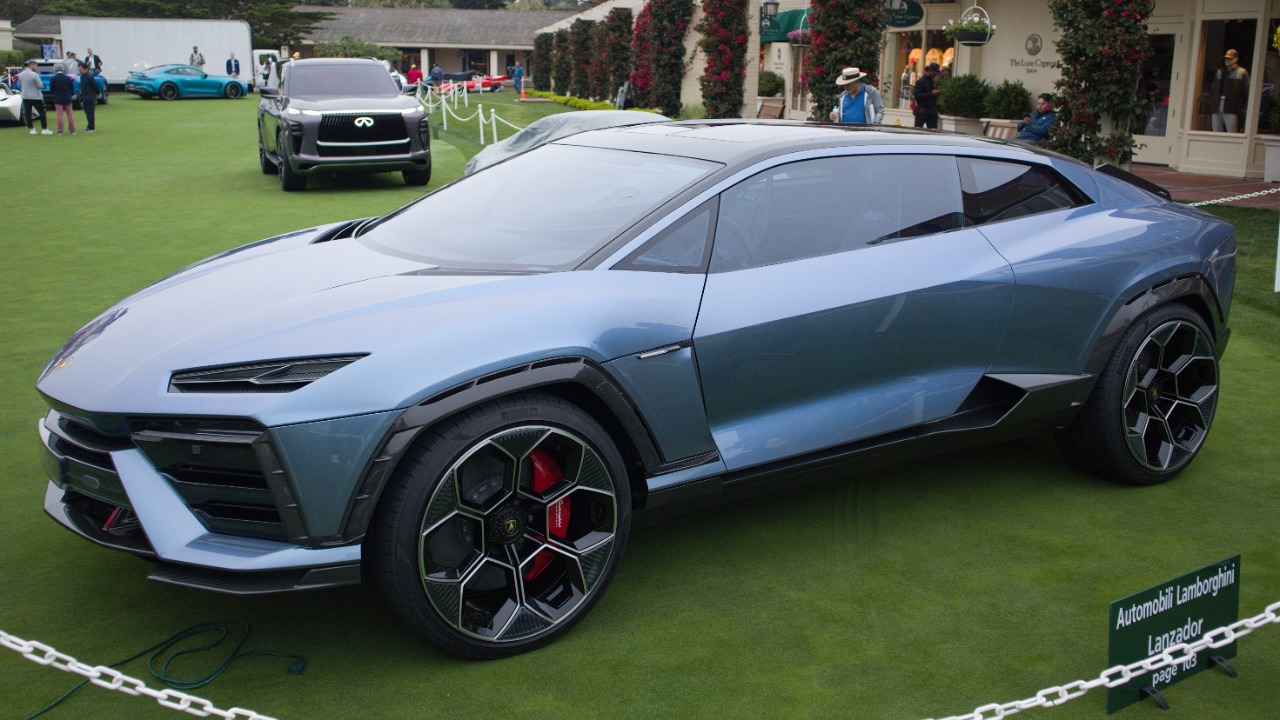
Lamborghini has executed a major strategy reversal in the performance-car segment, shelving its first planned battery electric model and placing plug-in hybrids at the center of its future range. The decision removes the all-electric Lanzador from the product roadmap and elevates models that blend combustion engines with electric assistance as the brand’s main path to lower emissions.
The move signals that, for at least the next product cycle, Lamborghini intends to satisfy regulators without abandoning the sound, drama and mechanical character that its core buyers still demand. It also turns the company into a high-profile test case for whether plug-in hybrids can carry a luxury manufacturer through tightening climate rules at a time when enthusiasm for pure EVs is cooling.
From bold EV promise to abrupt reversal
Lamborghini had initially presented the Lanzador concept as its first fully electric supercar, a high-riding two-door that was supposed to open a new chapter for the Italian marque. That plan has now been scrapped, with reports indicating that Lamborghini has abandoned development of battery electric vehicles in response to weak demand among high-end buyers. Executives are described as seeing appetite for a pure EV from their clientele as close to zero, a stark contrast with the enthusiasm that surrounded the original concept reveal.
The cancellation is not limited to a single show car. The company has effectively torn up its previous electrification roadmap, which had envisaged a fully electric model by the end of the decade, and is instead refocusing its engineering resources on plug-in hybrid systems. That shift is reinforced by reports that the all-electric Lanzador is no longer on the drawing board and that its name will instead live on in a different configuration, one that preserves a combustion engine at the heart of the car. For a brand that had been held up as a symbol of how even the most theatrical supercars would go silent, the reversal marks a significant recalibration of expectations.
Customer sentiment and the sound of a V12
Behind the decision lies a blunt assessment of what Lamborghini’s customers actually want from a six-figure performance car. Executives have pointed to a lack of meaningful demand for a silent, battery-only supercar and to feedback from sports car enthusiasts who say they miss the noise when they sample electric rivals. Reporting on the pivot describes how the supercar maker found demand for a fully electric model to be close to zero among its established demographic, a group that associates the brand as much with sound and sensation as with raw acceleration figures.
Leadership has echoed that sentiment over several years. Earlier commentary from the company’s top management stressed that clients still want the sound and feel of high-revving engines, and that any electrification plan would need to respect that emotional connection. That perspective has now been translated into product planning, with the firm leaning into plug-in hybrids that can run quietly at low speeds or in urban areas yet revert to full combustion drama on open roads. For buyers who see an EV’s silence as a loss rather than a gain, the hybrid compromise is being framed as a way to have both regulatory compliance and the traditional theatre of a Lamborghini.
Lanzador reborn as a plug-in hybrid
The most visible casualty of the policy change is the Lanzador itself, which had been showcased as Lamborghini’s first pure EV and a statement of intent about its technological future. That vehicle will not appear in the form originally promised. Instead, reports indicate that Lamborghini has dropped the fully electric version and is accelerating a plug-in hybrid strategy in its place. The Lanzador name is being retained, but the production car will now be engineered around a plug-in hybrid powertrain that combines electric motors with a combustion engine.
Reports state that Lamborghini has shelved its first pure electric project and will instead focus on plug-in hybrid versions of the Revuelto, Urus, and a planned model called Temerario. Additional reporting has stated that Lamborghini CEO Stephan Winkelmann intends to replace the electric Lanzador with a plug-in hybrid after finding minimal buyer enthusiasm for a battery-only flagship, a message that aligns with the broader narrative of customers resisting a fully silent supercar. In practical terms, the Lanzador’s transformation means the company can reuse much of the design and packaging work already completed, while swapping in a drivetrain that is more aligned with its brand identity.
Revuelto as the template for a hybrid era
The clearest indication of where Lamborghini is heading technically can be seen in The Lamborghini Revuelto, the first series-production plug-in hybrid from the company and the successor to the Aventador. According to product information, the Lamborghini Revuelto is a mid-engine plug-in hybrid sports car produced by the Italian manufacturer, pairing a naturally aspirated V12 with three electric motors and a high-voltage battery. That layout allows short periods of electric-only driving while preserving the traditional engine layout and sound that define the brand’s mid-engine flagships.
The Revuelto effectively serves as a rolling laboratory for the rest of the range, showcasing how a plug-in hybrid system can boost performance and reduce emissions without diluting character. Its success has encouraged the company to extend similar technology to other models, including the Urus SUV and future supercars that will share electrified architectures. By treating the Revuelto as a template rather than an exception, Lamborghini is signaling that plug-in hybrids are not an interim curiosity but the mainline technology that will carry its products through the next regulatory cycle.
Regulation, rivals and the risk of standing apart
Lamborghini’s pivot also reflects a calculation about regulation and competitive positioning. The company must meet tightening fleet emissions targets in Europe and other key markets, yet it is small enough that a focused plug-in hybrid lineup can still deliver the required reductions without a full EV. Analysts following the brand’s parent group note that this approach allows the marque to align the pace of electrification with customer sentiment rather than moving ahead of its buyers. Commentary on the strategy argues that plug-in hybrids give the company a flexible tool to manage emissions, since they can operate as zero-emission vehicles in cities while still offering long-range capability without charging anxiety.
At the same time, the decision sets Lamborghini apart from some direct rivals that continue to invest heavily in pure electric sports cars. That divergence carries risk if regulations tighten faster than expected or if buyer sentiment swings back toward EVs later in the decade. Yet the company appears to be betting that its customers will continue to prioritize drama and mechanical engagement over silent speed, and that the hybrid systems now under development will keep that experience alive. For now, the brand is focusing on plug-in hybrids as the technology that can reconcile its theatrical identity with regulatory and investor expectations, while leaving open the possibility of revisiting full electrification if market demand changes.
More from Fast Lane Only