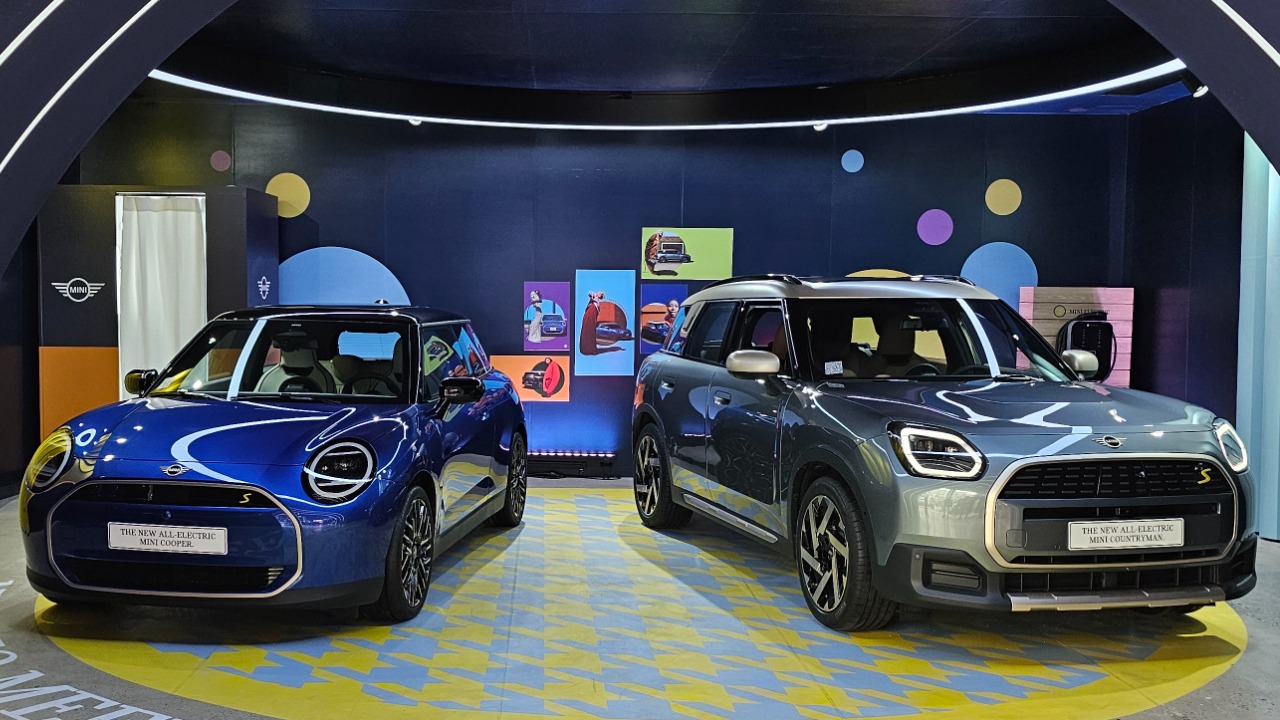
BMW is seeking a way around new European Union tariffs that threaten to raise prices on China-built Mini electric vehicles and blunt the brand’s momentum in battery-powered cars. The company is in talks with policymakers over a minimum import price that could spare these models from extra duties while still addressing concerns about state support for Chinese manufacturing.
The negotiations come as European authorities tighten scrutiny of electric vehicles imported from China and as BMW leans heavily on the Mini Cooper and Aceman EVs to grow its zero-emission portfolio in Europe. The outcome will shape not only BMW’s pricing strategy but also how open the European market remains to China-based production in the next phase of the electric transition.
BMW’s push for a tariff carve-out
BMW is pressing Brussels to accept a deal that would swap higher duties for a floor on the import price of China-built Mini electric models. According to reports on the talks, BMW and the European Commission are discussing a structure in which Mini EVs shipped from China into the European Union would be exempted from the bloc’s additional tariff rate of 20.7% if they are sold above a negotiated minimum value. By offering a predictable pricing corridor, BMW aims to satisfy EU concerns about undercutting local producers while preserving the commercial viability of importing compact electric cars from China-based plants.
The company’s stance reflects a broader effort to shield its small EVs from the cost shock that followed the EU’s anti-subsidy investigation into Chinese-made electric vehicles. Current discussions build on earlier outreach in which BMW argued that its China production is integrated into a global manufacturing system rather than a low-cost dumping strategy, and that a tailored arrangement would better fit that reality than blanket duties. The push for a minimum price mechanism, framed as a replacement for the extra 20.7% tariff, is detailed in reports describing active negotiations over a compromise.
Legal battles and alliances around EU tariffs
BMW’s lobbying in Brussels runs in parallel with a legal offensive against the tariff regime itself. Earlier in the dispute, BMW joined a group of Chinese EV manufacturers in filing a challenge at the Court of Justice of the European Union, contesting the legality and methodology of the extra duties on vehicles imported from China. That complaint argues that the investigation into Chinese subsidies and the resulting tariff schedule unfairly penalize both Chinese EV producers and European brands that build cars in China, a position that aligns BMW with several Chinese EV peers in a rare cross-border alliance. The case is described in detail in reports that note how BMW joins Chinese makers in seeking judicial review of the tariffs.
The courtroom strategy is not limited to BMW and Chinese firms. Separate coverage indicates that Tesla, led by Elon Musk, has also aligned with BMW and other Chinese manufacturers in a related challenge at the Court of Justice of the European Union, underscoring how the tariff package has galvanized a coalition of global automakers that depend on China-based production for their European offerings. While those proceedings will take time to resolve, their existence gives BMW leverage in its talks with the European Commission. The company can present the proposed minimum price arrangement as a pragmatic alternative to a drawn-out legal fight that could leave both sides with uncertainty over the final tariff structure for years.
How EU tariff levels hit Mini pricing
The stakes of BMW’s negotiations become clearer when set against the tariff levels imposed on Chinese-built electric vehicles. Provisional EU measures set additional duties that vary by manufacturer, with rates such as 17.4% for BYD and 37.6% for SAIC, on top of the existing 10% import tariff on cars. For Mini, which relies on Chinese plants for models like the Cooper and Aceman EVs, the effective increase in costs is even sharper. One analysis projected that the applied rate on China-built Minis would translate into a 38.1 percent increase in European sticker prices if fully passed on to consumers, a scenario that would significantly erode demand in a price-sensitive segment.
BMW has already warned that such a jump would undermine the business case for importing smaller electric cars from China and could force a rethink of product planning for Europe. The company’s earlier efforts to secure lower duties for China-made Mini imports into Europe were framed around the argument that the tariff bands, ranging from 17.4% for BYD to 37.6% for SAIC, were calibrated for mass-volume Chinese exporters rather than for European brands using Chinese production as part of a global footprint. Those figures and their implications for Mini pricing are set out in coverage of BMW seeks lower and in reports that quantify the 38.1 percent potential price increase for China-built Minis.
BMW’s sales momentum and the 70 percent local-content hurdle
The tariff fight is unfolding at a time when Mini’s electric line-up is gaining real traction in Europe. The brand delivered a record 105,535 battery electric vehicles in a recent period, a figure that underscores how central the Cooper and Aceman EVs have become to BMW’s broader electrification strategy. Those volumes rely heavily on China-based production, which allows BMW to scale output of compact EVs without overloading European plants that are already balancing combustion, plug-in hybrid, and electric lines. The company’s success with Mini EVs therefore heightens the urgency of finding a sustainable import framework that does not choke off a fast-growing part of its portfolio.
The policy environment is tightening in other ways as well. EU industrial plans linked to green manufacturing and strategic autonomy are expected to require that 70% of key components and value in electric vehicles sold in the bloc come from local or approved sources in order to qualify for certain incentives. For a brand that currently relies on China-made electric Mini production for global supply, that threshold presents a structural challenge. Reporting on BMW’s strategy notes that the company is weighing how to reconcile its China-made electric Mini volumes with future EU rules that could require 70% local content, a tension highlighted as Mini EV sales reach 105,535 units.
Handelsblatt’s revelations and the political dimension in Berlin
The political backdrop to BMW’s talks with the European Commission has been sharpened by reporting in Germany that brought the negotiations into public view. Coverage citing Germany’s Handelsblatt and sources close to the discussions indicated that BMW and the European Commission were in active contact over a minimum pricing model, with details surfacing that highlighted both the sensitivity and the advanced stage of the talks. The same reports suggested that the initiative followed similar outreach by other German automakers, including Volkswagen, which had engaged with Brussels on its own tariff exposure just two weeks earlier. These disclosures helped frame BMW’s effort not as an isolated plea but as part of a broader German industry push to recalibrate the EU’s China EV policy.
Berlin’s role is therefore both direct and indirect. On one hand, BMW is a flagship industrial group headquartered in Germany, and its negotiations with the European Commission naturally intersect with the German government’s stance on trade with China and on the protection of domestic manufacturing jobs. On the other hand, the leak of the talks to Handelsblatt signaled that political stakeholders wanted to shape the narrative around any eventual compromise, particularly in light of concerns that a special arrangement for BMW could be seen as favoritism. The interplay between corporate diplomacy and national politics is captured in reports that describe how Germany’s Handelsblatt reported that BMW and the European Commission were already deep into discussions over a Mini-specific solution.
More from Fast Lane Only