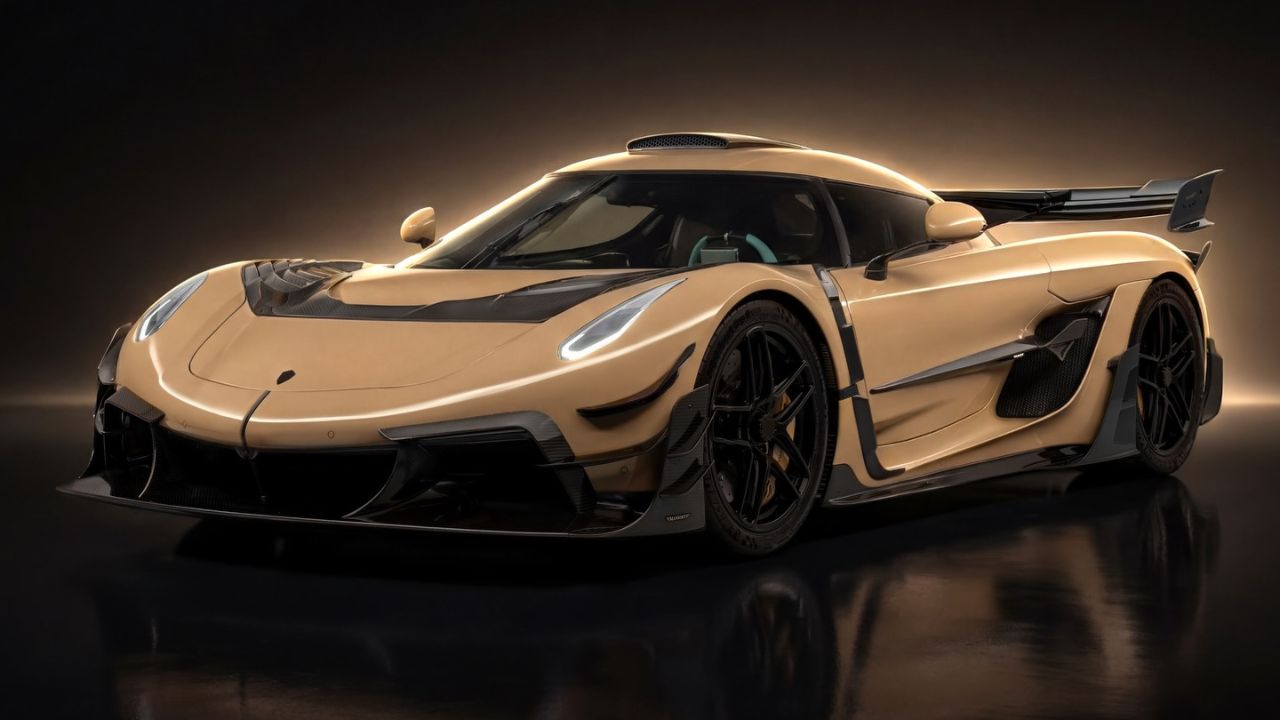
The Koenigsegg Jesko is already one of the most extreme road‑legal machines you can buy, a Swedish “megacar” engineered to chase records rather than trends. Now Mansory has arrived with a full carbon fiber aero package that turns that intensity up another notch, visually and aerodynamically, while leaving the Jesko’s core engineering intact. You are looking at a tuner taking on a car that barely seemed modifiable in the first place, and doing it with 17 pieces of sculpted carbon that aim to add drama without completely overwhelming the original design.
For you as an enthusiast, collector, or track‑day regular, the result is a case study in how far personalization can go at the very top of the market. The Koenigsegg Jesko By Mansory is not a new model but a comprehensive body kit and interior treatment for a car that already sits in a league of its own, and it raises pointed questions about taste, value, and performance when exclusivity meets even more exclusivity.
The Jesko baseline: a megacar that barely needed more
Before you can judge Mansory’s work, you need to understand the starting point. The standard Jesko is Koenigsegg’s track‑focused flagship, part of a family the company itself describes as “megacars” because of their power output and performance envelope. With its advanced aerodynamics, active rear wing, and race‑bred chassis, the Jesko is engineered to generate thousands of pounds of downforce and to chase top‑speed and lap‑time bragging rights in a way that already puts it beyond most hypercars, a status reflected in how it appears in dedicated Jesko searches and buyer guides.
Koenigsegg’s own development work left very little “white space” on the body for traditional tuning. The factory car uses extensive carbon fiber, intricate venting, and a dramatic rear wing to balance stability with speed, and production only began after years of testing and refinement. When you look at the Jesko’s role in Koenigsegg’s lineup, sitting above earlier models and marketed as a technological showcase, it is clear that any aftermarket intervention has to respect a carefully honed package rather than fix obvious shortcomings, which is why the idea of a full aero kit from a third party initially sounded like sacrilege to many fans.
What Mansory actually adds: 17 pieces of carbon theater
Mansory’s answer is not to reengineer Koenigsegg’s megacar but to layer on a new visual identity using a bolt‑on approach. The Koenigsegg Jesko By Mansory is described as an aero package made up of 17 carbon fiber components that attach to the existing bodywork, including a more aggressive front splitter, additional canards, reshaped side skirts, and a reworked rear diffuser that visually thickens the car’s stance. These pieces are designed to integrate with the Jesko’s original carbon structure rather than replace it, which lets you treat the kit as a reversible styling choice rather than a structural conversion, a point underscored in detailed breakdowns of the Koenigsegg Jesko By package.
The tuner also leans heavily into exposed carbon, with the body panels, aero add‑ons, and even some trim pieces finished in glossy weave that catches the light from every angle. You get a sense of how comprehensive this is when you see Mansory’s own presentation of the kit as an “all‑carbon aerodynamic package” for the hypercar, language that matches the visual impression of a car almost entirely stripped of paint. For you as a buyer, that means the Jesko’s already technical aesthetic is pushed into full motorsport cosplay, with every surface seemingly optimized for airflow, even if the primary goal is visual impact.
From Sweden to wild: styling, stance, and that turquoise interior
Visually, the Mansory treatment pulls the Jesko away from its relatively clean Swedish minimalism and into something more extroverted. The front end gains sharper edges and extra vents, the side profile is busier with added fins, and the rear becomes a layered sculpture of carbon planes that make the stock car look almost restrained. Commentators have noted that somewhere, Christian von Koenigsegg is probably watching through his fingers as Mansory gets its hands on Sweden’s most exclusive hypercar, a reaction that captures how radical the transformation looks in early Jesko images.
Inside, Mansory goes even further from factory spec, swapping the Jesko’s purposeful cabin for a high‑contrast color scheme dominated by turquoise accents. Matching turquoise details appear on the doors, center console, and steering wheel, creating a cockpit that is impossible to ignore and clearly aimed at clients who want their car to feel as bespoke as a couture watch. That interior has already sparked debate about whether such a bold palette will help or hurt future collectability, with some observers arguing that the carbon‑heavy styling and bright trim prioritize immediate visual impact over long‑term resale tastes.
First Koenigsegg for Mansory, and a $4 million talking point
For Mansory itself, this Jesko project is a milestone. It is the first time the tuner has modified a Koenigsegg, a fact that instantly elevates the car’s profile among collectors who track such “firsts.” Coverage of the build has emphasized that this is the first Koenigsegg that Mansory has modified and that, in the eyes of some critics, it is not terrible, a backhanded compliment that reflects how controversial the company’s previous work on brands like Lamborghini and Ferrari has been. You can see that nuance in early reactions that note the Jesko’s factory ability to generate up to 3,086 pounds of downforce and then weigh whether Mansory’s changes respect that engineering, a tension highlighted in analyses of Koenigsegg and Mansory roles in the project.
Price, of course, is part of the theater. A world‑exclusive video walkaround framed the car as a 4 million dollar Mansory Koenigsegg Jesko, a figure that folds the base car’s cost and the tuner’s work into a single eye‑watering number. For you as a potential buyer or simply as someone tracking the ultra‑luxury market, that price tag positions the car in the same conversation as one‑off coachbuilt Ferraris and bespoke Bugattis, and it underscores how Mansory is pitching this kit as a top‑tier collectible rather than a mass‑market accessory, a message reinforced in the WORLD EXCLUSIVE framing of the reveal.
“Exclusivity meets even more exclusivity”: how Mansory sells it
Mansory’s own messaging leans hard into scarcity and status. The company describes the project with the phrase “When exclusivity meets even more exclusivity,” presenting the Jesko as an already rare hypercar that is being taken to another level through a comprehensive all‑carbon aerodynamic package. In social posts, MANSORY positions the kit as a way to redefine hypercar exclusivity, pairing images of the carbon‑clad Jesko with language about luxury and individuality that is clearly aimed at clients who see their cars as rolling signatures rather than mere transportation, a pitch that comes through in the brand’s When exclusivity and follow‑up MANSORY posts.
That positioning is echoed in longer descriptions that frame the Jesko as already an ultra‑exclusive hypercar and then argue that Mansory’s carbon fiber kit takes it beyond even that category. You are invited to see the car not simply as a tuned Koenigsegg but as a new expression of the megacar idea, one that uses additional carbon, bespoke paint accents, and a transformed interior to create a one‑of‑a‑kind object. In that sense, the Jesko By Mansory is less about incremental performance gains and more about staking out a new peak in the hierarchy of personalized Koenigsegg megacars.
More from Fast Lane Only