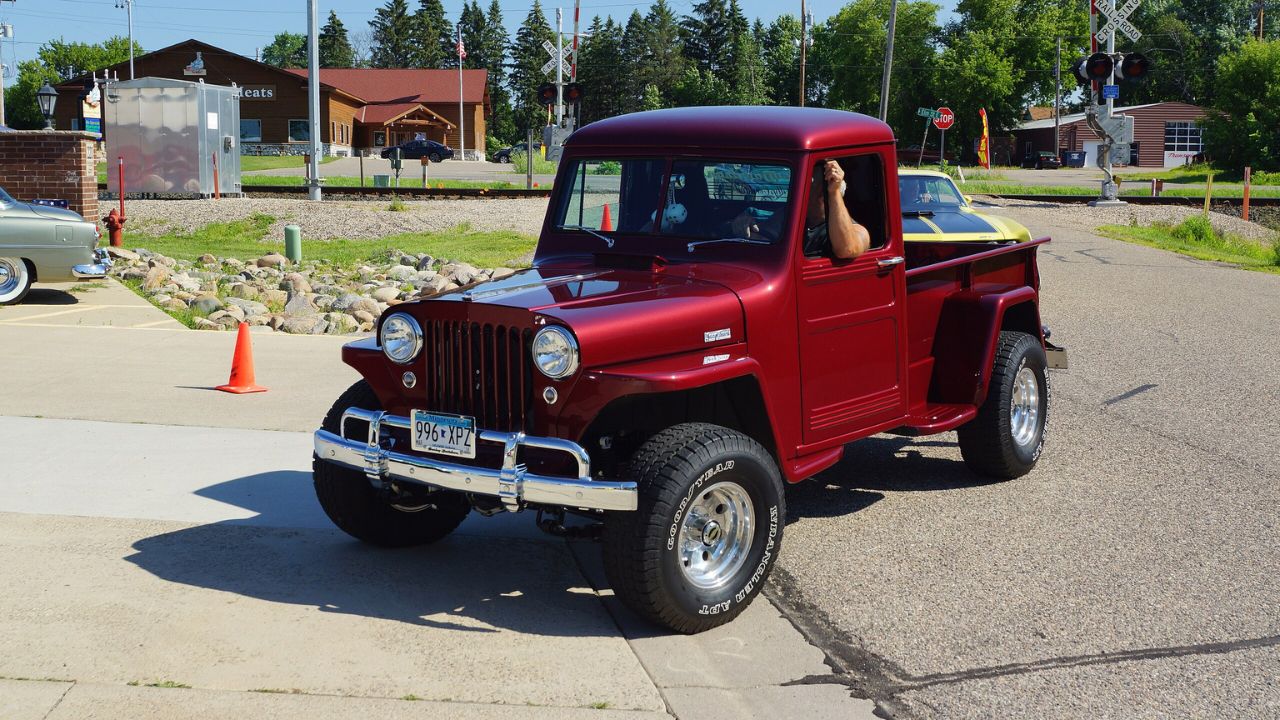
The charm of a 1948 Willys Jeep is how little there seems to be to it: a sturdy ladder frame, leaf springs, a simple drivetrain, and just enough bodywork to keep mud off your boots. That simplicity can fool new owners into thinking it’ll behave like a modern appliance—turn the key and forget it. In reality, early civilian Jeeps reward regular, hands-on attention, and they’ll quickly tell you when something’s drifting out of adjustment.
Why “simple” still means frequent maintenance
Postwar vehicles were designed around service intervals that assumed owners (and local shops) would grease, adjust, and inspect constantly. A CJ-2A-era Jeep has many lubrication points, a handful of settings that can drift with use, and components that wear faster when they’re exposed to dirt and water. The original owner’s mindset was closer to farm equipment than modern commuter car: a little routine care, often, to keep it dependable.
Even when everything is in good shape, the experience includes normal vintage-vehicle behavior—slight seepage, periodic adjustments, and noises you learn to interpret. A well-sorted Jeep can be reliable, but it’s rarely “set it and forget it.” The upside is that most tasks are straightforward, with easy access and minimal special tools.
Lubrication is a lifestyle with early Jeeps
One of the biggest surprises is how much the Jeep expects to be greased. The chassis, steering linkage, and driveline all depend on regular lubrication, especially if the vehicle sees dirt roads or wet conditions. Miss a few greasing intervals and you can accelerate wear in places that feel “minor” until steering gets sloppy or a joint starts complaining.
It’s also a vehicle where you keep an eye on fluid levels as a habit, not a reaction to warning lights. Seepage from gaskets and seals is common on vintage drivetrains, and small losses add up over time. Catching a low level early is usually the difference between a casual top-off and an expensive lesson.
Steering and suspension need periodic checks
Leaf springs, solid axles, and a steering system full of joints make for a rugged setup, but one that wears gradually and shows it in the way it drives. A 1948 Jeep can develop wander or shimmy if steering linkage and related components loosen or wear out of spec. Because these parts are mechanical and adjustable, owners often find themselves checking play and tightening or rebuilding items as the years go by.
Alignment expectations were also different in the 1940s, and many Jeeps have lived through decades of hard use, curb strikes, and off-road impacts. That history can translate into small issues that stack up: a little play here, a slightly tired spring there, and suddenly it feels less precise than it did last season. Regular inspection keeps those small issues from turning into a white-knuckle drive at speed.
Carburetion and ignition don’t tolerate neglect
The CJ-2A’s era of carburetors and breaker-point ignition is wonderfully understandable, but it does ask for periodic attention. Points can wear and drift out of adjustment, which affects starting, idle quality, and overall drivability. Many owners keep basic tune-up parts on hand because a quick adjustment can bring the engine back to its happy place.
Carburetors are also sensitive to old fuel, varnish, and dirt. If a Jeep sits for long periods, it can reward you with clogged passages, sticky floats, or inconsistent mixtures that show up as hesitation or hard starts. Keeping the fuel system clean and the ignition properly set is often the difference between “temperamental antique” and “dependable old workhorse.”
Cooling systems and electricals reflect their time
Cooling systems on vehicles of this vintage can be perfectly adequate, but they’re less forgiving of partial blockages, tired hoses, or sediment in the radiator. A Jeep that runs fine around town might creep toward hot if the system isn’t in good shape and you ask more of it—slow trail work, warm weather, or long climbs. Routine inspection and timely replacement of aging rubber parts helps prevent the classic old-vehicle surprise of a sudden leak.
Electrical systems are another area where “simple” doesn’t mean “care-free.” Connections corrode, grounds get flaky, and old wiring can become brittle, especially in vehicles that have seen moisture and vibration for decades. Many issues that feel mysterious at first—dim lights, intermittent charging behavior, stubborn starting—trace back to basic cleaning, tightening, and making sure the system’s components are healthy and correctly adjusted.
Owning one is more like stewardship than possession
What seasoned owners learn is that a 1948 Jeep responds best to a steady rhythm: listen, inspect, lubricate, adjust, and fix small things before they become big ones. That can sound like a chore, but it’s also part of why these vehicles remain beloved—your hands and senses are part of the operating system. You’re not just driving it; you’re participating in keeping a piece of practical postwar engineering alive.
If you approach the Jeep with that expectation, the constant attention becomes less of a frustration and more of a satisfying routine. You’ll also build confidence quickly, because the vehicle teaches you what it needs and rewards you when you stay ahead of it. For many enthusiasts, that’s the whole point.