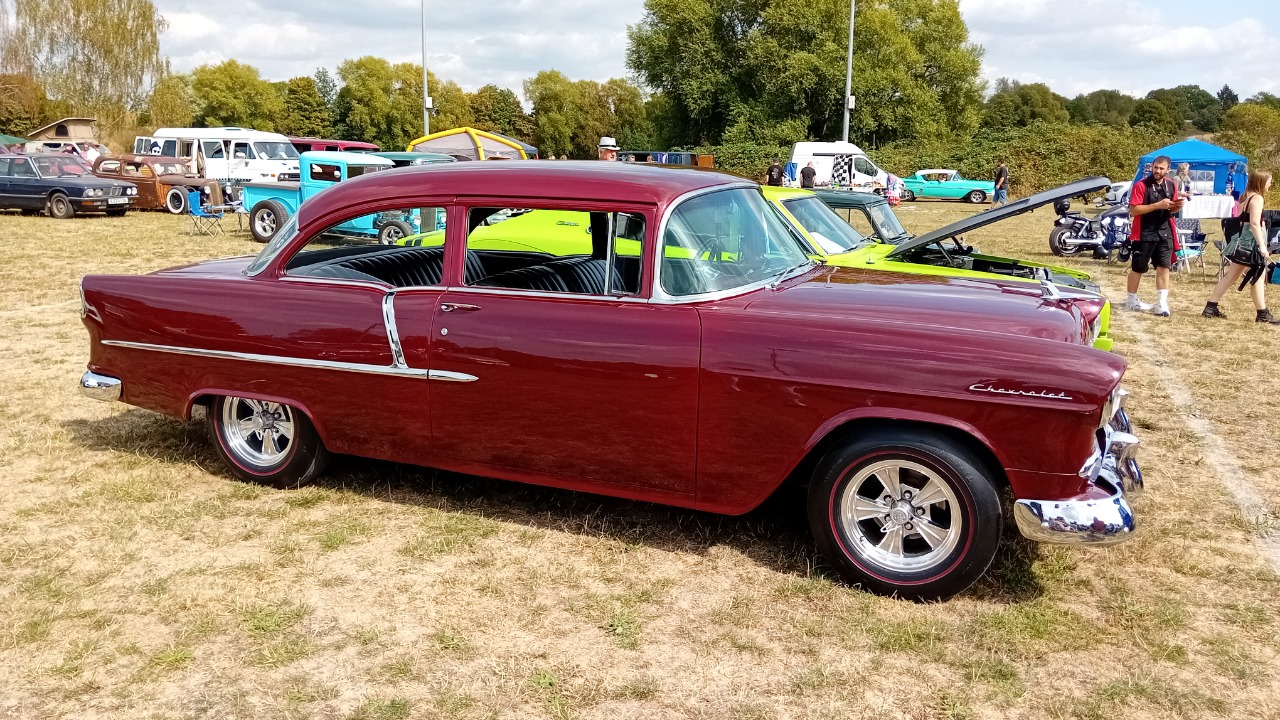
A 1955 Chevrolet 210 is the kind of car that invites a neat, organized build sheet—and then quietly dares you to change it. These mid-level Tri-Five Chevys weren’t originally the flashy Bel Air, but that’s exactly why so many of them became blank canvases for hot rodders, restorers, and weekend tinkerers. After a few months of parts hunting and real-world driving, the “simple plan” often runs into budget realities, availability, and the way the car actually feels on the road.
Why the 1955 210 is such a common starting point
Chevrolet positioned the 210 between the budget 150 and the upscale Bel Air, which made it a practical family car in its day and a plentiful used car later on. That long timeline matters, because many 210s survived long enough to become second-hand projects when the first wave of Tri-Five enthusiasm took off. The 1955 model year also matters mechanically: it’s the first year of Chevrolet’s small-block V8, which helped cement the car’s reputation as a natural hot rod platform.
Trim level plays into it, too. A 210 generally has cleaner, simpler brightwork than a Bel Air, so builders feel less guilty modifying it, and replacement trim decisions are less expensive. Even when the goal starts as “keep it stock,” a missing piece of original trim or an incorrect interior detail can nudge the project toward a tasteful driver instead of a points-judged restoration.
The plan vs. the parts: availability changes everything
Many builds change direction the moment you start pricing and sourcing parts. Factory-correct details—specific interior fabrics, correct fasteners, date-coded components, and model-specific trim—can be harder to find than the big-ticket mechanical pieces. Meanwhile, reproduction support for Tri-Five Chevys is strong, but it naturally favors popular configurations and the look most people want rather than every exact original variation.
That mismatch often leads to a pivot: a builder who wanted strict originality might settle into “period-correct” upgrades, like a tasteful stance, better brakes, and an updated cooling system, simply because those parts are readily available and make the car nicer to live with. On the other side, someone chasing a modern pro-touring setup might stumble into a good-running period engine and decide the car feels more authentic as a traditional small-block cruiser.
Budget creep and the “while you’re in there” effect
Tri-Five projects are famous for scope creep because so many systems are interconnected. A simple brake refresh can turn into new lines, then a dual-reservoir master cylinder for safety, then a pedal or linkage change, and suddenly the firewall and under-dash work are part of the job. It’s not that the original plan was wrong—it’s that the car keeps revealing what it needs once you begin disassembly.
Paint and bodywork are where plans most commonly split in two. If you uncover rust in floors, rocker panels, or lower quarters, the project can move from “quick respray” to metalwork and panel alignment, and that’s where people either simplify (patina driver) or double down (full restoration). The 1955’s age means prior repairs are common, and dealing with old patchwork often forces more extensive work than the owner expected.
Drivability upgrades that tend to steer the whole build
One test drive can rewrite the plan. A stock-feeling 1955 Chevrolet 210 can be charming, but it can also feel busy on modern roads—especially if it still has original-style gearing, steering, and brakes. Many owners start with the idea of “just getting it running,” then decide they want a car that can comfortably do highway miles and stop predictably in modern traffic.
That’s where practical upgrades have a way of snowballing. Switching to a more modern transmission for highway cruising can influence driveshaft length, crossmember choices, and speedometer considerations. Improving cooling and charging reliability leads to radiator, fan, and alternator decisions that ripple through the engine bay, and before long the build is less about a single modification and more about an integrated package that works together.
Identity shifts: from clone dreams to honest 210 character
A lot of 210 projects begin with the temptation to “Bel Air-ize” the car, because the 1955 Bel Air has such a recognizable trim and two-tone look. But builders often change course once they realize the 210’s cleaner appearance is part of its charm. Instead of chasing a clone, they lean into the car’s original place in the lineup—simple, sporty, and less formal than its upscale sibling.
There’s also a cultural angle. Over the decades, Tri-Five Chevys became icons in multiple scenes: restored stockers, period hot rods, gassers, street machines, and modernized drivers. As the owner’s tastes evolve—or as they spend time at shows and talk with other enthusiasts—the car’s direction can shift toward the community they feel most at home in. A 210 doesn’t demand one identity, and that flexibility is a big reason so many projects end up differently than they began.
How to plan for the changes without losing momentum
The best way to keep a 1955 210 project enjoyable is to expect a few course corrections. Decide early what matters most—appearance, originality, comfort, performance, or long-distance reliability—and treat everything else as adjustable. When a surprise repair appears, it’s easier to respond if you already know which outcomes you’re protecting.
It also helps to build in phases you can drive between. Getting the car safe and dependable first tends to keep motivation high, and it gives you real feedback before you commit to expensive cosmetic work. A 1955 Chevrolet 210 has enough personality to be fun at many stages of completion, and that’s why so many of them wind up better—just different—than the first plan on paper.