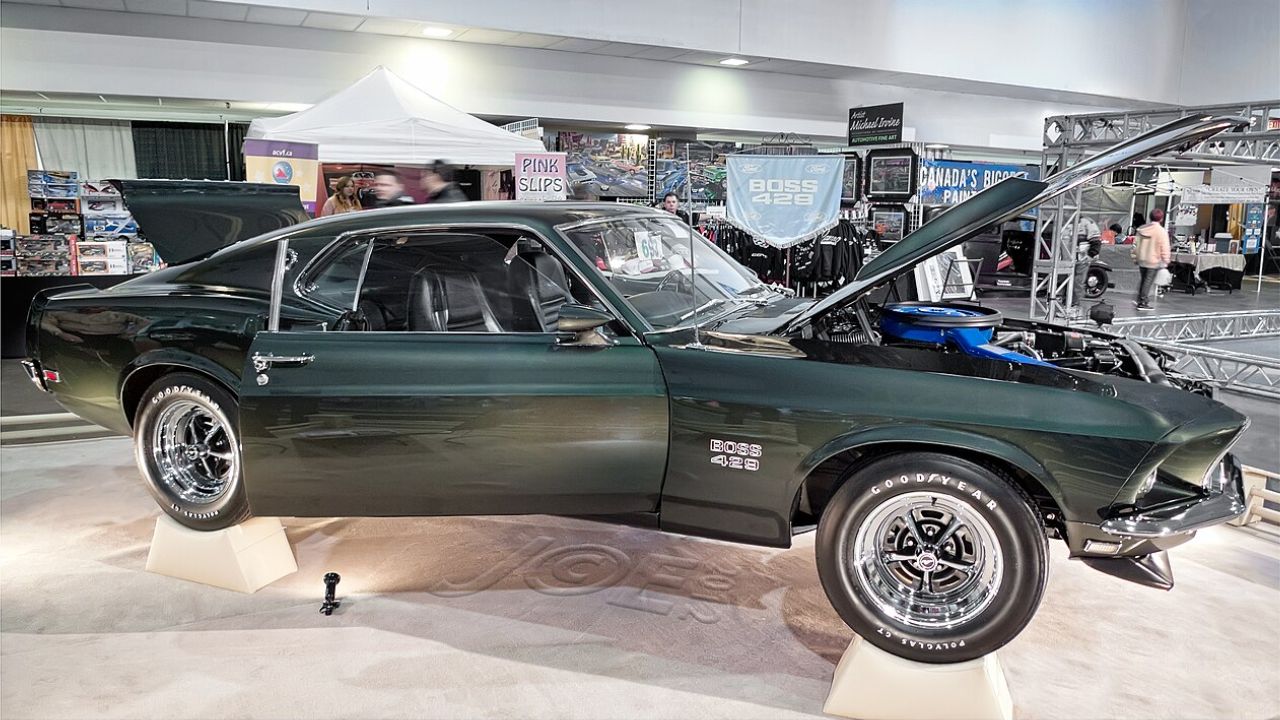
Owning a 1969 Boss 429 has a way of turning “I’ll just freshen it up” into a long-term lesson in scarcity. The car’s legend is well known, but what surprises many restorers is how quickly rare, one-year, or low-volume parts can steer decisions about originality, drivability, and even how far to disassemble. When certain pieces are hard to verify, harder to find, and expensive to replace, the smartest restoration plan often becomes the one that protects what’s already there.
Why this particular Mustang exposes parts scarcity so quickly
The Boss 429 wasn’t a typical Mustang option package; it was a specialized program built around fitting a large, semi-hemispherical-head 429 into a Mustang engine bay. Cars were modified by Kar Kraft after leaving Ford, and that split-production story matters because it created a mix of Mustang components and Boss-specific hardware that doesn’t always line up neatly with mass-produced parts catalogs. The result is a car where a “small” missing bracket or incorrect fastener can become a major research project.
Because production numbers were low, there wasn’t the same aftermarket safety net that exists for more common Mustangs. You’ll run into pieces that were used for a short time, had unique dimensions, or were tied to the conversion work rather than standard assembly-line practices. That’s why two cars can look similar yet have subtle differences restorers need to document before turning wrenches.
The ripple effect: one rare component can dictate the whole build
On many Boss 429s, the rarest items aren’t the flashy ones; they’re the unglamorous pieces that establish correctness and function. If an original, Boss-specific part is present but tired, owners often choose preservation over replacement because a “better-looking” substitute may be wrong and difficult to reverse later. That can push a restoration toward careful cleaning, stabilization, and minimal refinishing rather than a fully detailed, everything-new approach.
When something is missing, the temptation is to hunt for a perfect replacement, but availability can change the timeline and the budget overnight. Owners sometimes decide to keep the car in a “survivor-style” state or build it as a driver while continuing the search. In other cases, the hunt affects paint and assembly sequencing, because you don’t want to finalize routing, brackets, and clearances until you’ve confirmed the correct pieces.
Research becomes a tool, not a formality
Boss 429 restorations tend to reward people who treat documentation as part of the mechanical work. Period photos, factory literature, and well-regarded marque references help owners understand what’s typical versus what’s simply aged, modified, or misassembled during a past repair. That matters because some “wrong” details are actually evidence of how these cars were built and converted, and erasing those clues can reduce historical integrity.
It’s also why owners photograph everything before disassembly and keep notes on finishes, markings, and how components stack and align. With rare parts, you can’t assume you’ll find a clear replacement reference later, especially for small hardware and underhood details. A few careful photos can prevent an expensive mistake and make reassembly far smoother.
Original vs. replacement: making peace with smart compromises
Even dedicated purists end up weighing tradeoffs, because not every part can be sourced in the right form at the right time. Some owners prioritize keeping original core pieces and accept carefully chosen service replacements for wear items, especially where safety and reliability are involved. Others will preserve an original part off the car and install a more practical substitute to drive the car regularly, keeping the rare component protected.
The key is to make reversible decisions whenever possible. If a substitute is needed, owners often try to avoid modifications that cut or permanently alter Boss-specific structures and hard-to-replace pieces. That way, if the correct component surfaces later, the car can be brought closer to original without undoing major work.
Planning and sourcing strategy matters more than pure wrench time
Restoring a car like this rewards a “parts-first” mindset. Before paint and final detailing, many owners inventory what they have, verify what’s correct, and identify what’s missing or questionable. That reduces the risk of finishing the engine bay only to discover a rare bracket, duct, or mounting piece needs to be installed behind freshly restored components.
Networking is also part of the process, because rare parts often change hands privately. Enthusiast communities, marque specialists, and reputable restoration shops can help confirm what you’re looking at and what’s realistic to source. Owners who rush without that support sometimes end up buying expensive pieces that don’t fit the application or aren’t appropriate for the model year.
How scarcity reshapes the end goal of the restoration
With common classics, the end goal is often a clean checklist: numbers, finishes, and assembly details brought back to a known standard. With the Boss 429, scarcity and variation can shift the goal toward stewardship—keeping the car intact, protecting uncommon original components, and making choices that respect how the car was actually assembled and converted. For some owners, that means a lightly restored engine bay and an emphasis on preserving original parts rather than chasing a uniform “as-new” appearance.
In the long run, many owners find the most satisfying restorations are the ones guided by what the car still has, not by an abstract ideal. When rare parts drive the plan, the project becomes more about careful decision-making than brute-force replacement. That approach tends to keep the car more authentic, more serviceable, and easier to refine as better information—or the right elusive part—finally turns up.