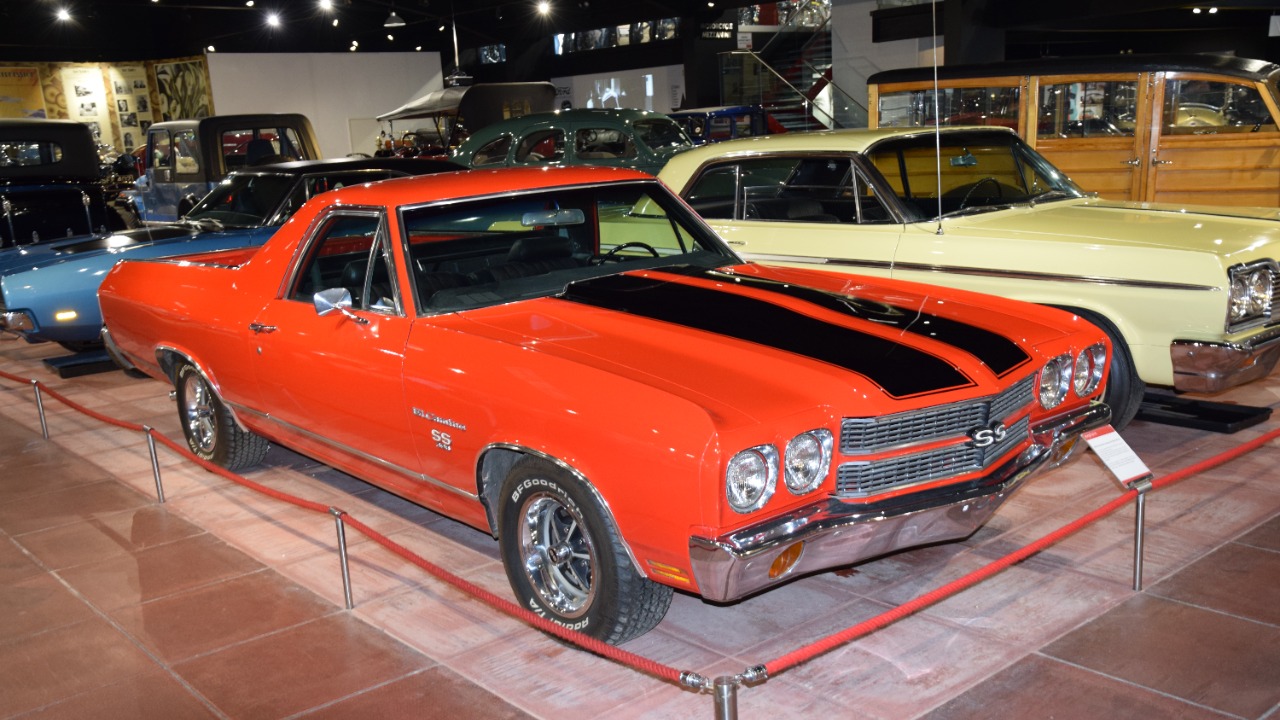
If you’ve spent time around a 1970 Chevrolet El Camino, you’ve probably noticed a pattern: owners often sort the brakes before they chase more horsepower. It isn’t because the small-block or big-block options aren’t tempting—it’s because these cars were built in an era when “adequate” braking was the norm, not a performance benchmark. Bringing the stopping system up to modern expectations makes every other upgrade more enjoyable and a lot less stressful.
Why braking upgrades usually come first
The 1970 El Camino shares much of its mechanical DNA with the Chevelle, and like most A-body intermediates, it was designed for street use with tires and traffic conditions that look very different from today’s. Even when factory front discs were available on GM intermediates around this time, plenty of cars left the showroom with front drums and a basic hydraulic setup. After decades of use, storage, and parts aging, owners often find the braking system is the weakest link before they ever touch the engine.
There’s also a practical reality: an El Camino is part pickup, part car, and people use them that way. Hauling weight in the bed or towing small trailers changes how quickly things go from “it stops fine” to “that was too close.” Once owners experience fade on a long downhill or a squishy pedal in summer traffic, the upgrade priority list tends to reshuffle quickly.
Common factory braking hardware and its limitations
A stock setup from this era typically relies on a single-circuit or dual-circuit master cylinder depending on exact build date and options, plus drum brakes at least in the rear and often at all four corners. Drums can work well when they’re properly adjusted and kept cool, but they’re more sensitive to heat and water than discs. Add in old rubber hoses, tired wheel cylinders, and glazed shoes, and you end up with a system that can feel unpredictable.
Even cars equipped with front discs can feel underwhelming if the calipers are sticky, the rotors are worn, or the proportioning/combination valve isn’t behaving. On top of that, pedal feel is heavily influenced by vacuum booster health and engine vacuum levels. An owner can build a stronger engine and accidentally make the brakes feel worse if vacuum drops at idle with a bigger cam.
Safety and drivability issues that show up before power mods
Most people don’t decide to “upgrade brakes” in a vacuum—they’re reacting to a symptom. A long pedal, pulling to one side, or the need to pump the brakes is often traced to air in the lines, out-of-adjustment rear drums, or deteriorated hoses that balloon under pressure. In older cars, it’s also common for fluid to be neglected; brake fluid absorbs moisture over time, which lowers its boiling point and contributes to corrosion inside calipers, wheel cylinders, and lines.
Once the car is mechanically sorted and driven regularly, heat becomes the next limitation. A mildly built 350 or a healthy big-block makes it easy to carry more speed than the original brakes were ever meant to shed repeatedly. That’s why a lot of owners treat braking as the foundation: stable, repeatable stops make the car feel “newer” long before any performance part does.
Popular, historically consistent upgrade paths
Many upgrades stick to a period-correct spirit while using better components. Converting front drums to factory-style front discs using GM intermediate parts and reproduction components is a well-worn path, and it keeps the look and serviceability familiar. Owners also commonly refresh everything at once—new hard lines where needed, new rubber hoses, quality pads/shoes, and properly machined or replaced rotors/drums—because mixing old hydraulics with new friction parts can lead to uneven results.
Another frequent step is moving to a dual-reservoir master cylinder if the car is equipped with an older single-circuit design, since separating front and rear circuits adds redundancy. People also pay attention to the combination/proportioning valve to ensure pressure is balanced correctly between front and rear. None of this is exotic, but it’s the kind of detail work that transforms confidence behind the wheel.
How brake choices affect later performance plans
Brake upgrades aren’t just about shorter stopping distances—they influence how the whole car can be set up. Tire choice matters because modern, stickier tires can generate more grip, which asks more from the brakes and suspension. Likewise, adding power often pushes owners toward taller rear gears or different transmission setups, and those changes can make the car arrive at corners or traffic lights with more speed than before.
Engine modifications can also alter braking assist. A bigger camshaft can reduce manifold vacuum at idle, which can make a vacuum booster feel weak or inconsistent. That’s why owners who plan significant engine changes often make sure the braking system is strong and predictable first, and they choose components that will still behave well if the engine’s personality changes later.
For many 1970 El Camino enthusiasts, improving the brakes is less about chasing numbers and more about making the car feel trustworthy in real-world driving. Once the pedal is firm, the car tracks straight, and repeated stops don’t change the feel, performance upgrades become more fun—and the whole project tends to move forward with fewer surprises.