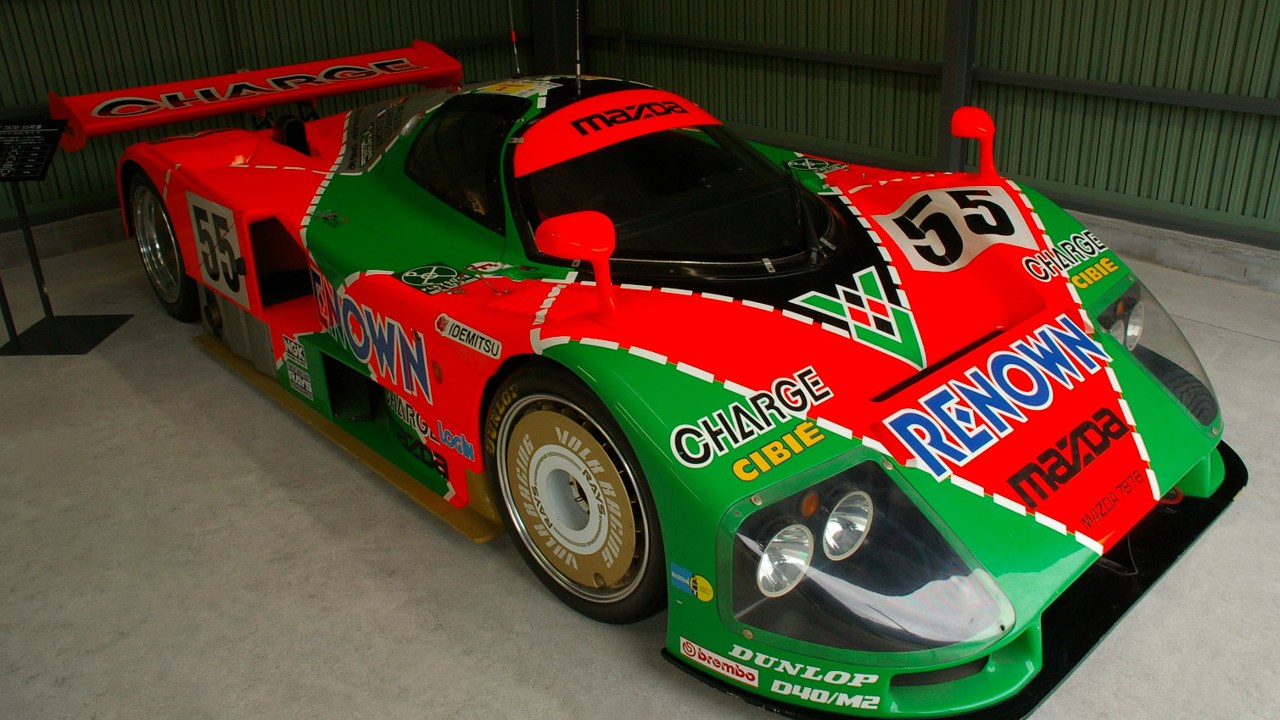
You step into Retromobile this year and find that one of the loudest stories in the hall is not about a new supercar, but about a victory that reshaped endurance racing 35 years ago. Mazda is using the Paris classic-car showcase to revisit its 1991 triumph at the 24 Hours of Le Mans, turning a single win into a broader celebration of rotary ingenuity, fan memory, and the brand’s modern sports-car identity. The result is a carefully staged reminder that the green-and-orange 787B did more than take a trophy; it gave Mazda a motorsport legacy you can still feel in the company’s road cars today.
Rather than treating the anniversary as a static museum moment, Mazda is inviting you to relive the sound, the technology, and the culture that grew around that race. The Le Mans winner, a roster of rotary icons, and even a cutaway project all converge in Paris to show how a single endurance race still shapes the way Mazda talks about performance, from the 787B to the MX-5 and beyond.
The 787B returns as Retromobile’s rotary centerpiece
At the heart of Mazda’s presence in Paris is the 787B itself, the car that carried the brand to its historic victory at the 24 Hours of Le Mans. The company has brought the original 1991 machine to the show, placing it on the Mazda stand in Hall space so you can walk right up to the car that once screamed down the Mulsanne Straight. By positioning the 787B as the focal point of its display, Mazda is reminding you that this was not just another prototype but the one that finally broke through for Japan at Le Mans.
The car’s significance rests on more than the win alone. The 787B was the first Le Mans winner powered by a rotary engine, a technical outlier that proved a multi-rotor design could survive and succeed over 24 hours of flat-out running. At Retromobile, Mazda is surrounding the 787B with other rotary-powered sports cars to underline how that race program fed into a broader engineering philosophy, a link you can see in the way the brand still talks about its rotary heritage in modern enthusiast coverage of the Le Mans anniversary.
Hearing the “unforgettable roar” on the Mazda stand
Seeing the 787B in person is one thing; hearing it is another. Mazda is leaning into that difference by scheduling daily sound demonstrations on its stand, inviting you to experience what organizers describe as the “unforgettable roar” of the rotary. Every day, the Mazda team welcomes you at 11:00 a.m., 2:00 p.m., and 5:00 p.m. to gather around the car and relive, for one minute, the auditory shock that once echoed across the Circuit de la Sarthe. The timing is precise and ritualistic, turning each session into a small ceremony of combustion and memory on the Mazda stand.
For you as a visitor, those scheduled roars do more than entertain. They frame the 787B as a living machine rather than a static exhibit, and they help you understand why the car still commands such devotion among fans who never saw it race. The sound is a direct line back to 1991, when the rotary’s shriek set Mazda apart from the field at Le Mans and helped cement the brand’s reputation for doing things differently. By building these acoustic moments into the daily rhythm of Retromobile, Mazda is making sure the anniversary is felt as much as it is seen.
Why 35 years on, Le Mans still defines Mazda’s racing story
Anniversaries can be arbitrary, but the number 35 carries real weight for Mazda at Retromobile. The company is explicitly framing its presence as a celebration of the 35 years since its victory at Le Mans, using that milestone to connect the race program to a half-century of the Paris show itself. Coverage of Retromobile’s 50th edition has already highlighted Mazda’s 787B tribute as one of the event’s defining themes, describing it as a showcase for the beautiful logic of the rotary engine and a reminder of how a single win can echo across decades of car culture at Le Mans.
For you, that 35-year framing matters because it shows how Mazda sees its own history. The brand is not just revisiting a race result; it is using the Le Mans win as a narrative spine that runs through its motorsport and road-car stories. By tying the anniversary to a major European classic-car show, Mazda is effectively telling you that the 787B belongs in the same pantheon as the great endurance legends, and that its rotary experiment was not a quirky detour but a core part of the company’s identity over the past 35 years.
From race car to cutaway: preserving the rotary in detail
Beyond the running car in Paris, Mazda’s Le Mans celebration also extends into more forensic territory. Enthusiast projects around the anniversary include a detailed 787B cutaway initiative, created to mark the 35th year since the win at Le Mans and to give you a clearer view of how the rotary-powered prototype was put together. The project has been teased as part of a broader effort to commemorate Mazda’s historic victory, with references to figures such as Takashi Yorino and Yojiro Terada that underline how much of the car’s story lives in the memories of the people who raced and developed it, as reflected in a Mazda community project.
For you as a technically minded fan, that kind of cutaway work is more than a visual novelty. It turns the 787B into a teaching tool, showing how the rotary engine, the chassis, and the aerodynamics all interacted to survive 24 hours at racing speed. In the context of Retromobile, where many cars are admired primarily for their styling, Mazda’s emphasis on the inner workings of its Le Mans winner reinforces the idea that the rotary story is as much about engineering problem solving as it is about sound and spectacle.
How the Le Mans legacy shapes Mazda’s road cars
Even if you never plan to attend Retromobile, the 35th anniversary matters because it influences the Mazda models you can actually buy. The company has long used its motorsport history to frame its road-going sports cars, and the Le Mans win sits at the center of that strategy. You can see the same blend of lightness, driver focus, and mechanical character that defined the 787B in the way Mazda talks about its MX-5 Miata, a car the brand celebrates as a pure, back-to-basics sports machine in its own right on its official MX-5 heritage pages.
The connection becomes even clearer when you look at special editions. Ahead of the Le Mans anniversary, Mazda prepared a 2025 MX-5 35th Anniversary model for the American market, finished in an artisan red metallic exterior and positioned as a premium take on the classic roadster formula. Priced at $36,250, plus a $1,185 destination and handling fee, the car is a reminder that Mazda sees anniversaries as opportunities to translate racing and brand history into tangible features you can order from a dealer, a point underscored in coverage of the Priced special edition.
More from Fast Lane Only