Old motorcycles often sit for years because nobody wants to deal with a dry oil tank and gummed-up carburetors. This 1968 Kawasaki W2 650 SS came out of an old Kawasaki dealer’s collection in a Pennsylvania barn, with just 5,054 miles on it.
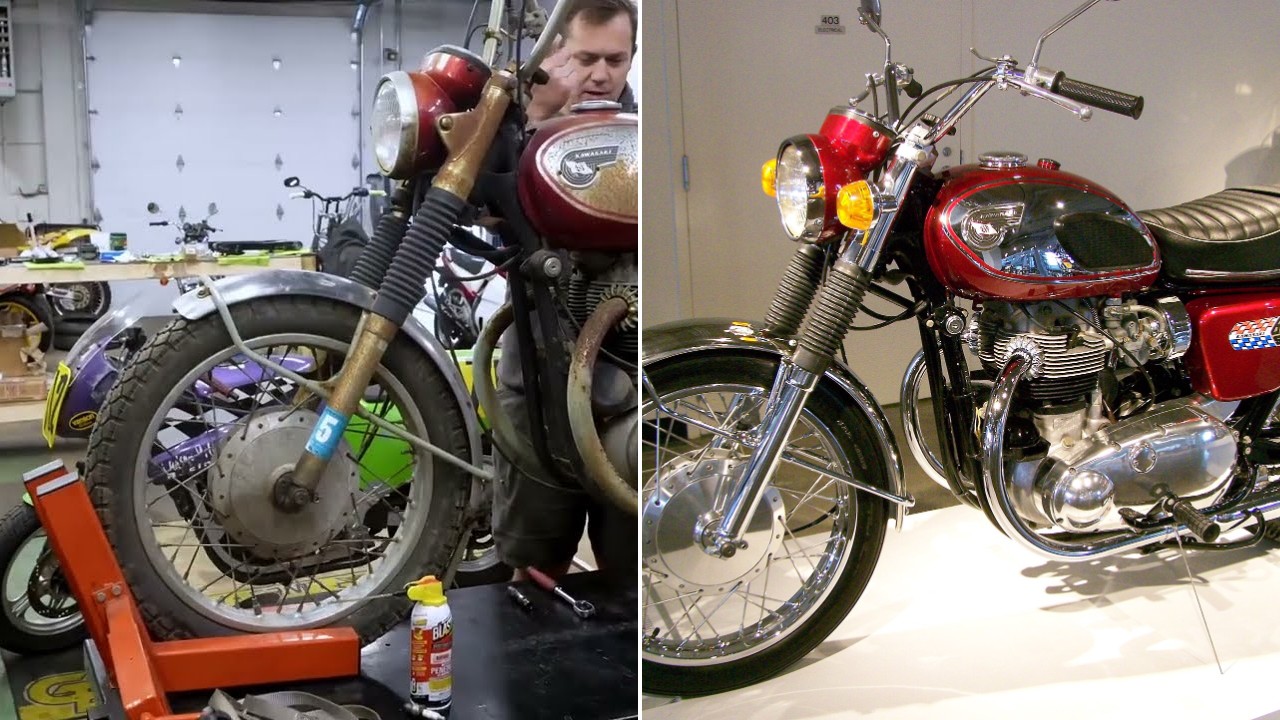
The mechanic who runs @The_Bearded_Mechanic set out to see whether it would run again. He calls it one of the most confusing bikes his shop has had.
“basically, it’s a British bike made in Japan.”
A Kawasaki W2 With A Dealer’s Past
On his walk-around, he finds a 1975 inspection sticker, dual Mikuni carburetors, twin exhausts and a right-side shifter. He thinks the handlebars came later, but the rest looks original to him. Surprisingly, the fuel tank is clean inside. He also points out two steering dampers, including an oil-filled one he says was standard equipment.
Because it has a dry-sump engine, he expects oil to have seeped into the crankcase over the years. Sure enough, oil comes out when they drain it. However, he says that oil looks pretty good, which encourages him.
He also passes on a story he heard about the dealer. According to that story, the dealer would take bikes out of the crate, race them for a weekend and then put them back on the showroom floor. He points to safety wire all over the bike as a racer’s habit.
Then comes one more fun fact. According to him, these 650s actually measure 624 cc, because 650 sounded better in a brochure.
Compression, Spark And A Rusty Oil Tank
The first check goes their way.
“Motor turns over, dude. That is a good sign.”
With the throttle stuck, a quick compression test reads about 115 on one cylinder and 75 on the other. The oil tank turns out to be rusty inside, and later they find a hole in its bottom. So they buy a better used tank on eBay. They also fit new fuel petcocks, clean the carburetors and scrub the corrosion off the ignition points.
There is no key, so he jumps the ignition wires with help from a wiring diagram. Then the points throw a spark.
“Hey! We got spark.”
Next comes a carburetor problem. One carburetor has stripped threads for its banjo bolt, and he says replacement carbs are almost impossible to find. So they clean up the threads and shorten another banjo bolt until it seals.
The First Start
After they set the valves, fill the oil and add fuel, they roll the bike off the table to kick it. It fires and settles into an idle. A fuel leak at a banjo fitting shows up right away, but the engine sounds healthy to them.
Later, with a key in place and the fuel on, he rides it around the parking lot. The brakes work, and it shifts through the gears.
“This thing is running really good.”
What To Check Before Reviving An Old Motorcycle
A bike that sat for decades can come back, but not without work. Here is what this one shows:
- Drain and inspect the oil tank on a dry-sump engine before the first start.
- Check compression early to spot stuck rings or valve trouble.
- Clean the ignition points before you chase other spark problems.
- Inspect old oil and fuel lines for cracks.
- Plan for tires, brakes and seals before any real road riding.
Where Things Stand
The Kawasaki W2 now runs and rides. Still, he says it needs tires, brakes, fork seals and fuel leak fixes before it goes back on the road. He estimates it may have sat for about 50 years, and he says the revival took more work than money.
More from Fast Lane Only