Most drivers know to pull over when the temperature needle climbs toward red. But what happens when a car has no needle at all? The owner of a 2021 Porsche Taycan found out the expensive way, according to the London electric-car repair shop that put the car back together.
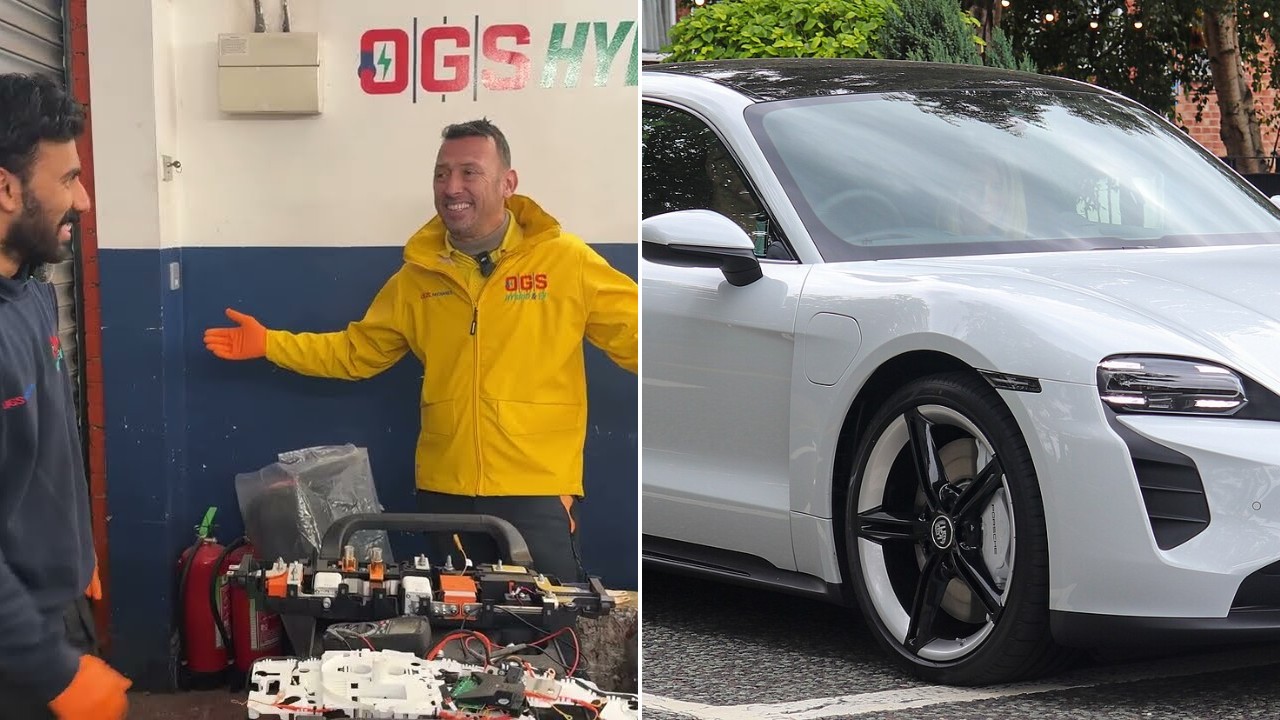
The shop, which posts as @OGSMechanics, says the car arrived dead after what looked like light damage. It had hit a curb on the driver’s side, damaging an air conditioning pipe, and then it simply stopped driving. The shop puts the final bill at about $9,400.
The opening line of their video sums up the problem.
“The inverter was on fire. And the owner didn’t even knew this is happening.”
From A Curb Strike To A Dead Porsche Taycan
At first, the damage looks cosmetic. A wheel arch liner is missing, and someone has already removed the AC pipe. However, the mechanics suspect something deeper. Their theory is that the car lost coolant, so a key component overheated without enough fluid to keep it cool.
To test that idea, they open up the trunk area and take measurements. They find arcing marks on the cables and a blackened area. An insulation test then fails. In their view, the rear motor’s inverter, the electronics that feed power to the motor, had cooked.
Inside the battery’s safety box, they also find a blown high-voltage fuse. They explain that the failing inverter sent a spike back into the box, and the fuse did its job.
A Sealed Unit And A Costly Fuse
Getting to the inverter means dropping the whole rear motor and gearbox assembly. Once it is out, they test the motor on its own, and it is fine. The inverter is the only casualty. When they open the old one up, they find blown capacitors inside a sealed, resin-filled unit that nobody can repair.
The fuse turns into its own headache. According to the shop, Porsche does not sell it separately, only the complete safety box, which they put at about $2,000. They push back on that, arguing it creates waste. Eventually, they track down the fuse for about $390 plus tax and fit a used inverter that cost about $1,470 plus tax.
No Gauge, No Warning
After programming and software updates, the mechanics turn to what they see as the root cause: the cooling system. They use a vacuum process to pull air out of the lines before filling them. On an electric car, they say, an air pocket left behind can lead to serious damage.
On a test drive of about 30 miles, temperatures stay steady. Still, one thing bothers them. The car measures temperatures in many places, but it shows none of them to the driver.
“You’re driving blindly up until the moment something fails badly.”
In the end, though, the mechanic does not blame the hardware alone. He says the driver knew the car had lost coolant and kept driving anyway.
“So, the driver knew the coolant has lost yet he continued to drive.”
What EV Owners Can Take From This
Electric cars still rely on coolant, and a leak can be more serious than it looks. Here is what we took from this one:
- If you see coolant on the ground or a warning about it, stop driving and get the car checked.
- After any accident repair, ask whether the shop properly bled the cooling system, not just refilled it.
- Do not assume a cosmetic hit is only cosmetic. A light hit can still damage pipes and lines behind the trim.
- Ask a specialist shop whether repairing a component is possible before replacing a whole assembly.
- Keep records of every repair, since they help the next technician trace a fault.
Where Things Stand
Labor alone came to about $5,600 plus tax, the shop says, and the total landed at about $9,400. The Taycan now drives again with its cooling system bled and its temperatures in check. For the mechanic, the lesson is about awareness more than engineering.
“I don’t blame the cooling. I will say it’s the lack of knowledge.”
We converted the prices in this story from British pounds to US dollars at the European Central Bank rate of November 6, 2026, and rounded them.
More from Fast Lane Only