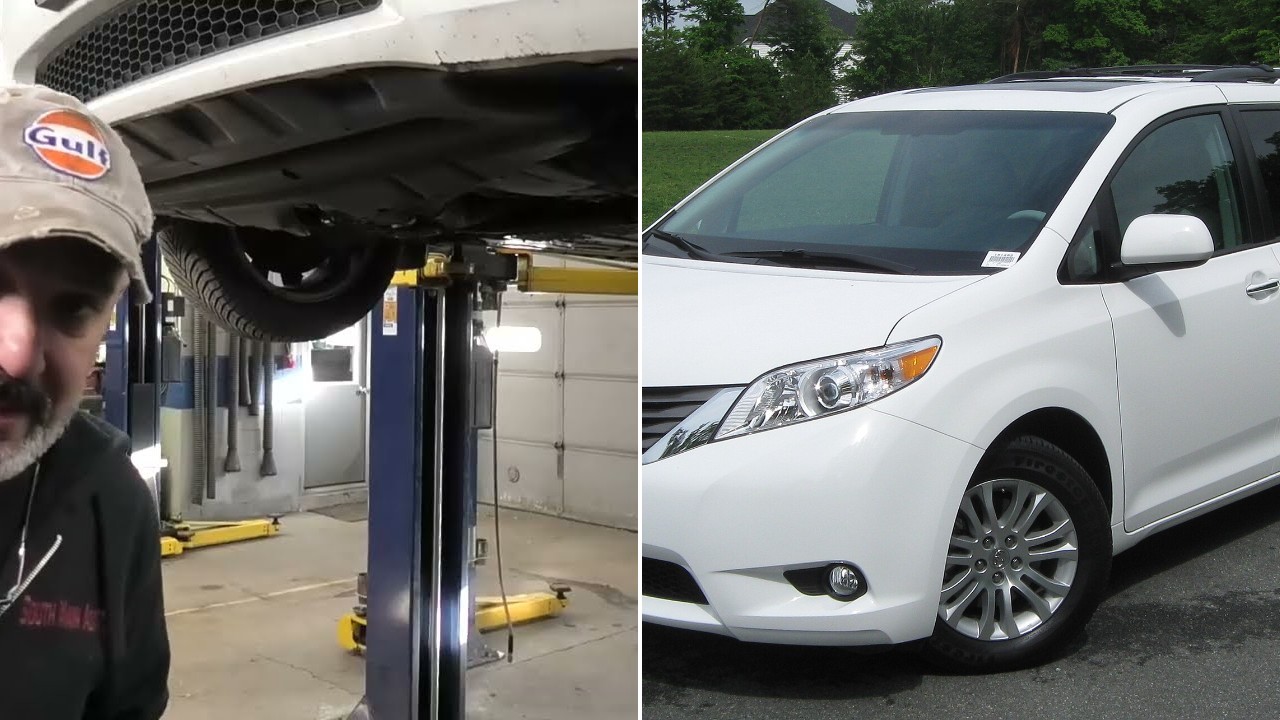
Most drivers never see the inside of an engine after a shop condemns it. Usually it goes straight back as a core and disappears. This time, a mechanic got his hands on the twin-turbo V6 from a 2019 Kia Stinger and opened it up to find out what killed it.
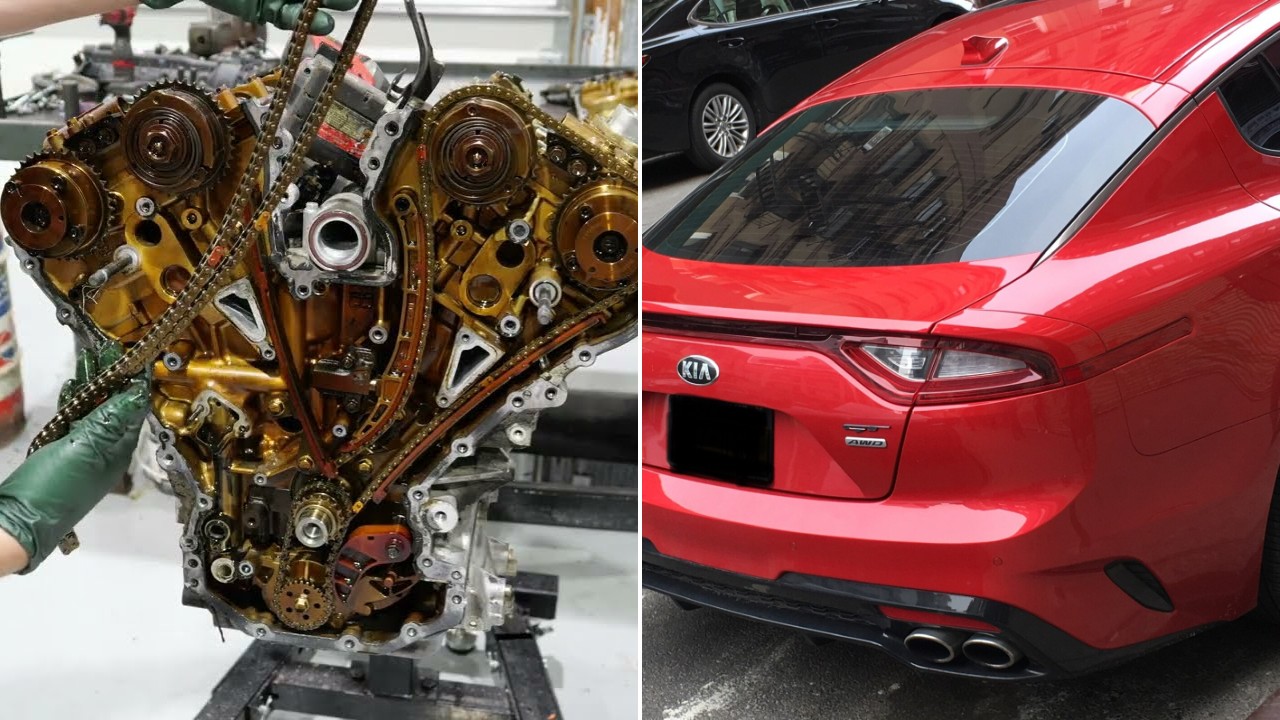
The engine builder behind @I_Do_Cars tears down failed engines and sells the good parts. He says this 3.3-liter engine had about 100,000 miles on it and came from a dealer, where the owner paid for a replacement. Because core values have dropped so low, he says, he had to go straight to a dealership to find one.
Glitter Where Oil Should Be
The engine turned over by hand, but he could hear knocking right away. Next, he looked down the intake ports and found heavy carbon buildup, which he blames on 100,000 miles of direct injection.
Then the valve covers came off. At first, the top end looked fairly well kept. However, the oil had a silver tint, and every crevice held fine metallic powder. He calls it forbidden glitter, and he says it also clogged the screens on the cam timing solenoids.
Things got stranger at the timing cover. Fine bearing material was seeping out of the timing chain tensioner itself.
“I have never seen it happen. Never.”
Inside The Bottom End
Surprisingly, the cam journals and cylinder heads looked better than he expected. The head gaskets looked fine, and none of the pistons showed signs of hitting a valve or the cylinder head. On one bank, though, he found heavy wear in a cylinder bore. Underneath, ground-up bearing coated the oil pan so thickly that he compares it to an epoxy floor. Even the oil pump was full of metal.
Then he started on the connecting rods. One after another, the bearings showed damage, and several had spun in their rods.
“Well, that one spun.”
In the end, four of the six rod bearings had spun. Still, they had not welded themselves to the crankshaft, and the engine never locked up. He says he cannot remember the last engine he opened that looked like this and still turned so easily.
What He Thinks Went Wrong
He is careful not to blame Kia here. Instead, he points to the oil control rings, which deposits had caked solid. In his view, that let the engine burn oil, and the owner probably did not check the level often enough. He adds that the Carfax was nearly blank, so he cannot say how far apart the oil changes ran.
His theory is that the engine ran low on oil for a long time. Eventually it started knocking, someone topped it up, and the fresh oil carried all that debris through the engine.
He also says the factory oil change interval of 7,500 miles is too long for this Kia Stinger engine. According to him, a replacement engine runs about $4,000 to $6,000 or more, plus a lot of labor on an all-wheel-drive car.
“you couldn’t get me to go more than 5K between oil changes if I owned a vehicle with one of these engines.”
Lessons For Kia Stinger And Turbo Owners
Turbocharged engines can be tough, but they do not forgive neglect. Here is what we took from this teardown:
- Check the dipstick regularly between oil changes, especially on a high-mileage turbo engine.
- Consider changing oil sooner than the longest interval the maker allows.
- If an engine starts knocking, adding oil may quiet it, but the harm may already exist.
- Keep oil change receipts, because a blank history hurts both resale and any warranty claim.
- Take an oil warning light seriously, and stop driving until you know the level.
Where Things Stand
The owner already has a replacement engine, so this one is headed for parts. He says these engines part out well, and he expects to sell the good pieces from this Kia Stinger. For anyone shopping for one, his advice is simple: keep it full and change the oil early.
More from Fast Lane Only