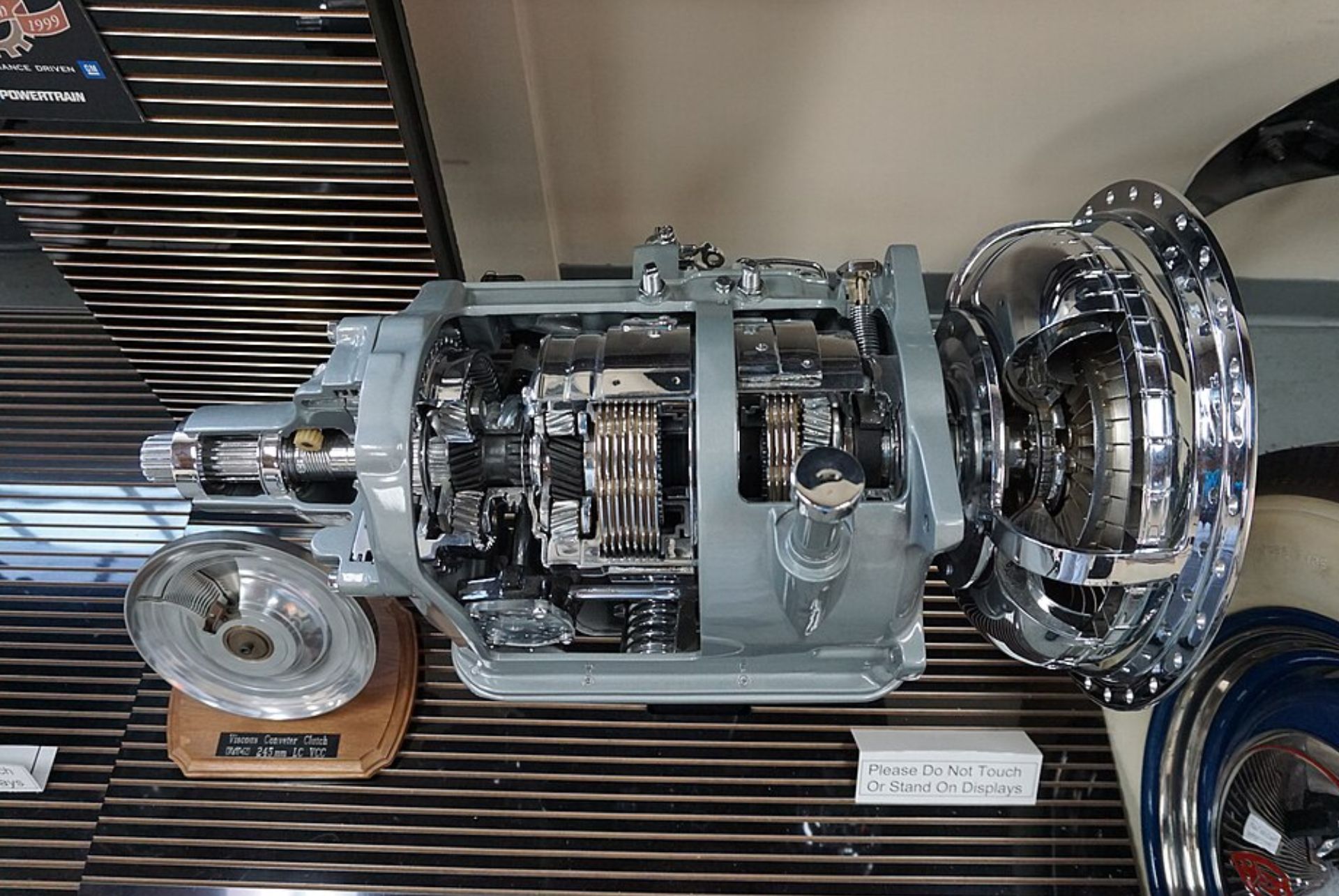
Transmission lifespan is one of the biggest variables in vehicle ownership. Two cars can share similar engines, weights, and driving conditions, yet one transmission may fail early while the other quietly survives well past 300,000 kilometers. Mechanics often say the difference is rarely luck. Instead, it comes down to engineering choices, heat management, and how the transmission is used and maintained over time.
While modern automatics are far more advanced than older designs, they also vary widely in durability. Some are built with long-term simplicity in mind, while others prioritize smoothness, fuel economy, or performance at the expense of long-term mechanical stress.
Heat management is the single biggest factor
Ask most transmission specialists what kills gearboxes, and the answer is almost always the same: heat.
Automatic transmissions rely on fluid not just for lubrication, but also for hydraulic pressure and cooling. When temperatures rise beyond safe limits, transmission fluid begins to break down. Once that happens, it loses its ability to protect internal components like clutches, seals, and valve bodies.
Mechanics frequently observe that transmissions operating in cooler conditions or with effective cooling systems tend to last significantly longer than those regularly exposed to heat buildup, especially in stop-and-go traffic or heavy load situations.
Simpler designs often survive longer
Not all transmissions are built with the same level of complexity. Older or more conservatively designed automatics often last longer simply because they contain fewer failure points.
Traditional 4-speed and 5-speed automatics typically use straightforward hydraulic systems and robust internal components. These designs prioritize durability over refinement.
By contrast, modern transmissions with 8, 9, or 10 speeds pack more gears, tighter tolerances, and more complex control systems into the same space. While this improves efficiency and acceleration, it also increases the number of components that must operate perfectly under stress.
Torque handling determines long-term survival
Another key factor is how much torque a transmission is designed to handle. Every gearbox has a mechanical limit, and operating near that limit consistently reduces lifespan.
Transmissions paired with engines that produce high torque at low RPM often experience more stress during everyday driving, especially during acceleration from a stop. If a transmission is not generously overbuilt for the engine it supports, wear accumulates faster.
Mechanics often point out that transmissions shared across multiple vehicle platforms tend to have better longevity when they are used in lighter-duty applications.
Fluid quality and maintenance make a major difference
Transmission fluid degrades over time, especially under heat and load. As it ages, it becomes less effective at lubricating and cooling internal parts.
Despite this, many manufacturers advertise “lifetime fluid,” which can lead owners to skip service intervals. Mechanics consistently disagree with this approach, noting that regular fluid changes are one of the most effective ways to extend transmission life.
Contaminated or degraded fluid can lead to slipping, harsh shifting, and premature wear of internal clutch packs and valves.
Driving style quietly shapes transmission lifespan
How a vehicle is driven often matters just as much as how it is built.
Aggressive acceleration, frequent hard launches, towing beyond recommended limits, and constant stop-and-go driving all increase stress on a transmission. Even small habits, such as repeatedly shifting between drive and reverse without fully stopping, can contribute to long-term wear.
On the other hand, smooth throttle input and allowing the transmission to shift naturally under moderate load can significantly extend its lifespan.
Cooling systems separate long-life transmissions from short-lived ones
Just like engines, transmissions depend heavily on temperature control.
Vehicles equipped with dedicated transmission coolers or larger integrated cooling systems tend to experience fewer failures over time. These systems help maintain stable fluid temperatures even under demanding conditions such as towing or highway driving in hot climates.
Mechanics often note that overheating is a silent killer—damage accumulates gradually long before a driver notices symptoms like slipping or delayed engagement.
Design philosophy plays a hidden role
Some manufacturers build transmissions with long-term durability as a core priority, while others focus on efficiency or driving feel.
For example, certain traditional automatic transmissions were engineered with heavier-duty components and conservative tuning, allowing them to operate comfortably below their mechanical limits. These units often develop reputations for extreme longevity.
In contrast, some modern transmissions are designed to maximize fuel economy by using lock-up strategies, lightweight components, and tightly controlled hydraulic pressure. While effective, these designs can be more sensitive to wear if maintenance is neglected.
Software tuning affects mechanical stress
Modern transmissions rely heavily on electronic control systems. Shift timing, clutch engagement, and pressure levels are all managed by software.
Aggressive or poorly calibrated shift logic can increase wear by forcing faster gear changes or higher clutch pressures. Conversely, conservative tuning can reduce stress and extend service life.
Manufacturers often balance comfort, performance, and emissions requirements, which means transmission longevity is sometimes a secondary consideration.
Towing and heavy loads accelerate wear dramatically
One of the fastest ways to shorten transmission life is sustained heavy load use without proper cooling or capacity margins.
Towing increases heat generation and places additional strain on gears and clutches. If a vehicle is not designed or equipped for regular towing, the transmission may operate near its limits for extended periods.
Mechanics consistently see higher failure rates in vehicles that are frequently overloaded or used outside their intended purpose.
Why some transmissions double the lifespan of others
When all these factors combine—cooling efficiency, torque capacity, fluid quality, driving habits, and design simplicity—the differences become dramatic.
A well-designed transmission with good cooling, conservative tuning, and proper maintenance can last twice as long—or even longer—than a more complex unit operating under higher stress with neglected fluid changes.
In many cases, the difference is not a single failure point but a gradual accumulation of small advantages or disadvantages over hundreds of thousands of kilometers.
Longevity comes down to engineering and behavior
Mechanics consistently emphasize that transmission life is not random. It is the result of design decisions made during development and the habits of the person driving the vehicle.
Simple, overbuilt systems tend to survive longer. Well-maintained systems last longer. And carefully driven systems last the longest of all.
When all three align, transmissions can achieve lifespans that surprise even experienced technicians.
More from Fast Lane Only
- Unboxing the WWII Jeep in a Crate
- 15 rare Chevys collectors are quietly buying
- 10 underrated V8s still worth hunting down
- Police notice this before you even roll window down
*Research for this article included AI assistance, with all final content reviewed by human editors