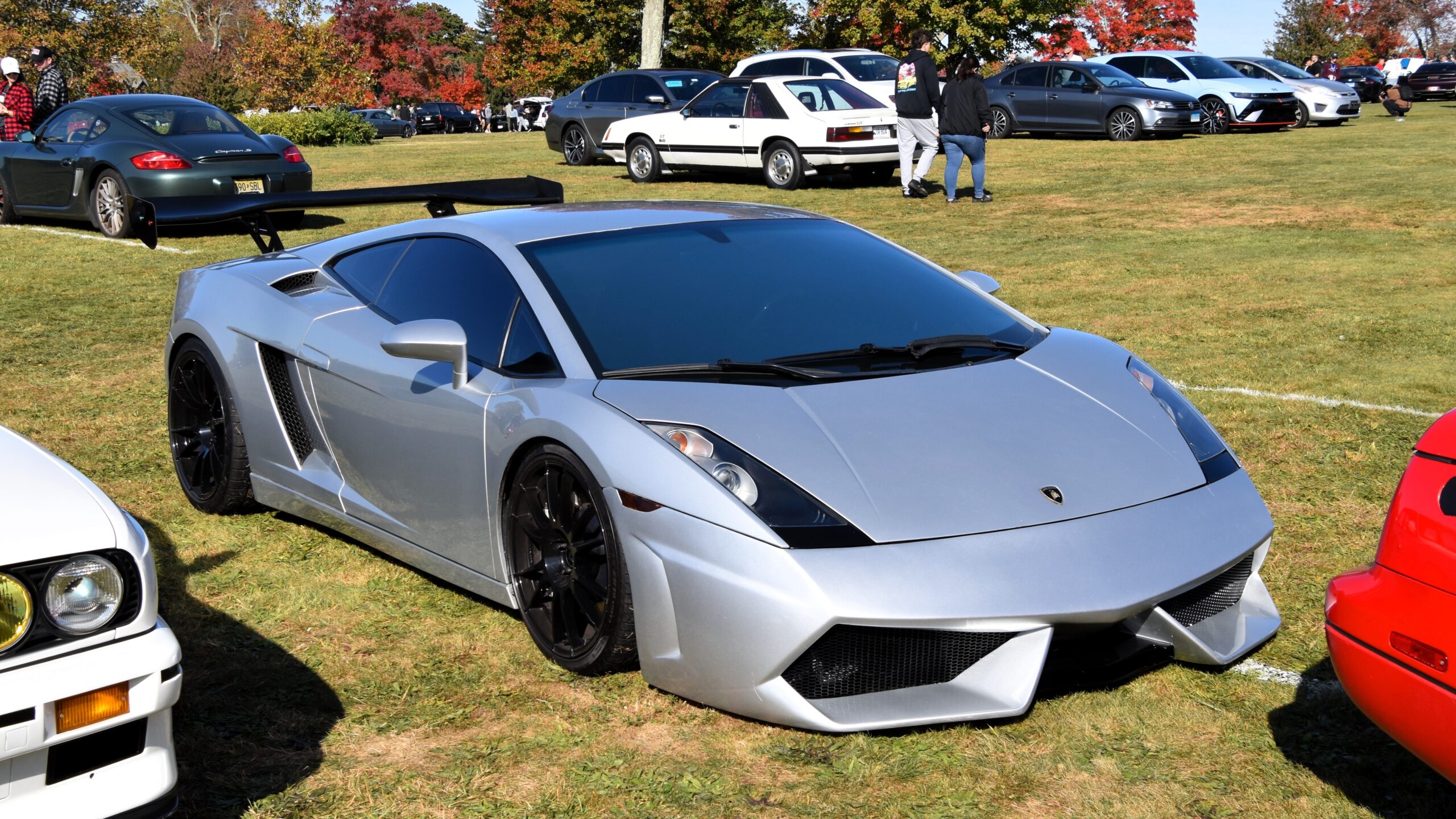
The 2005 Lamborghini Gallardo arrived at a turning point for the brand, when sharp-edged styling and show-car drama risked overshadowing what happened from the driver’s seat. It kept the theatrical look that buyers expected but, underneath, signaled a shift toward more serious mechanical engagement and everyday usability. Two decades on, it stands as the moment Lamborghini proved that a mid‑engine supercar could be both visually outrageous and genuinely rewarding to drive.
From design statement to driver’s car
When the Gallardo entered production in the mid‑2000s, Lamborghini was still best known for poster cars like the Countach and Diablo, machines that sacrificed refinement and ease of use in favor of shock value. The Gallardo kept the wedge shape and dramatic presence yet rode on a far more modern platform, with a compact V10, all‑wheel drive, and a chassis tuned for real-world roads rather than just magazine covers. By 2005, early updates had already sharpened the car’s responses and ironed out some of the rough edges that came with first‑year production.
This evolution did not happen in isolation. Under Audi ownership, Lamborghini had access to more rigorous engineering processes and higher build quality, which filtered directly into the Gallardo’s structure and mechanical layout. The car’s aluminum spaceframe, shared in concept with other high‑performance models within the group, gave it a stiff foundation that could support both aggressive cornering and the demands of daily driving. That balance between drama and discipline marked a clear change in philosophy from earlier Lamborghinis that often felt wild but imprecise.
Centro Stile and the Gallardo’s visual legacy
The Gallardo also arrived as Lamborghini’s design language was being formalized and institutionalized. The company’s dedicated design center, Centro Stile, would later celebrate two decades of shaping the brand’s look, highlighting how models like the Gallardo defined the modern Lamborghini identity. In that context, the 2005 car sits near the beginning of a lineage of crisp lines, angular surfaces, and compact proportions that continue to influence current production models, a progression that has been highlighted in Centro Stile retrospectives.
Out on the road, the Gallardo’s design served more than an aesthetic purpose. The short overhangs and cab‑forward stance helped centralize mass, improving agility. Large side intakes fed the V10 and managed airflow around the rear wheels, while the flat surfaces and tight creases gave aerodynamicists clearer control over how the car cut through the air. Even the signature glass engine cover, available on many examples, was not just theater; it helped manage engine bay temperatures and showcased the hardware that defined the car’s character.
Compared with the larger Murciélago, the Gallardo looked almost compact, which made it feel more approachable in person. That visual compactness translated into better visibility from the driver’s seat and a cabin that, while still snug, was easier to live with than the brand’s earlier flagships. The design team had not abandoned drama, but they had started to prioritize how the car would be used on real roads, not just how it would appear in photos.
The 5.0‑liter V10 and a new kind of Lamborghini powertrain
At the heart of the 2005 Gallardo sat a 5.0‑liter V10, a configuration that was new to Lamborghini’s production lineup. Earlier cars had relied on V12 engines that delivered immense power but often felt peaky and temperamental. The V10, by contrast, offered a broader spread of torque and a more progressive build of power, which made the car easier to control at the limit and more flexible in everyday driving. It revved eagerly yet could also tolerate low‑speed cruising without protest.
The sound of that engine became one of the Gallardo’s defining traits. At idle, it produced a busy mechanical thrum, then climbed into a metallic howl as the tachometer swept past the midrange. This aural character was not just entertainment; it gave the driver clear feedback about engine speed and load, which encouraged more precise use of the gearbox. At a time when some rivals were starting to mute their exhausts in the name of refinement, the Gallardo leaned into its mechanical voice as a core part of the driving experience.
Packaging of the engine also played a role in how the car handled. By mounting the V10 longitudinally behind the cabin and pairing it with a compact transmission and all‑wheel‑drive system, engineers were able to keep the center of gravity low and the mass centralized. This layout reduced the pendulum effect that could make earlier mid‑engine supercars feel unpredictable at the limit. The result was a car that still demanded respect but rewarded smooth inputs with stable, confidence‑inspiring behavior.
Manual gearbox versus e‑gear: two paths to engagement
One of the key choices for 2005 Gallardo buyers was between a traditional six‑speed manual and the automated “e‑gear” transmission. The manual, with its open‑gate shifter, provided the most direct connection between driver and drivetrain. Each shift required deliberate movement and precise timing, and the metal gate turned every gear change into a tactile event. For enthusiasts who valued involvement above outright speed, this gearbox defined the car’s appeal.
By contrast, the e‑gear system, operated through paddle shifters, aimed to bring race‑style control to the road. It could shift faster than most drivers could manage with a manual, especially under full throttle, and it allowed the driver to keep both hands on the wheel during aggressive driving. However, early versions could be abrupt at low speeds, particularly in stop‑and‑go traffic or when maneuvering in tight spaces. That behavior highlighted the broader tension in supercar design at the time: whether to prioritize raw engagement or smoother, more automated performance.
In practice, the choice between manual and e‑gear shaped how owners experienced the Gallardo. Manual cars tended to attract purists who valued heel‑and‑toe downshifts and the satisfaction of nailing a perfect gear change on a favorite road. E‑gear cars leaned toward buyers who wanted the latest technology and the thrill of rapid‑fire shifts on track days. Both versions, however, shared the same fundamental chassis and powertrain, so the core character of the car remained intact regardless of transmission.
Chassis tuning and the feel from behind the wheel
The 2005 Gallardo’s chassis was engineered to strike a balance between precision and usability. Hydraulic power steering delivered clear feedback through the wheel, allowing the driver to sense grip levels and road texture. The rack was quick without feeling nervous, which made the car responsive on tight roads yet stable at high speeds. Compared with earlier Lamborghinis that could feel heavy and vague, the Gallardo invited the driver to place the car accurately and adjust its line mid‑corner with small steering inputs.
Suspension tuning played a significant role in this newfound approachability. Double‑wishbone geometry at each corner kept the tires in optimal contact with the road, while carefully chosen spring and damper rates allowed enough compliance for imperfect surfaces. The car still rode firmly, as expected of a mid‑engine supercar, but it no longer punished the driver for using it on anything other than glass‑smooth tarmac. That shift encouraged owners to drive their cars more often, which in turn deepened their connection with the machine.
All‑wheel drive further shaped the Gallardo’s dynamic personality. Power was sent primarily to the rear wheels, with the front axle stepping in as needed to maintain traction. On dry pavement, this setup gave the car a rear‑biased feel, with the ability to adjust its attitude on the throttle. In wet or low‑grip conditions, the system added a layer of security that earlier rear‑drive Lamborghinis simply could not match. For drivers new to mid‑engine cars, this combination of grip and feedback reduced the intimidation factor without diluting the sense of occasion.
Cabin ergonomics and daily usability
Inside, the 2005 Gallardo reflected Audi’s influence in materials and layout, yet it retained distinct Lamborghini flair. The driving position was more natural than in earlier models, with better alignment of the pedals, steering wheel, and seat. Controls were logically placed, and visibility, while still limited compared with a conventional coupe, was improved enough to make city driving and parking less stressful. These changes might seem minor on paper, but they transformed how often owners were willing to take the car out of the garage.
Material quality also stepped up. Soft‑touch plastics, precise switchgear, and well‑fitted leather helped the cabin feel solid rather than fragile. That perception of durability mattered for a car that many buyers wanted to use regularly, not just on special occasions. Noise levels at a cruise were still high by luxury‑car standards, but the cabin no longer felt like a bare shell wrapped around a race engine. Instead, it struck a middle ground between sensory overload and long‑distance comfort.
Practical touches such as usable climate control, a workable audio system, and modest storage space behind the seats rounded out the package. None of these features turned the Gallardo into a grand tourer, yet they made it realistic to drive the car to work, on weekend trips, or through changing weather. That usability, combined with the mechanical involvement of the V10 and the steering, helped shift the conversation around Lamborghini ownership from pure spectacle to sustained engagement.
How the 2005 model shaped Lamborghini’s later cars
The impact of the 2005 Gallardo can be traced through the models that followed. Later iterations of the Gallardo itself gained more power, refined e‑gear software, and special editions focused on track performance or lightweight construction. Each of those developments built on the core strengths established in the early cars: a responsive chassis, a charismatic engine, and a design that balanced aggression with coherence.
When Lamborghini introduced the Huracán as the Gallardo’s successor, it carried forward the V10 layout, the compact proportions, and the emphasis on usability. Technologies such as dual‑clutch transmissions and more advanced stability systems pushed performance to new heights, yet the underlying philosophy remained consistent. The company had learned that customers valued a car they could drive and enjoy frequently, not just admire from a distance. That insight can be traced directly back to the way the Gallardo, particularly in its formative 2005 guise, reshaped expectations.
The influence also extended beyond Lamborghini’s own lineup. Rival manufacturers took note of how successfully the Gallardo blended design drama with a more accessible driving experience. The idea of a “junior” supercar, positioned below a brand’s flagship but offering genuine performance and engagement, gained traction across the segment. In that sense, the Gallardo helped define a new category of mid‑engine cars that offered both spectacle and usability.
Why enthusiasts still seek out the 2005 Gallardo
Two decades after its debut, the 2005 Gallardo holds particular appeal for enthusiasts who value mechanical purity. Early cars capture the moment before dual‑clutch gearboxes and ever‑more intrusive electronics became the norm, yet they still benefit from modern safety and build quality. The combination of a naturally aspirated V10, hydraulic steering, and a manual gearbox in some examples creates a driving experience that feels increasingly rare in a market dominated by turbocharged engines and digital interfaces.
More from Fast Lane Only
- Unboxing the WWII Jeep in a Crate
- 15 rare Chevys collectors are quietly buying
- 10 underrated V8s still worth hunting down
- Police notice this before you even roll window down
*Research for this article included AI assistance, with all final content reviewed by human editors.