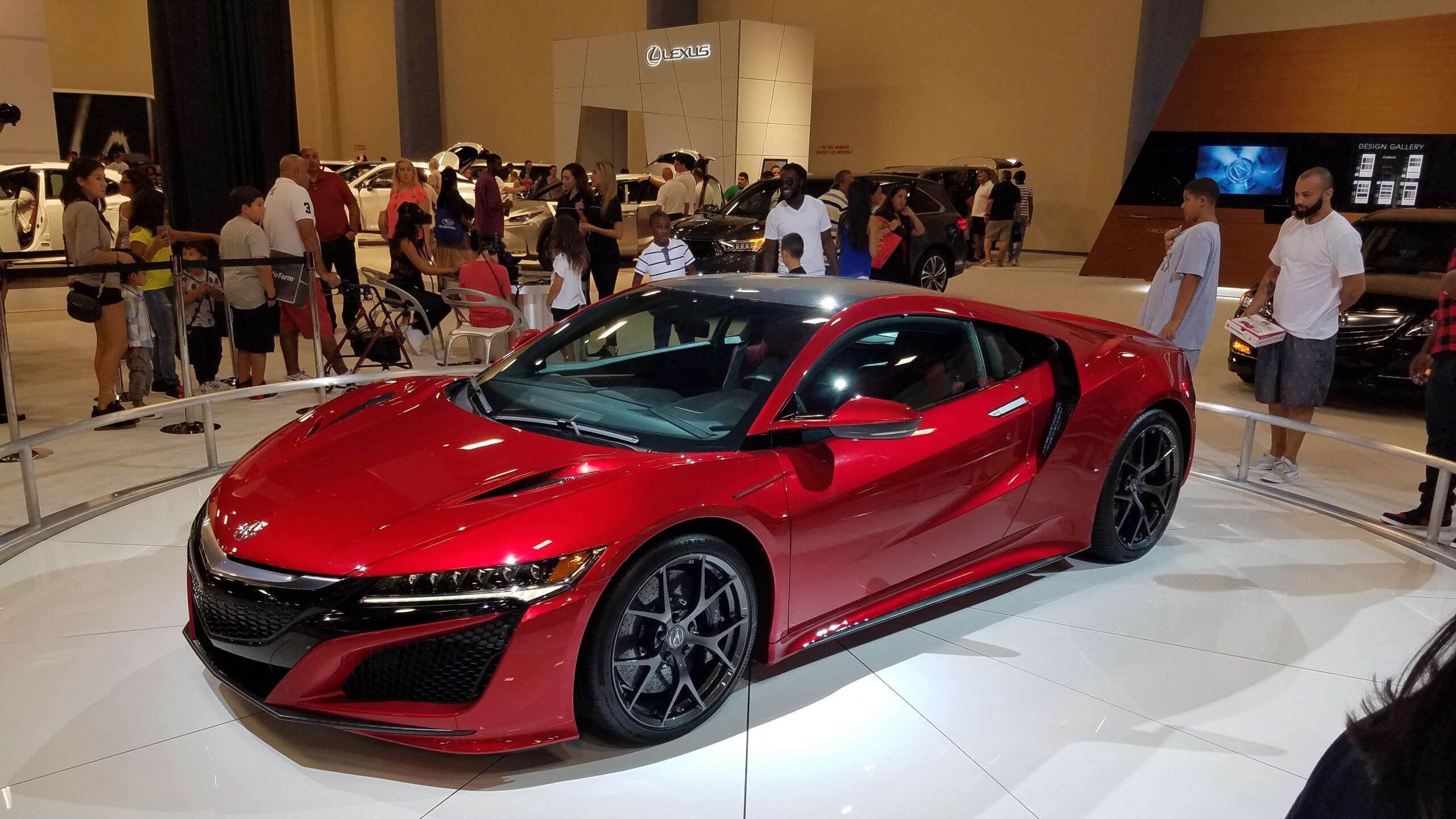
The second-generation Acura NSX arrived in 2016 as a striking contradiction: a complex plug-in hybrid supercar engineered not just for lap records, but for daily commutes and weekend road trips. It paired three electric motors with a twin-turbo V6, wrapped it in a user-friendly chassis, and aimed to make advanced hybrid tech feel as approachable as any premium coupe. In doing so, it quietly reset expectations for what a modern supercar could be in normal use.
The effort did not always translate into sales glory or universal acclaim, yet the car’s technical choices, driving character, and eventual sendoff help explain how electrification moved from eco badge to performance weapon. The 2016 NSX now looks less like an outlier and more like an early blueprint for the hybrid and electric exotics that followed.
A hybrid supercar built for real roads
When Acura revived the NSX nameplate, the company rejected the simple formula of a high-revving engine and rear-drive purity. The 2016 car instead used a 3.5‑liter twin‑turbo V6 mounted behind the seats, paired with a 9‑speed dual‑clutch transmission and three electric motors. Two motors sat at the front axle to drive each front wheel independently, while a third motor was sandwiched between the engine and gearbox. The combined system output was rated at 573 horsepower and 476 pound‑feet of torque, figures that placed the car squarely in modern supercar territory.
The layout was unusual at the time. Rather than a simple hybrid assist, the front motors enabled torque vectoring, pulling the car into a corner by overdriving the outside front wheel and trimming the inside. Honda had already invested heavily in torque‑vectoring all‑wheel drive for mainstream models, and the NSX effectively became a flagship for that work. The company detailed how its engineers evolved this thinking into what it called Super Handling All‑Wheel Drive, and the NSX represented the most advanced expression of that philosophy in a road car, linking the electric front axle to the broader family of Super Handling systems.
Unlike many high-strung exotics of the era, the NSX also offered an all‑electric mode for short distances at low speeds. Drivers could creep through a neighborhood or garage in near silence, then wake the V6 once clear of traffic. The car’s four main driving modes, selected via a large central dial, ranged from a quiet, comfort‑oriented setting to an aggressive track mode that sharpened throttle response, stiffened the suspension, and opened up the exhaust. The idea was to give owners a single car that could be docile in the city and ferocious on a back road.
How reviewers found the balance
Road testers quickly picked up on this dual personality. One early evaluation described the NSX as a car that could feel almost too civilized at legal speeds, with the hybrid system smoothing out the drama that some buyers expect from a mid‑engined supercar. Push harder, and the car revealed a different character, with strong acceleration, rapid shifts, and a level of front‑end grip that made the nose feel locked to the driver’s chosen line. A detailed road test of the 2017 model highlighted the car’s ability to run from 0 to 60 miles per hour in about 3 seconds while still offering a compliant ride quality and a cabin that felt more like a premium sports coupe than a stripped‑out racer, an impression captured in one road test that praised both performance and usability.
That usability came from more than just the hybrid layout. The NSX offered clear sightlines relative to other mid‑engined cars, straightforward controls, and a driving position that did not punish taller occupants. Reviewers noted that the seats were supportive without being overly tight, and that the suspension tuning resisted the urge to go track‑stiff at all times. The result was a car that owners could realistically drive to work or on long highway stretches without fatigue, even if the cabin’s noise levels and storage space still reminded them that this was no ordinary coupe.
Long-distance tests exposed the tradeoffs. One account of a 1,200‑mile trip described the NSX as both gorgeous and occasionally tiring, with road noise and firm seats wearing on the driver over time. Yet that same experience underscored how unusual it was to contemplate such mileage in a mid‑engined hybrid supercar at all. The NSX made those journeys possible for drivers who were willing to accept a bit of compromise in comfort for the sake of its performance envelope.
Why the NSX confused expectations
The NSX also faced a perception problem from the start. The original, early‑1990s NSX had built its reputation on simplicity, naturally aspirated power, and a kind of analog clarity that enthusiasts still revere. The new car arrived with turbos, electric motors, and drive‑by‑wire systems, and some fans assumed that all this complexity would dilute the experience. Early speculation framed the hybrid system as a marketing exercise rather than a genuine performance advantage.
Over time, detailed driving impressions suggested that this skepticism had been misplaced. A closer look at the car’s behavior on road and track revealed that the electric front axle did more than add weight. It allowed the car to pivot into corners with a level of agility that would have been difficult to achieve with a purely mechanical setup.
Styling also played a role in the disconnect. While undeniably dramatic, with sharp creases and large air intakes, the design did not shout as loudly as some Italian rivals. For buyers who wanted maximum visual theater, the NSX could appear almost understated. That relative subtlety fit the car’s mission as an everyday supercar, but it may have limited its appeal among shoppers who equated price with extroversion.
Inside the hybrid powertrain’s engineering
From a technical standpoint, the NSX represented one of the most advanced uses of hybrid technology in a production supercar at the time. Engineers had to manage not only the interaction between the V6 and the rear electric motor, but also the complex torque distribution across the front axle. Each front motor could apply positive or negative torque independently, which allowed the car to pull itself into a corner or stabilize its line under braking.
An in‑depth engineering profile of the car described how the battery pack, motor inverters, and cooling systems were packaged to maintain a low center of gravity and balanced weight distribution. The team used extensive computer modeling and real‑world testing to refine how much electric assist to provide at different points in a corner, and how quickly to blend regenerative braking with the mechanical brakes. The result was a car that could transition smoothly between power sources without the lurches or hesitation that sometimes plague early hybrid systems, a level of integration that one technical overview of the NSX powertrain highlighted in detail.
Weight remained a challenge. The hybrid hardware added mass compared with a conventional mid‑engined sports car, so Acura leaned on a multi‑material body that combined aluminum, high‑strength steel, and carbon fiber. The chassis used cast nodes and extrusions to achieve the necessary rigidity, while strategic use of carbon fiber in the floor and roof helped lower the center of gravity. Reviewers who pushed the car on track noted that it felt planted and stable, with the extra weight masked by the instant torque from the electric motors and the clever work of the torque‑vectoring system.
How the NSX fits into the hybrid performance wave
The NSX did not appear in a vacuum. By the time it reached customers, hybrid performance had already been validated at the very top of the market by cars such as the Porsche 918 Spyder and McLaren P1. Those machines, however, were ultra‑limited, multi‑million‑dollar showcases. Acura attempted something different: a series‑production hybrid supercar that a broader range of buyers might actually drive regularly.
That positioning caught the attention of engineers who study vehicle electrification. An analysis from a technology‑focused outlet examined the NSX as a case study in how electric motors could enhance handling as much as straight‑line speed. The piece noted how the car’s three‑motor layout allowed engineers to fine‑tune yaw response and traction in ways that would be extremely difficult with mechanical differentials alone, and framed the NSX as an early example of how software‑defined dynamics would shape future performance cars, a view laid out in detail in a review of the hybrid supercar.
In that context, the NSX’s relatively modest price compared with hypercar benchmarks made its technology more significant. It showed that torque‑vectoring hybrids did not have to be reserved for track‑only specials or seven‑figure collectibles. Instead, they could sit in showrooms next to luxury sedans and crossovers, inviting owners to experience advanced electrification every time they left the driveway.
Sales reality and enthusiastic reception
Commercially, the NSX never became a volume hit. Production numbers remained limited, and the car spent much of its life as a niche choice even among supercar buyers. Several factors contributed to that outcome. The price placed it in competition with established European brands, and some shoppers were hesitant to pay exotic money for a badge more closely associated with premium sedans and crossovers.
Enthusiast forums and track‑day paddocks revealed a split audience. One camp appreciated the car’s approachability and the way it could be driven hard without intimidating its driver. Another group, often nostalgic for the original NSX, felt that the hybrid system and dual‑clutch transmission created a layer of separation from the road. For them, the car’s brilliance lay in its engineering rather than its emotional drama.
Yet even among skeptics, there was respect for the car’s capability. Independent testing showed consistent lap times and strong braking performance, with the hybrid system helping the car deliver repeatable acceleration runs without heat‑soak issues that can plague purely turbocharged engines. Owners who used their cars regularly often cited reliability and ease of use as major advantages, traits that aligned with Honda’s broader reputation.
The Type S finale and legacy
As production wound down, Acura introduced a final evolution known as the NSX Type S. This version increased output to 600 horsepower and 492 pound‑feet of torque, revised the turbochargers, and sharpened the chassis. Only 350 units were built, with 300 allocated to the United States, and the car quickly became a collector’s focus. A detailed review of the Type S described it as more powerful and precise than the standard model, and emphasized that it would be the last of its kind, a hybrid supercar closing out a short but influential chapter in Acura’s history, a point highlighted in a piece on the NSX Type S.
More from Fast Lane Only
- Unboxing the WWII Jeep in a Crate
- 15 rare Chevys collectors are quietly buying
- 10 underrated V8s still worth hunting down
- Police notice this before you even roll window down
*Research for this article included AI assistance, with all final content reviewed by human editors.