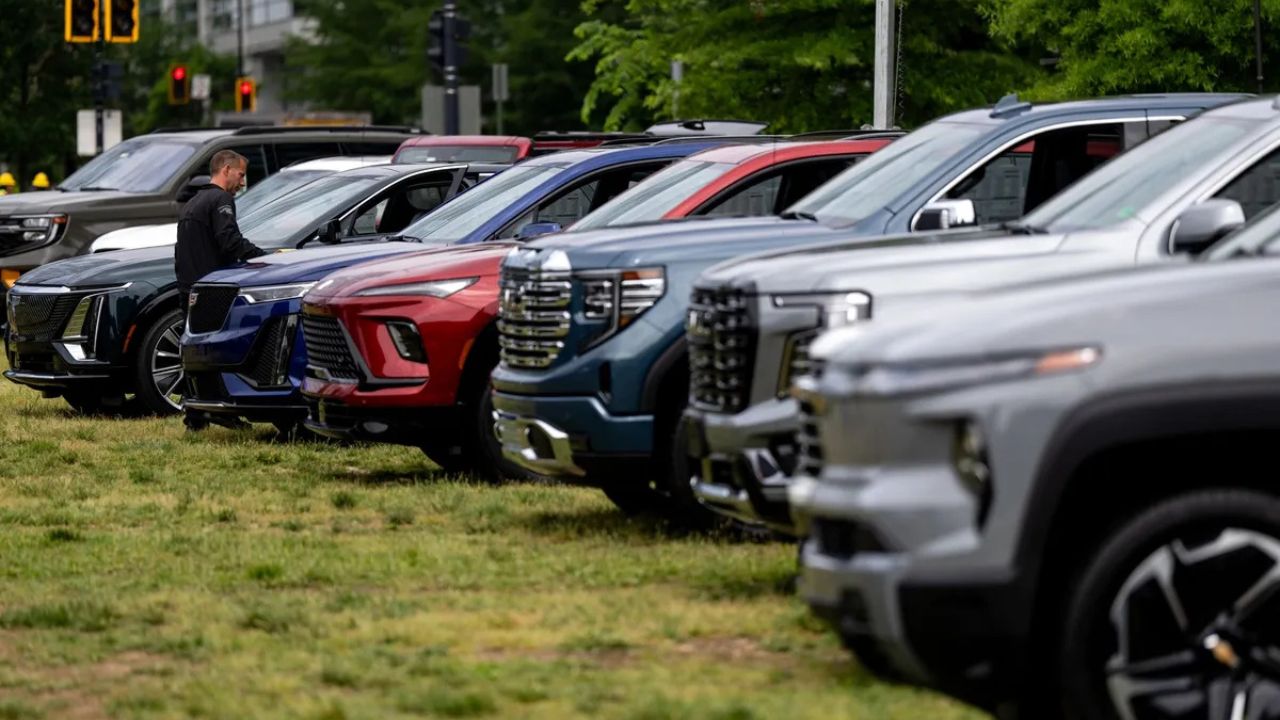
Sticker shock has become the new normal when you shop for a vehicle in the United States. Average new-car prices now clear $50,000, and typical monthly payments have climbed past $800, turning what used to be a middle-class purchase into a financial stretch for many households. You are not just paying more for a nicer model; you are confronting a market that has structurally shifted toward higher prices and tougher trade-offs.
As prices surge, you face a choice between stretching your budget, driving your current car longer, or settling for less vehicle than you had a decade ago. Automakers, lenders, and policymakers are all reacting to this pressure, but so far the burden rests most heavily on you, the buyer, who has to reconcile everyday transportation needs with a payment that looks uncomfortably like a second rent.
The new-car price shock you are facing
Walk into a showroom today and you are entering a market where the Average new vehicle price tops $50,000, according to Cox Automotive data. That figure is not an outlier or a luxury-only phenomenon; it is the typical transaction price across the market, a level that would have sounded extreme only a few years ago. New data from Kelley Blue Book shows that the average transaction price for a New vehicle topped $50,000 in December, confirming that this is now the baseline, not a temporary spike. As you weigh options, you are contending with a market that has quietly reset what “normal” looks like.
The payment side of the equation is just as jarring. Monthly payments now exceed $800 on Average, according to the same Cox Automotive and J.D. Power data cited in the Feb report that flagged these KEY TAKEAWAYS. Another analysis from Feb by The Blueprint notes that Average new car prices exceed $50,000, with monthly payments topping $800, and Nearly 1 in 5 new auto loans carry payment obligations that strain household budgets, according to affordability research. When you sign a typical loan today, you are effectively committing to a luxury-level payment even if you are buying a family crossover or a basic pickup.
Why your next car costs so much more
You might sense that prices did not always look like this, and the data backs you up. From 2000 to 2020, the cost of car ownership rose roughly in line with inflation, according to Navy Federal analysis cited in a broader review of Why the cost of living for cars has surged. Over the past few years, that relationship broke. You are now paying for more complex technology, stricter safety and emissions hardware, and a shift toward larger, higher-margin vehicles that manufacturers prefer to build. Each of those trends adds cost, and together they have made it harder to afford a car.
Affordability pressures are not just about features and technology; they are also about how the market is structured. Import-heavy models face allocation volatility as Automotive supply chains adjust, which can push you toward domestic or higher-priced alternatives when your first choice is scarce. Industry observers describe this as Automotive’s long-running affordability problem moving into “another gear,” as import dynamics and production decisions collide with your household budget, a pattern outlined in affordability commentary. When manufacturers emphasize larger SUVs and trucks and scale back lower-margin small cars, you are left with fewer genuinely low-priced choices on the lot.
How high prices are reshaping what and how you buy
The result of this squeeze shows up clearly in sales data. New car sales began the year on a weaker note as ongoing affordability concerns continue to throttle demand, according to a New Bank of America analysis summarized by national broadcast reporting. Analysts estimate that New car prices are up around 22 percent compared to 2019, a jump that has pushed some shoppers out of the market entirely and nudged others into used vehicles or longer loan terms. When affordability becomes a key part of the drop in automotive sales volume, your hesitation to sign for a new model is not just personal caution; it is part of a national trend.
On the ground, that trend looks like buyers stretching loans to six or seven years, trading down to smaller trims, or simply hanging on to aging vehicles. Automotive expert and analyst Brian Moody told FOX Business that higher new car prices are undoubtedly driving buyers to used models or persuading them to stick with their current car, a shift that shows up in data based on Cox Automotive research and was highlighted in a detailed segment on new-car. As you weigh a purchase, you are effectively deciding whether to join that migration to used inventory or accept a payment that might crowd out other financial goals.
Where “affordable” cars are going
If you are hunting for a new vehicle under $30,000, you are looking in the narrowest part of the market. Analysts at the Anderson Economic Group warn that Based on the tariffs that have been announced as of April 2, many small cars could see prices increase by as much as $8,000 to $10,000, according to a detailed tariff analysis. That kind of jump would effectively erase the remaining tier of genuinely budget-friendly models. When the cheapest vehicles bear the biggest relative price risk, your path into the new-car market becomes steeper, especially if you are a first-time buyer or have limited savings for a down payment.
Some manufacturers are trying to keep you in the game. Foreign-owned carmakers state they offer many affordable vehicles made in the United States that cost less than the national average, and they have highlighted US-made budget options around $35,000 in a bid to reassure price-sensitive shoppers, according to a detailed look at Foreign carmakers. At the same time, major brands continue to promote higher-priced trucks and SUVs, with lineups on sites like Chevrolet models showcasing everything from compact crossovers to full-size pickups that can easily climb far above that $50,000 benchmark once you add options. When you shop, you are navigating a showroom that presents a few carefully marketed “value” models alongside a much larger universe of premium-priced choices.
How you can navigate the affordability crunch
Given these structural shifts, you have limited power over sticker prices, but you still have levers to pull on the deal itself. Longer loan terms reduce the monthly hit but increase total interest, so you need to weigh whether a six- or seven-year note is worth the trade-off compared with a cheaper used vehicle on a shorter schedule. Nearly 1 in 5 new auto loans already carry heavy payment burdens, as the Feb analysis from The Blueprint highlights, which means you are not alone if you feel pressure to stretch. The key is to decide whether joining that group fits your broader financial plan or whether you would rather adjust expectations on features, segment, or model year instead.
You can also widen your search beyond the traditional new-versus-used binary. Certified pre-owned programs, especially for popular domestic models and Foreign-branded vehicles built in the United States, can give you modern safety tech and lower mileage without the full brunt of new-car depreciation. At the same time, you should factor in ownership costs that extend beyond the showroom. As the Oct review of Why the cost of living for cars has risen explains, rising insurance, maintenance, and fuel have combined with higher purchase prices to make it harder to afford a car, a pattern that affects you whether you buy new or used, as detailed in the Discovered Why America reporting. When you tally the full cost, including interest, upkeep, and insurance, the question is not just whether you can manage that $800 payment, but whether the entire package leaves room for the rest of your life.
More from Fast Lane Only