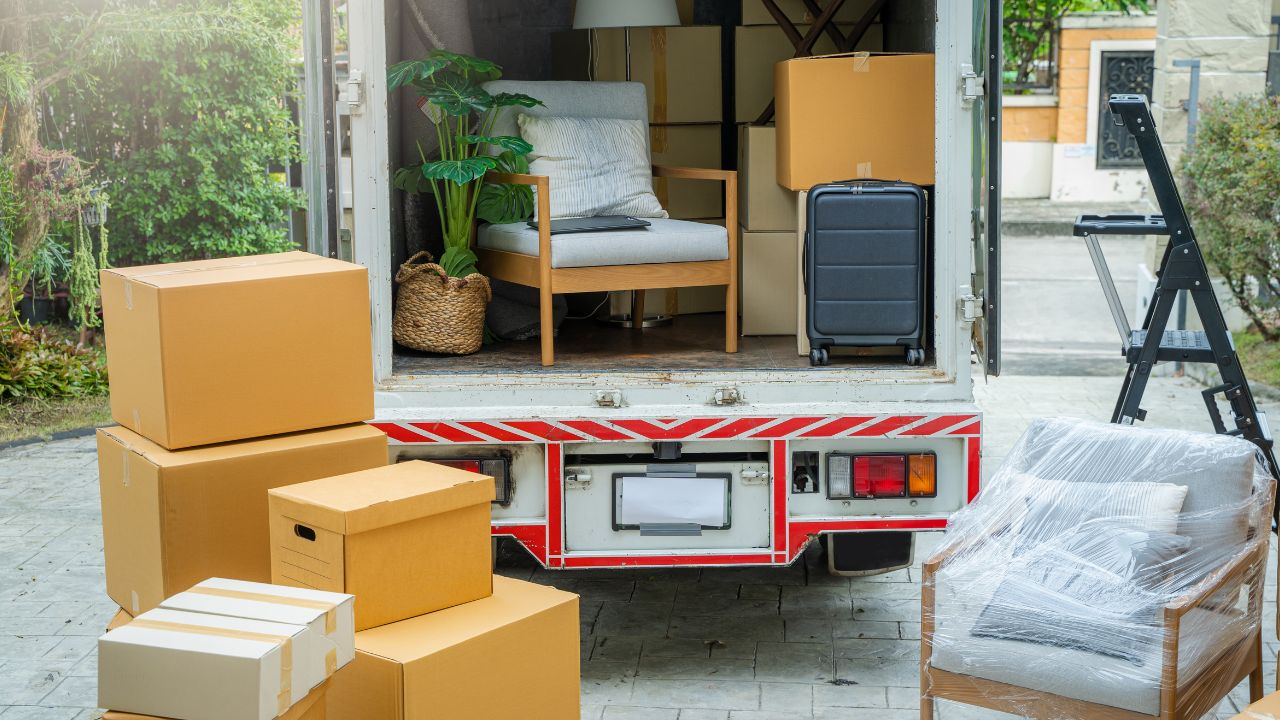
On a quiet residential street where most drama usually tops out at “whose trash can is this,” one homeowner says he’s dealing with a surprisingly stubborn problem: delivery trucks parked directly across his driveway. He’s not talking about a quick stop-and-go, either. He says it happens often enough that leaving for work or getting home has turned into a small daily guessing game.
“I don’t want to be that neighbor,” the homeowner told us, sounding more tired than angry. “But when a truck is sitting across your driveway and you’ve got somewhere to be, it’s hard to stay chill.” He asked that we use only his first name, Mark, because he still has to live next door once the cameras (and the trucks) are gone.
A ‘Two-Minute Drop-Off’ That Keeps Stretching Longer
Mark says the trucks aren’t delivering to his home. They’re dropping off packages next door, where his neighbor frequently receives large deliveries—furniture, home improvement supplies, and the occasional stack of boxes that looks like it might contain an entire new kitchen.
The neighbor, he says, often directs drivers to park in the easiest spot for unloading, which happens to be right in front of Mark’s driveway. “They’ll pull up, pop the hazards on, and then it’s like everyone forgets driveways are meant for driving,” he said.
Mark’s not claiming the drivers are malicious. In his view, it’s more about convenience and habit. Still, he says convenience adds up when it keeps happening, especially on mornings when he’s trying to leave on time or when he returns with groceries and can’t pull in.
Not Just an Annoyance, but a Real Access Problem
Blocking a driveway isn’t just mildly irritating—it can be a practical safety issue. Mark worries about what would happen if there were an emergency and he needed to get out quickly, or if a family member needed to park after dark and had to double-park on the street instead.
“I’ve got places to be, but it’s also my property access,” he said. “I’m not asking for a red carpet, just don’t park right where my car needs to go.” He added that the street itself is tight, so when a large truck stops in the wrong spot, it can also pinch traffic and make it harder for other cars to pass.
The Neighborly Conversation That Didn’t Quite Land
Mark says he tried the polite route first. He spoke to his neighbor a few times, explaining that the trucks were making it hard for him to use his driveway. According to Mark, the neighbor responded with a version of, “It’s only for a minute,” and promised to keep an eye on it.
But Mark claims the pattern continued. “I’m not trying to police their deliveries,” he said. “I just want them to tell the drivers, ‘Hey, don’t block that driveway.’ It feels like the simplest fix in the world.”
The neighbor declined to be interviewed for this story. A person who answered the door said they didn’t have time to talk, but added that deliveries are “hard to manage” and that drivers “park where they can.”
Why Delivery Drivers Park Where They Park
If you’ve ever watched a delivery truck navigate a narrow street, you know it’s not exactly a relaxing experience. Drivers are balancing tight schedules, heavy items, limited curb space, and sometimes confusing house numbers. Parking close to the drop-off point can feel like the safest and quickest option—at least in the moment.
But “quick” is a slippery word. A stop that’s supposed to take two minutes can turn into ten if there’s a signature needed, a gate code missing, or a box that suddenly weighs as much as a small refrigerator. To the person stuck behind the truck, ten minutes can feel like an entire mini-episode of frustration.
What the Rules Usually Say About Blocking Driveways
In many cities and towns, blocking a driveway—whether it’s yours or someone else’s—isn’t allowed. Local traffic ordinances often treat it similarly to obstructing access, and in some areas it can lead to a ticket or towing, especially if the vehicle is unattended.
That said, enforcement can be inconsistent. Some places respond quickly if a resident calls, while others prioritize more urgent issues unless the blockage is ongoing. And delivery trucks can fall into a gray area socially, even when the rules are clear, because everyone knows they’re “just doing their job.”
Small Fixes That Could Calm the Situation Down
Mark says he’d rather solve this with a little coordination than escalate it. One idea he’s considering is putting up a visible “Do Not Block Driveway” sign near the curb line. It’s not fancy, but it can give drivers a clear cue without requiring a face-to-face conversation every time a truck shows up.
He’s also thought about approaching the neighbor again, but in a more specific way. Instead of “please don’t block my driveway,” he wants to propose a concrete alternative: a preferred spot for trucks to park that doesn’t block anyone’s access. “If there’s a better place they can stop, I’m happy to point it out,” he said.
Some residents in similar situations also contact the delivery company directly, especially if it’s a recurring carrier. A quick note with the address, typical delivery times, and a clear request—“please don’t block the driveway next door”—can sometimes get added as a delivery instruction. It’s not a magic wand, but it can help when the same route drivers rotate through.
When It’s Time to Call for Help
Mark says he hasn’t called parking enforcement yet, but he’s debated it on days when he’s been truly stuck. “I don’t want anyone to get fined because I’m irritated,” he said. “But I also can’t keep missing appointments because someone else’s deliveries are parked across my driveway.”
If the blockages continue, he may start documenting the incidents—dates, times, photos—so he has a record if he needs to report it. That kind of documentation can also be useful if he ends up speaking with the neighbor again. It keeps the conversation grounded in facts rather than feelings, which, in neighborhood disputes, is basically the closest thing we have to a secret weapon.
A Street-Level Story About Shared Space
At its heart, this is one of those modern problems that sounds small until you’re living it. Online shopping and frequent deliveries are normal now, but the curb space in older neighborhoods hasn’t magically expanded to keep up. What used to be a quiet stretch of sidewalk can turn into a rotating stage for box trucks, vans, and drop-offs at all hours.
Mark says he still hopes the fix is simple. “I don’t want a feud,” he said, with a quick laugh. “I just want to be able to use my driveway like a normal person.” For now, he’s keeping it friendly, staying patient, and watching the curb like it might sprout another delivery van at any moment.
More from Fast Lane Only