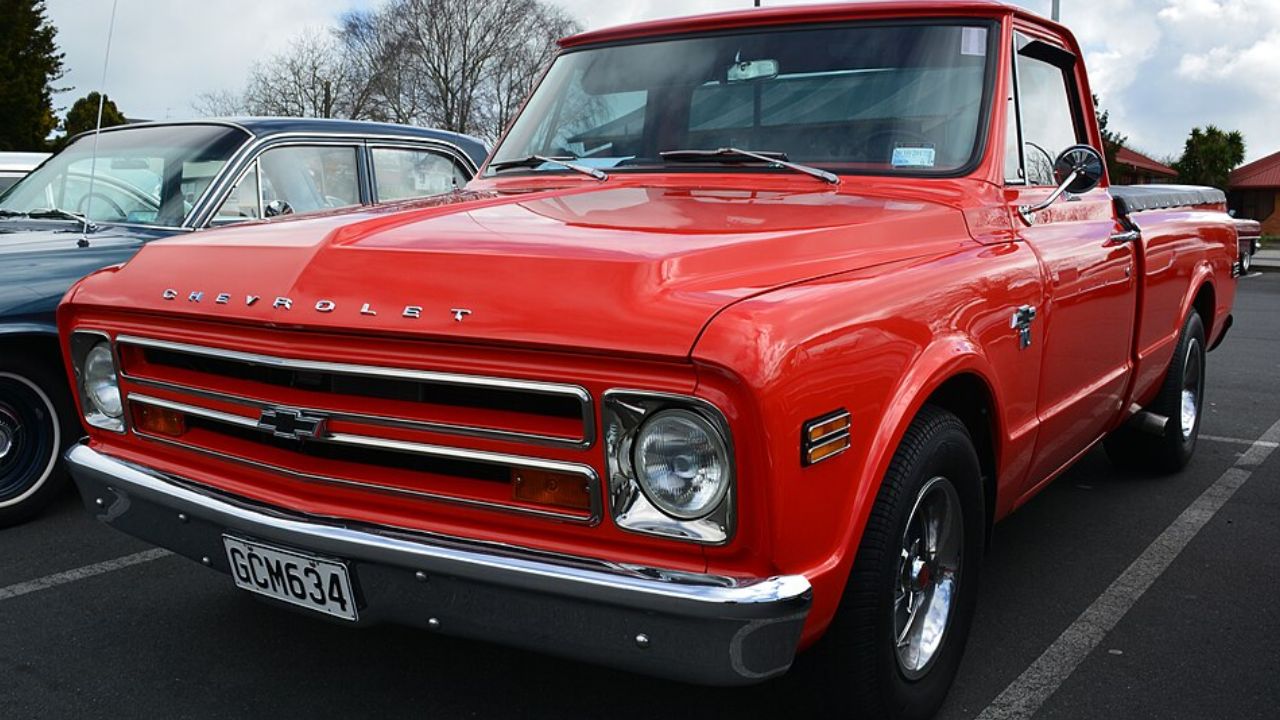
With a 1968 Chevrolet C10, it’s easy to assume a rough ride is just “old truck behavior.” Sometimes it is, but these pickups were never meant to rattle your teeth on every expansion joint. When the suspension is tired—or modified without a plan—the difference shows up immediately in steering feel, braking stability, and how the truck handles ordinary pavement.
Why a stock 1968 C10 can ride better than people expect
Chevrolet’s 1967–1972 “Action Line” C/K trucks used a coil-spring front suspension, which was a big part of why they drove more comfortably than many leaf-spring-front pickups of earlier eras. A well-sorted C10 won’t ride like a modern SUV, but it should track straight, absorb bumps without harsh rebounds, and feel composed in sweeping turns. If yours feels nervous or crashy, it’s usually not the design—it’s the condition.
Another often-missed point is that factory ride quality assumed factory ride height and spring rates. Once the truck is lowered, lifted, or loaded with mismatched parts, the geometry and shock travel can change enough to make even good components feel bad. Starting from a known baseline makes diagnosis much easier.
Common wear points that change ride quality the most
Shock absorbers are the obvious place to look, but they’re only part of the story. Worn control-arm bushings can let the front end shift under braking and bumps, creating a jittery, wandering feel that many people mistake for “loose steering.” Ball joints and tie-rod ends add their own clunks and imprecision, and if they’re far gone, they can also make the suspension bind and ride harshly over sharp edges.
On the rear, leaf-spring eye bushings and shackles matter more than many owners expect. When those bushings degrade, the axle can feel like it’s steering the truck from the back, especially over uneven surfaces. U-bolts that have been reused too many times or weren’t torqued properly can also contribute to axle wrap and vibration that shows up as a choppy ride.
Springs, sag, and the “it looks level” trap
Coil springs and leaf packs don’t just hold the truck up—they set where the suspension operates in its travel. Springs that have sagged can put the front suspension closer to the bump stops, so the truck hits those stops more often, which feels like a sharp thud rather than a controlled compression. In back, a tired leaf pack can do the same thing, and it can also encourage bottoming when you add passengers or a load.
It’s also possible for a truck to look “about right” and still be riding on compromised springs. A previous owner may have installed spring spacers, add-a-leafs, or air shocks to compensate for sag, and those quick fixes can change effective spring rate and damping in ways that hurt comfort. If the truck feels stiff but still bottoms out, that’s often a clue that the suspension is operating in the wrong part of its travel rather than simply needing stiffer parts.
Bushings, alignment, and tire choices: the hidden ride modifiers
Rubber bushings were part of the factory’s ride-and-noise strategy, and fresh rubber can restore a lot of the original smoothness. Switching to harder bushing materials may sharpen response, but it can also transmit more vibration and road texture into the cab. If comfort is a priority, it’s worth thinking through how much “feel” you want before choosing parts.
Alignment and tire setup are just as important. A C10 with incorrect toe settings can feel darty and unsettled, and that sensation often gets blamed on shocks. Tire sidewall height and construction matter too: shorter sidewalls and higher pressures can make impacts feel harsher, while older or out-of-round tires can introduce a constant shimmy that mimics suspension problems.
Lowering, lifting, and why travel and geometry matter
Many 1968 C10s have been lowered for stance or handling, and the details of how it was done make a huge difference in ride quality. If the suspension is lowered without maintaining adequate shock travel, the shocks may bottom out internally or the truck may ride the bump stops, both of which feel abrupt and unpleasant. Geometry changes can also affect camber gain and steering behavior, making the truck feel twitchy over mid-corner bumps.
Lifts can cause similar issues in the other direction, especially if shock length and mounting points weren’t matched to the new ride height. A lifted truck with shocks that top out over dips will feel like it’s being yanked downward, and it can be hard on components. Whether you’re going up or down, the goal is the same: keep the suspension working in the middle of its travel with the correct angles and clearances.
A practical way to evaluate what your truck needs
Start with a simple inspection: look for leaking shocks, cracked or displaced bushings, torn ball-joint boots, and uneven tire wear. Check ride height side-to-side and front-to-rear, because a sagging corner can point to a weak spring or a bent component. Pay attention to where the truck sits relative to the bump stops; a small gap at rest usually means a harsh ride is unavoidable until that’s corrected.
Then road-test with intent. Note whether the truck bounces repeatedly after a bump (damping issue), crashes sharply (travel/bump-stop issue), or feels like it shifts sideways (bushings/alignment issue). When you replace parts, aim for a matched system—springs, shocks, and bushings chosen to work together at your ride height—because mixing random “new” parts doesn’t guarantee a better-driving C10.
When the suspension is healthy, a 1968 C10 can feel surprisingly composed for a vintage pickup, especially compared with what many people expect from a 50-plus-year-old truck. The key is treating ride quality as a system: springs set the posture, shocks control motion, bushings locate everything, and alignment and tires finish the job. Sort those fundamentals, and the truck’s character comes through without the unnecessary harshness.