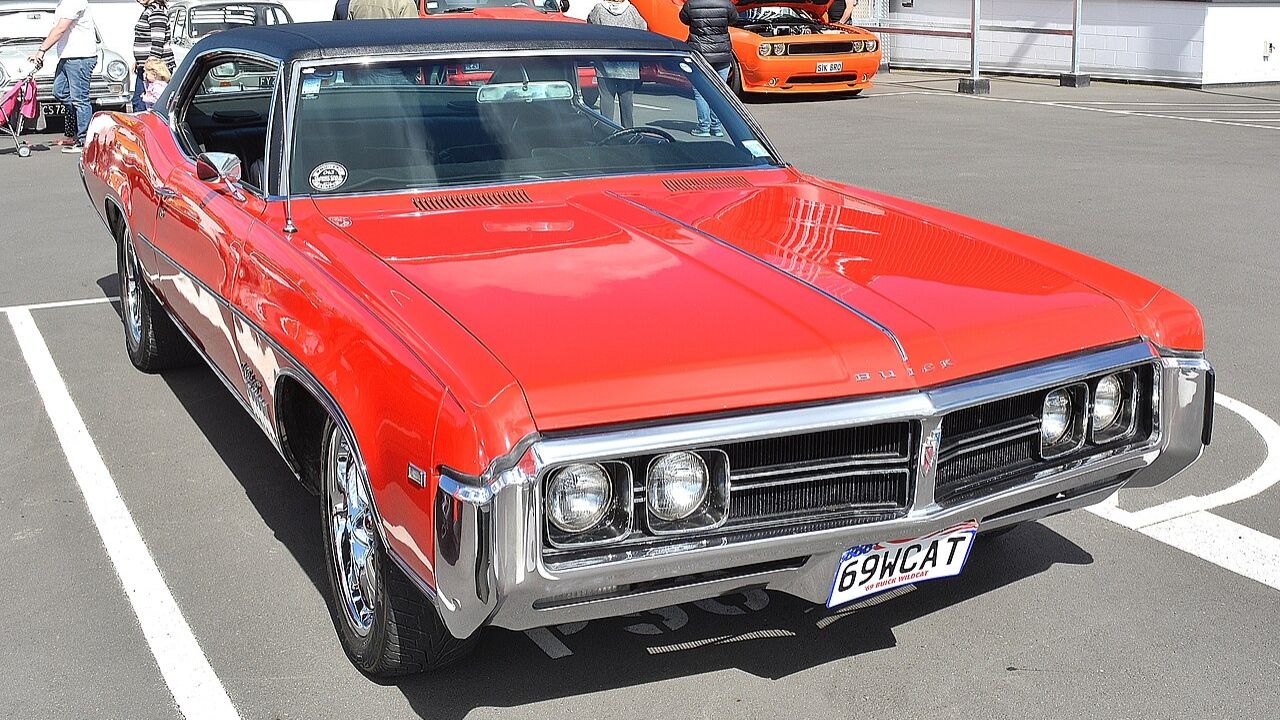
Drive a 1969 Buick Wildcat for any length of time and you’ll notice something interesting: it gets looked at in places where you might expect a muscle car or a European classic to steal the spotlight. The Wildcat sits in that sweet spot of “big American coupe” presence with Buick restraint, so people who don’t normally flag down a classic car owner still wander over. A lot of the attention is the surprised kind—folks recognize it as familiar, but they can’t quite place it until they’re close.
Why people notice the shape before they recognize the badge
The 1969 Wildcat wears Buick’s late-’60s full-size styling cues—long hood, broad shoulders, and a stance that reads substantial even at a distance. The body is clean and confident rather than flamboyant, which makes it stand out today among more overtly sporty classics. When a car looks this large and composed in modern traffic, it naturally draws eyes, even from people who aren’t “car people.”
Part of the appeal is proportion: the Wildcat looks like it was designed around highway miles and comfort, not tight city parking. That visual promise of smoothness and power is easy for bystanders to read. Even before someone knows it’s a Buick, they often know it’s a serious full-size American car from the era.
The “Wildcat” name and trim still spark conversation
Buick used the Wildcat name in the 1960s as part of its full-size lineup, and by 1969 it carried a certain image—sporting, but not brash. Owners frequently hear comments from people who remember the name from brochures, family cars, or a neighbor’s driveway. It’s the kind of name that triggers memory even when the specific model details are fuzzy.
Unlike some badges that are either universally famous or totally obscure, “Wildcat” tends to land in the middle. That’s why it attracts unexpected attention: people approach because it rings a bell, and then they stay because it’s not the car everyone expects. Conversations often start with, “I haven’t seen one of these in years,” followed quickly by someone trying to recall who in their life owned a Buick like it.
Understated performance cues make it a sleeper in plain sight
One reason the Wildcat draws the curious crowd is that it doesn’t advertise itself like a typical performance icon. Buick’s full-size cars could be ordered with big V8 power typical of the era, but the overall presentation leaned toward refinement—quiet confidence instead of loud graphics. That mismatch between “comfortable cruiser” appearance and “serious engine bay” reality is catnip for enthusiasts once they realize what they’re looking at.
At a stoplight or a gas station, the attention often comes from the way the car carries itself: a big coupe that looks ready to glide away effortlessly. People who grew up around late-’60s Detroit iron recognize the sound and the demeanor, even if they can’t immediately name the model. The Wildcat ends up feeling like a sleeper simply because it isn’t the usual headline-grabber.
It’s a rare sight compared with the usual classics at shows
At many gatherings, you’ll see plenty of Mustangs, Camaros, and Corvettes, plus a healthy rotation of popular Mopars. A 1969 Buick Wildcat isn’t an everyday appearance in that mix, which makes it a natural magnet for the “something different” crowd. Owners often find that the car attracts the people who’ve already seen every mainstream show staple and want a fresh conversation.
This is also where Buick’s brand identity plays a role. The marque is respected, but its full-size models don’t always get the same spotlight as its most famous performance-era names. When a well-kept Wildcat shows up, it fills a gap in people’s mental picture of the era—reminding them that the late ’60s weren’t only about pony cars and stripped-down muscle machines.
The interior and comfort-first vibe surprise modern onlookers
Unexpected attention doesn’t always come from the outside. Once someone peeks in, the Wildcat’s cabin—designed for long-distance ease in a full-size American car—often becomes the talking point. Even enthusiasts used to sportier classics can be caught off guard by how “grown-up” the experience feels, with a layout aimed more at comfort than theatrics.
That’s a big part of the Wildcat’s charm today: it’s a classic you can imagine actually using, not just polishing. Owners get questions about ride quality, visibility, and whether it feels as big on the road as it looks. It’s common for a casual admirer to go from “nice car” to “I bet this is a great road-trip machine” in a matter of seconds.
Attention follows the little details: trim, grille, and period-correct touches
The 1969 Wildcat rewards close inspection, and that’s another reason people hover around it longer than expected. Late-’60s Buicks have distinctive front-end treatments and brightwork that look especially sharp when preserved or restored thoughtfully. When the trim is straight and the car sits right, it reads as authentic rather than overdone, which draws respect from restorers and purists.
Owners also find that period-correct details—factory-style wheels, proper badging, and an engine bay that looks like it belongs—invite better questions. Instead of generic compliments, people ask what’s original, what’s been refreshed, and how hard certain parts were to track down. The Wildcat becomes a conversation piece not because it’s flashy, but because it’s specific.
In the end, the attention a 1969 Buick Wildcat attracts often comes from how it defies expectations. It’s big without being cartoonish, powerful without shouting about it, and familiar without being commonplace. For owners, that means every drive has the potential to turn into an impromptu history lesson—usually sparked by someone who didn’t expect a Buick to be the car they couldn’t stop looking at.