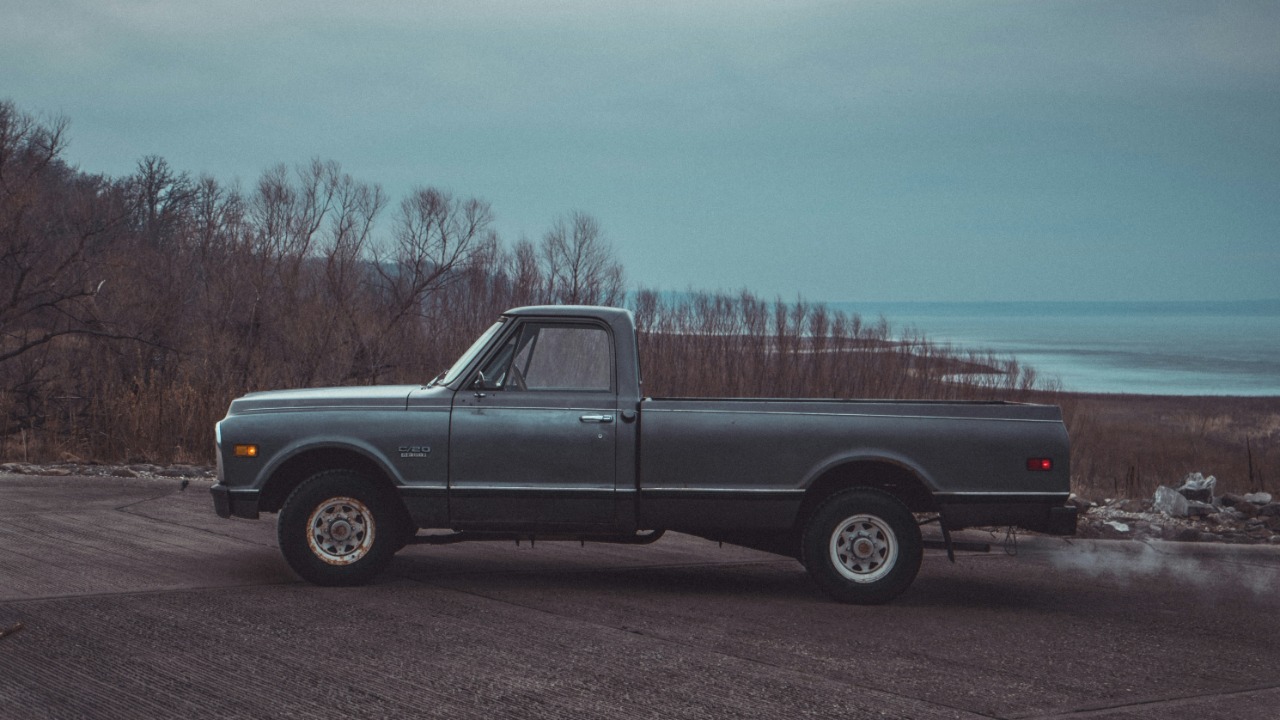
A well-kept 1972 Chevrolet C20 can feel surprisingly tight for a heavy, long-wheelbase pickup—until suspension wear starts stacking up. Because these trucks are simple and rugged, the decline often happens gradually: a little more steering play, a bit more wandering on the highway, an extra clunk over driveway entrances. Then one repair finally gets done and the difference is so dramatic it feels like the whole truck changed.
Why wear shows up so clearly on a C20
The C20 is a 3/4-ton truck, and that work-oriented design means its suspension parts live a harder life than the average classic car. Many were used for towing, hauling, or commercial duty, and even “light use” still involves a lot of curb weight on 16-inch wheels, big brakes, and stout axles. Add decades of dirt, dried grease, and tired rubber, and small clearances turn into noticeable movement.
These GM “Action Line” trucks also have a straightforward chassis with few layers between the road and the driver’s hands. When something wears—especially in the steering linkage or front-end bushings—you feel it directly through the wheel and seat. That clarity is part of the charm, but it also makes worn parts impossible to ignore once you’ve driven a properly sorted one.
The most common front-end wear points (and what they feel like)
On a 1972 C20, the front suspension and steering typically get blamed first, and for good reason. Worn tie-rod ends and drag-link ends can create vague on-center feel and a tendency to “hunt” in a lane, especially on grooved pavement. An idler arm can add slop that’s hard to diagnose until you watch the linkage move while someone rocks the steering wheel.
Ball joints are another big one, and their symptoms can range from uneven tire wear to clunks and looseness when the suspension loads and unloads. Control-arm bushings don’t always scream for attention, but when they’re cracked or compressed, braking and cornering can feel inconsistent because the geometry shifts under load. Even shocks—often treated as an afterthought—can transform body control on these trucks when they’re no longer damping properly.
Rear suspension fatigue: the “it still hauls” trap
The rear of a C20 is usually leaf-spring based and famously durable, which is why many owners overlook it. A truck can still carry weight with tired springs, but ride height and axle control can suffer, and that changes how the truck tracks and responds to bumps. Sagging springs can also alter driveline angles, sometimes contributing to vibrations that get blamed on tires or the driveshaft first.
Worn spring-eye and shackle bushings are an underappreciated source of looseness and noise. When those bushings degrade, the axle can feel less planted, and the truck may “step” sideways slightly over uneven pavement. Fresh bushings and properly matched shocks often bring back the confident, heavy-but-stable feel these trucks had when they were still doing dealership service work in the early 1970s.
Alignment and tires: where worn parts become obvious
Classic trucks don’t forgive mismatched components, and the C20 is no exception. If the front end has play, it’s hard to keep an alignment stable, which can lead to feathered tread, steering wheel off-center issues, and a general sense that the truck never settles. Owners sometimes chase alignments repeatedly when the real problem is that the truck can’t hold the settings because something is moving.
Tires add another layer. Many C20s run load-rated truck tires, and the combination of stiffer sidewalls and older steering geometry can make any looseness feel more pronounced. Once worn steering and suspension parts are corrected, the same tires often feel smoother and more predictable, which surprises people who assumed the “old truck ride” was solely about tire construction.
What changes “everything” after repairs
The most striking change usually isn’t a single part—it’s the cumulative effect of removing slack. When steering linkage, ball joints, and bushings are back within spec, the wheel stops feeling like it has a delay built in. Braking becomes more reassuring because the truck tracks straighter under pedal pressure instead of drifting as worn bushings shift.
Ride quality also tends to improve in a way that feels out of proportion to the work performed. Instead of bouncing or porpoising over dips, the truck takes a set and recovers cleanly, which makes it feel lighter on its feet without losing that heavy-duty character. Owners often describe it as “new truck tight,” and while it won’t drive like a modern independent-front-suspension pickup, it can absolutely feel composed and confident.
Keeping it historically correct while making it drive right
One of the best parts about a 1972 C20 is that you can preserve its original personality while addressing wear. Many owners choose stock-style rubber bushings and OE-type replacement steering components to keep the steering effort and road feel close to what Chevrolet intended. Others may opt for modest upgrades like modern-quality shocks, but the goal is usually the same: restore control rather than reinvent the truck.
It also helps to approach the suspension as a system. Replacing a single loose component can reveal the next weakest link, so it’s smart to inspect everything together—front end, rear leaf hardware, and steering gear adjustment—before declaring victory. When it’s all working as designed, the C20 feels honest and solid, the way a well-maintained heavy pickup from that era should.