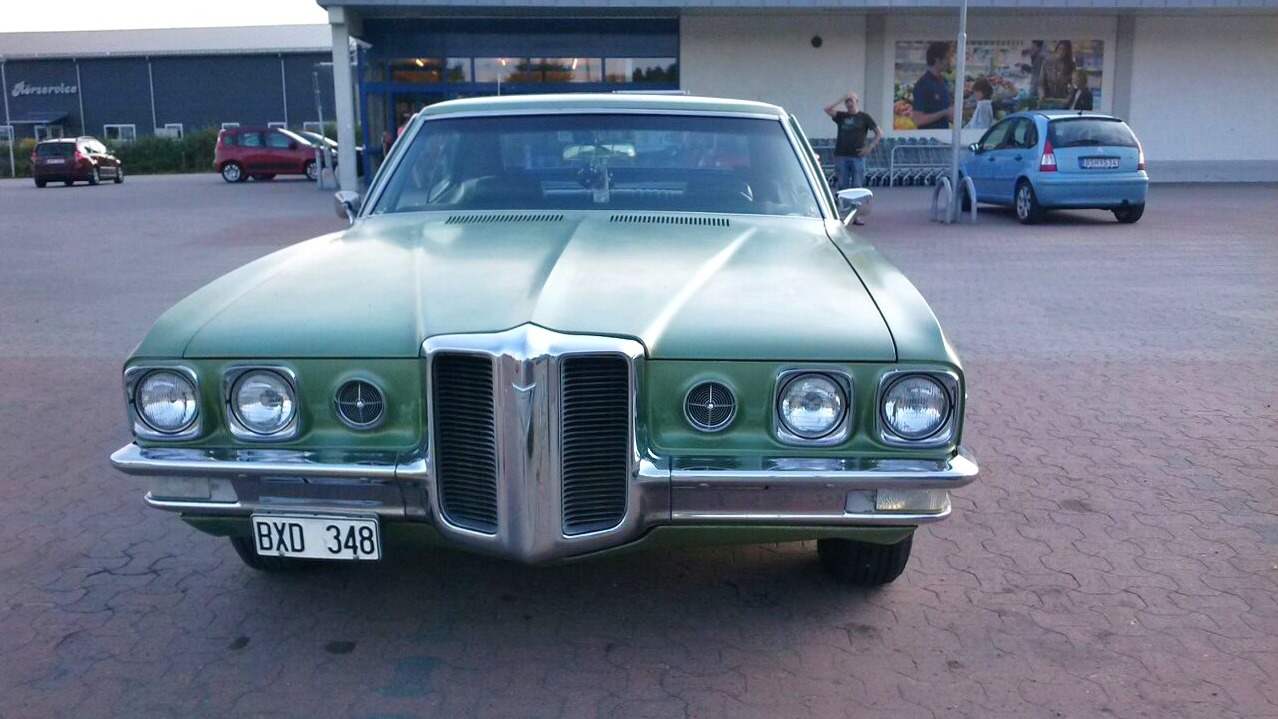
The 1970 Pontiac Ventura arrived in showrooms wearing sensible clothes. It was marketed as a compact, budget friendly Pontiac, not as a quarter mile weapon. Yet under that conservative sheetmetal and behind the Pontiac crest, the car carried more performance potential than its brochure copy ever admitted. What looked like a pragmatic commuter could be optioned, tuned, and transformed into a surprisingly quick street machine.
Seen from today’s distance, the 1970 Ventura sits at a crossroads in Pontiac history. It borrowed lessons from the brand’s early 1960s full size bruisers and quietly previewed the downsized performance that Pontiac fans would chase once the classic muscle car era began to fade. To understand why that matters, it helps to look both backward and forward along the Ventura nameplate.
What happened
The Ventura name did not start as a compact. In 1961 it appeared on a full size Pontiac, a stylish bubbletop hardtop that shared its basic body with the Catalina but offered more trim and flash. That first generation car could be ordered with serious V8 power, which meant the Ventura badge was tied to performance from the very beginning. Accounts of the 1961 Ventura describe big cubic inch engines, aggressive gearing, and a reputation that fit right into the early muscle movement.
By the mid 1960s Pontiac doubled down on that formula. The Ventura remained a full size model, but the brand had clearly learned how to blend comfort and speed. A 1964 example shows how far that balance could be pushed. Enthusiasts who have studied the 1964 Ventura point to high output 389 cubic inch engines, heavy duty suspensions, and drag strip ready gearing that turned a family sized coupe into a serious competitor. The car looked like a gentleman’s express yet behaved like a muscle car when prodded.
That background set expectations for the Ventura badge. Buyers who knew Pontiac’s catalog associated the name with big car luxury and big engine power. When the company revived the Ventura label for 1970, it applied it to a very different package. Instead of a full size body, the new Ventura rode on the X body platform that it shared with the Chevrolet Nova. The wheelbase shrank, the overall footprint tightened, and the marketing pitch shifted toward affordability and practicality.
On paper, the 1970 Ventura seemed to walk away from the brute force image of its predecessors. Base cars came with modest six cylinder engines and simple trim. The intent was clear: Pontiac wanted an entry level model that could compete on price while still offering a taste of the brand’s style. Many Venturas left the factory as plain two door sedans or four door commuters, destined for long lives of daily duty rather than glory runs.
Even so, Pontiac engineering rarely forgot about enthusiasts. Under the Ventura’s clean, almost anonymous body, the X body chassis could accept a range of V8 engines and suspension upgrades. Even in its early years, the car could be ordered with small block V8 power that dramatically changed its character. Owners discovered that the same basic platform responded eagerly to intake, exhaust, and ignition tweaks, and that the car’s relatively light weight compared with full size Pontiacs made those changes even more effective.
As the decade progressed, Pontiac leaned into that hidden potential. The Ventura line gradually picked up more aggressive options, including handling packages, cosmetic upgrades, and stronger drivetrains. By the time later Venturas evolved into more overt muscle flavored trims, enthusiasts were already looking back at the 1970 model as the sleeper that started it. Modern write ups of the Ventura’s evolution often highlight how the car blended upscale interior touches with performance hardware, a combination that traces directly to the understated 1970 original.
Meanwhile, Pontiac’s broader performance story was heading toward a cliff. Emissions rules, rising insurance costs, and changing buyer tastes were squeezing traditional muscle cars. By the mid 1970s, even icons like the GTO were losing their edge. A look at the 1974 GTO shows a car that carried a legendary name but had to make do with smaller engines, lower compression, and more restrained performance than its late 1960s forebears.
Against that backdrop, the compact 1970 Ventura takes on a different character. It arrived just as the traditional big cube formula began to face pressure. It wore a badge with full size muscle history, yet it occupied a smaller, lighter platform that could survive tightening regulations more gracefully. What looked like a simple budget car in that model year quietly set the stage for Pontiac’s shift toward compact performance.
Why it matters
The 1970 Ventura matters because it shows how performance can migrate and adapt when the market changes. Pontiac had built its reputation on full size powerhouses and mid size legends, but by the turn of the decade those segments were becoming harder to defend. The Ventura name, once attached to wide track bubbletops, now lived on a compact that could carry the performance torch in subtler form.
For enthusiasts, the car’s significance lies in its sleeper status. Buyers who ordered a Ventura with a V8 and upgraded suspension essentially acquired a stealth performance car. The styling was clean and relatively conservative, especially compared with the flamboyant graphics and scoops that defined late 1960s muscle. That restraint meant the car blended into traffic, yet it could surprise more obviously sporting machinery when properly equipped.
The Ventura also illustrates how Pontiac tried to maintain its identity under pressure. The brand’s slogan and marketing leaned heavily on excitement and performance. When external forces made big horsepower harder to sell, Pontiac shifted that energy into smaller packages. The 1970 Ventura, with its accessible price and upgradable hardware, gave the division a way to keep enthusiasts engaged without abandoning everyday buyers.
In historical context, the model helps bridge the gap between early 1960s full size muscle and the later era of compact and personal performance cars. The 1961 Ventura bubbletop represented the beginning of Pontiac’s serious performance push, with big displacement V8s and dramatic styling that made no attempt to hide its intent. The mid 1960s Ventura continued that theme with even more power and refinement. By contrast, the 1970 car looked almost modest, yet it carried the same core idea that a Pontiac with the right options should be quick, composed, and enjoyable to drive.
That continuity matters for collectors and historians who want to understand how muscle car DNA survived beyond the classic peak years. When emissions rules and fuel concerns began to reshape the industry, many nameplates either disappeared or lost their identity. The GTO’s trajectory into the mid 1970s shows how a once dominant performance leader could be reduced to a shadow of its former self. The Ventura, on the other hand, started from a lower key position and grew into its performance role, which helped it avoid some of the backlash that hit more famous badges.
The car also highlights the value of platform sharing when used creatively. By basing the Ventura on the X body, Pontiac could tap into a wide range of parts and engineering knowledge. That kept costs down and made it easier for owners to modify their cars with components from other GM models. Enthusiasts quickly realized that suspension parts, brake upgrades, and drivetrain pieces from more overtly sporty siblings could be adapted to the Ventura with relative ease. The result was a car that punched above its weight in both factory trim and modified form.
From a design standpoint, the 1970 Ventura reflects a shift toward cleaner lines and less ornamentation. The full size Venturas of the early 1960s wore chrome, distinctive rooflines, and bold trim. The compact Ventura adopted a simpler look that suited the era’s growing preference for straightforward, functional styling. That visual restraint has aged well. Today, many collectors appreciate the car’s proportions and restrained detailing, which provide a blank canvas for subtle performance touches rather than shouting for attention.
The model’s story also resonates because it mirrors a broader trend in performance cars. As regulations and market conditions changed, many brands moved their most interesting drivetrains into smaller, lighter platforms. The Ventura’s role in Pontiac’s lineup foreshadowed the rise of compact performance cars in later decades, where efficiency and agility became as important as raw displacement. In that sense, the car can be seen as an early step toward the idea that a practical, family friendly vehicle could also deliver genuine driving enjoyment.
For Pontiac loyalists, the 1970 Ventura holds an additional layer of meaning. It represents a moment when the brand still had the freedom and engineering talent to sneak performance into unexpected corners of the lineup. The car may not have received the marketing spotlight that shone on the GTO or Firebird, but it carried the same spirit in a more understated form. That quiet confidence has helped the model earn a devoted following among enthusiasts who value substance over flash.
What to watch next
Interest in the 1970 Ventura and its close relatives is likely to grow as collectors continue to seek out underappreciated muscle era cars. Prices for headline models from the late 1960s have climbed steadily, which pushes enthusiasts toward more affordable alternatives that still offer authentic period character. The Ventura fits that brief well, with its mix of compact size, available V8 power, and direct ties to Pontiac’s performance heritage.
As attention shifts, more restorations and tasteful restomods are beginning to surface. Owners often focus on bringing out the car’s latent performance, upgrading suspensions, brakes, and drivetrains while preserving the original understated look. That approach plays to the Ventura’s strengths. It allows the car to remain a comfortable, usable classic while delivering the kind of acceleration and handling that its badge suggests.
There is also growing appreciation for the broader Ventura story, from the early 1960s bubbletops through the mid decade bruisers and into the compact era. Enthusiasts who study the lineage see a consistent thread of performance and style that runs through very different body styles and market positions. The transition from the 1964 full size powerhouse to the 1970 compact marks a key chapter in that narrative, one that helps explain how Pontiac tried to adapt without losing its identity.
In the larger muscle car conversation, the Ventura’s journey offers a useful counterpoint to more familiar tales of decline. The 1974 GTO often appears as a symbol of the muscle car’s retreat, a car that carried a famous name into a period of reduced output and increased compromise. The Ventura, by contrast, shows how a less celebrated model could quietly carry the performance torch through the same period by relying on balance, adaptability, and a willingness to trade sheer size for agility.
Future scholarship and enthusiast coverage are likely to place more emphasis on these transitional cars. As the hobby matures, there is increasing interest in models that do not fit the traditional muscle template yet still embody the era’s spirit. The 1970 Ventura, with its mix of practicality and potential, fits that category perfectly. It invites a more nuanced view of what performance meant at the dawn of the 1970s, when power figures were no longer the only measure that mattered.
More from Fast Lane Only